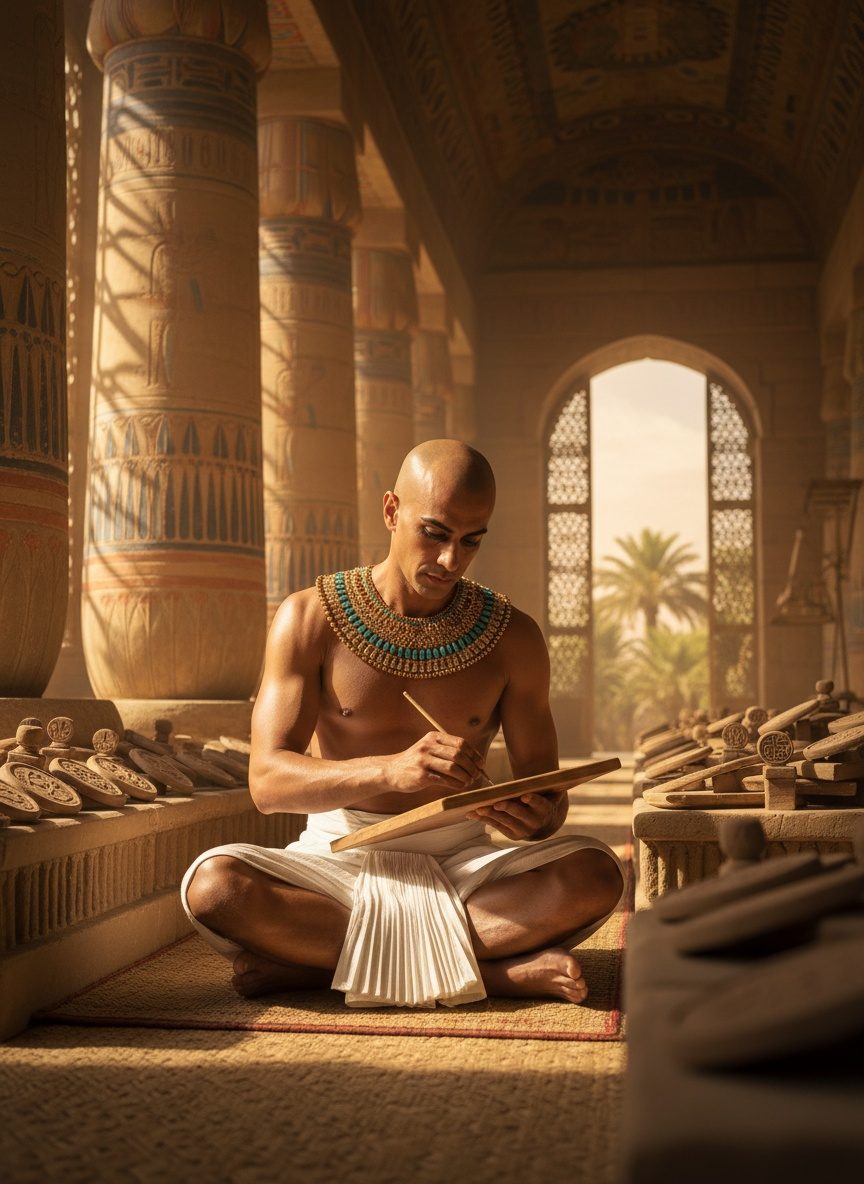
The crunch of footsteps echoed across the limestone floors of the Theban palace as messengers scurried about, clutching clay tablets etched with cuneiform script. In the shimmering heat of the Egyptian sun, Pharaoh Amenhotep III immersed himself in a different realm – a world bound not by massive stone columns or the rhythmic flow of the Nile but by words and promises, sealed in the smooth clay of distant lands.
The Art of Diplomatic Acumen
Long before the ink of modern diplomacy touched parchment, Amenhotep III wielded an influence rooted in his extraordinary ability to connect. His kingdom, the richest its neighbors had ever known, stretched as an unyielding beacon of power and prosperity, with Karnak's temples soaring towards the heavens and fields abundant under the beneficent gaze of Ra. Yet, it was not the scale of his monuments or the richness of his coffers that immortalized this pharaoh in the annals of time; it was his pioneering foray into international diplomacy.
Amenhotep III's reign marked a period when Egypt was hungry for more than just conquest. The pharaoh extended his reach not through armies, but through letters. This collection of clay tablets, unearthed millennia later at Tell el-Amarna, revealed the world’s first diplomatic network, a nexus where the mightiest of kings engaged in cordiality, veiled threats, and business propositions. The letters he dispatched were not mere declarations. They were instruments of negotiation, laden with rich tapestries of politeness, subtle manipulation, and occasionally, alliances sealed with marriage - the sovereign accords of that age.
The letters from Babylon, Assyria, Mitanni, and Cyprus portrayed a world interconnected by ambition and mutual respect. To the Babylonian king, Amenhotep shared a camaraderie formed over gifts of lapis lazuli and silver. From Assyria, came challenges to acknowledge sovereignty. With Mitanni, a dynastic alliance flourished, binding through marriages that wove tighter the ties of kinship and commerce.
The World on Clay Tablets
As the tablets lay dormant beneath the Egyptian sands for over three thousand years, their discovery was an accident of serendipity. In 1887, a peasant woman stumbled upon these calcified secrets, buried under the weight of forgotten sands. Upon their translation, the tablets provided an unparalleled tapestry of the Late Bronze Age — an age where words bounded kingdoms and pharaohs, just as much as armies.
These relics spoke of intricate trade networks, revealing a robust economy fueled by exchanges not only of goods but of ideas, artisans, and technology. Luminescent blue faience beads, ceramics, and rare woods traversed these ancient routes alongside gossip and political intelligence. Through Amenhotep's correspondences, a panorama unfolded where the world resonated with hieroglyphs and cuneiform - languages that transcended borders, breathing life into alliances that reshaped civilizations.
The Amarna Letters, as they are now famed, chronicled not just potentates’ intentions but also their vulnerabilities. Requests for gold, disputes over territory, and allegations of theft made their way to Amenhotep's court. Yet, the pharaoh’s responses portrayed a savvy ruler who managed his empire with grace. Through these dialogues, Amenhotep negotiated peace with a deft elegance, ensuring Egypt maintained its seat as the epicenter of an interconnected earth.
The Echo of Distant Voices
Amenhotep's letters are more than archaeological curiosities; they are voices resurrected from an age obscured by millennia. In the faint traces left by his stylus, we glimpse a grand tradition of internationalism long preceding empires more frequently studied in schoolbooks. This ancient diplomatic correspondence reveals a humanity that, despite the passage of time, echoes our own desires to connect, to understand, and ultimately, to prosper.
Above them all, Amenhotep III's vision of a cohesive world stands as a mirror, reflecting both our past and the intricacies of our present. These tablets, these whispering clays, remind us that language has always had the power to bind or break. They underscore that even the mightiest of pyramids could crumble, yet the words of an astute ruler, carved into mud and dried by the sun, could endure.
The story of Amenhotep III and his unparalleled diplomatic achievement invites us to question the fragility of power juxtaposed with the enduring strength of dialogue. In today's world, where lines are often drawn hastily and indiscriminately, his legacy speaks volumes — a reminder that even amidst rivalry and geopolitical stratagems, the written word remains a bridge across oceans of misunderstanding and torrents of time.