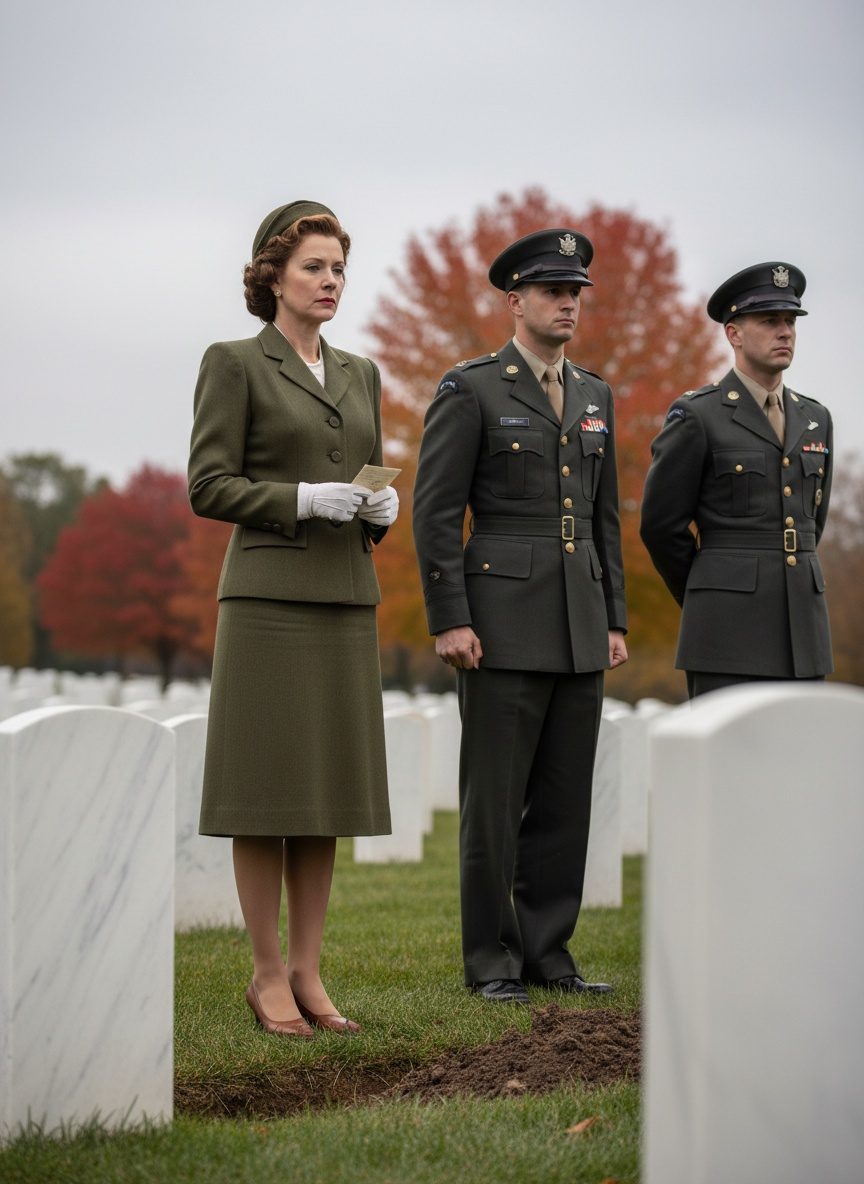
The mid-morning sun cast long shadows over the immaculate rows of white headstones, the dew from the night still clinging to the grass that blanketed the hallowed grounds of Arlington National Cemetery. The crisp autumn breeze rustled the leaves of the ancient oaks, carrying with it a solemn, sacred silence broken only by the occasional bird call. For a moment, all seemed serene — as if the park knew the solemn duty it carried. Yet beneath this tranquility lay a stark reality that stirred Gladys Vandenberg into action in 1948. A few steps away, in places where the grass was worn by time, airmen lay being consigned to the earth without a single soul to bid them farewell. It was a scene as silent as the fallen men who deserved more.
Calling the Silent Sisters
Gladys Vandenberg, wife of the then-recently appointed Air Force Chief of Staff General Hoyt Vandenberg, was a woman of determination. One day in 1948, during a visit to the cemetery, she noticed the heartbreaking absence of relatives or friends at the interment of several Air Force men. A simple fact caught her attention: they were strangers, mostly young men, buried in silence, marked only by the formality of a chaplain’s prayer. It seemed inconceivable to Gladys that those who had served their country should leave this world without recognition or witness. The absence of ceremony was an injustice she couldn't abide.
Thus, the Silent Sisters came into being. Rallying the support of other officers' wives and partners, Gladys initiated a volunteer service that assured no Air Force member would ever be laid to rest alone again. These women, often cloaked in quiet dignity, began attending each funeral, providing the respectful presence of witnesses that every life deserves. The simple act of being there — of standing beside the graves — was profound in its commitment and empathy, a lifeline thrown to the souls who rested beneath. Each whispered promise at the graves became a testament to service and sacrifice, reminding the world of the communal obligation to remember.
A New Mission Takes Flight
Over the decades, this solemn promise expanded, evolving into a dedicated endeavor that transcended the simple act of attending funerals. Volunteer groups emerged, each devoted to maintaining the tradition Gladys had founded, ensuring continuity in the ritual. The Honor Guard, those tasked with the full military honors at burials, often found comfort in the presence of these women and their male counterparts who joined the efforts. Known unofficially as the “Arlington Ladies,” they became an integral part of the military funeral fabric, their presence a part of the ceremonial landscape that surrounded each interment.
Even more striking than the duty itself was the commitment each volunteer showed. Without fanfare or expectation, these men and women would brave the elements — come rain, snow, or blistering heat — to attend anywhere between two to thirty funerals a day, depending on the need. Though the military families typically knew little about these volunteers, they felt the gratitude deeply for those who would not see such service. Years later, as the tradition grew to include representatives from other branches of the military, the legacy of the Vandenbergs took on greater significance — an embodiment of silent support that transcended personal acquaintance.
Perpetuating Memory, Expanding Legacy
Today, the Arlington Ladies are a robust body, ensuring that no service member is laid to rest without recognition, their duty unchanged since Gladys Vandenberg gathered kindred spirits decades ago. While the original members have long since passed, their spirit is preserved in their successors, who retain the commitment to a mission larger than themselves. With the might of tradition behind them, they uphold an ethos that acknowledges service and sacrifice in the most poignant way, each attendance a gentle declaration that no one is forgotten.
This tradition is more than a rite; it represents an understanding amidst the community that service members are a family responding not only to each other’s momentous needs but also to their quiet passing. Though unrecorded in many history books, this steadfast dedication to remembrance is a quiet but powerful narrative of gratitude and humility, speaking to the essence of communal responsibility and respect. In this space, they reveal an enduring truth: Even in death, no service member is alone, a profound reflection on shared humanity, initiated by the simple, caring resolve of Gladys Vandenberg.