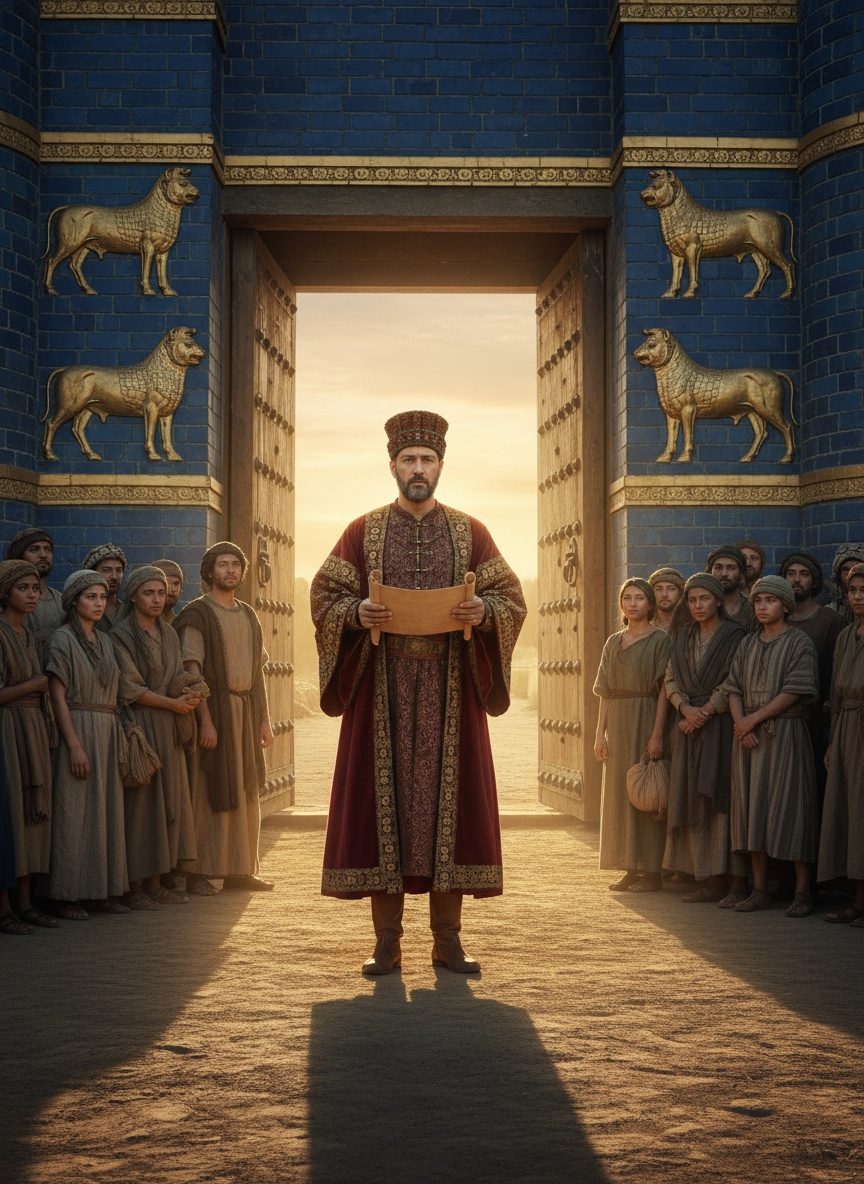
She was the daughter of a war hero and the wife of a military general. Yet, Cornelia Africana's most prized possessions were not relics of battle but rather the lives she helped form. In a society where wealth and power often overshadowed personal virtues, Cornelia exhibited a brand of heroism rooted in maternal devotion and intellectual nurturing.
Cornelia's Noble Lineage and the Roman Virtue
In the grand spectacle of Roman society during the 2nd century BCE, Cornelia Africana was a revered figure both in her own right and by virtue of her illustrious lineage. Born into the esteemed Scipio family, her father, Scipio Africanus, was celebrated for defeating Hannibal in the Second Punic War, a triumph that thrust Rome into an era of burgeoning power. Married to Tiberius Gracchus the Elder, she continued the esteemed tradition of connecting powerful families through familial alliances. But Cornelia was more than a link in a chain of powerful men; she was a cornerstone of Roman virtue.
Living in a time when women were expected to remain in the shadows, Cornelia was known for her intellect and moral fortitude. She found herself widowed at a young age, facing the daunting task of raising twelve children alone—a responsibility that demanded both courage and strength. Tragically, only three of them survived into adulthood: her daughter Sempronia and her sons Tiberius and Gaius Gracchus. But instead of being defeated by loss, she used her misfortune to fortify her remaining offspring, lighting within them an unyielding flame of public service and reform.
Amidst the social unrest and political upheaval that characterized this era, Cornelia's home became a sanctuary of learning and moral discourse. She surrounded her children with the finest scholars and thinkers of the time, ensuring they were not only well-versed in the art of statecraft but also grounded in principles of justice and equity. In a society driven by conquests and treasures, Cornelia's commitment to the intellectual and ethical education of her children was a rarity and became a testament to her enduring influence on Roman culture.
The Day of the Revelatory Jewels
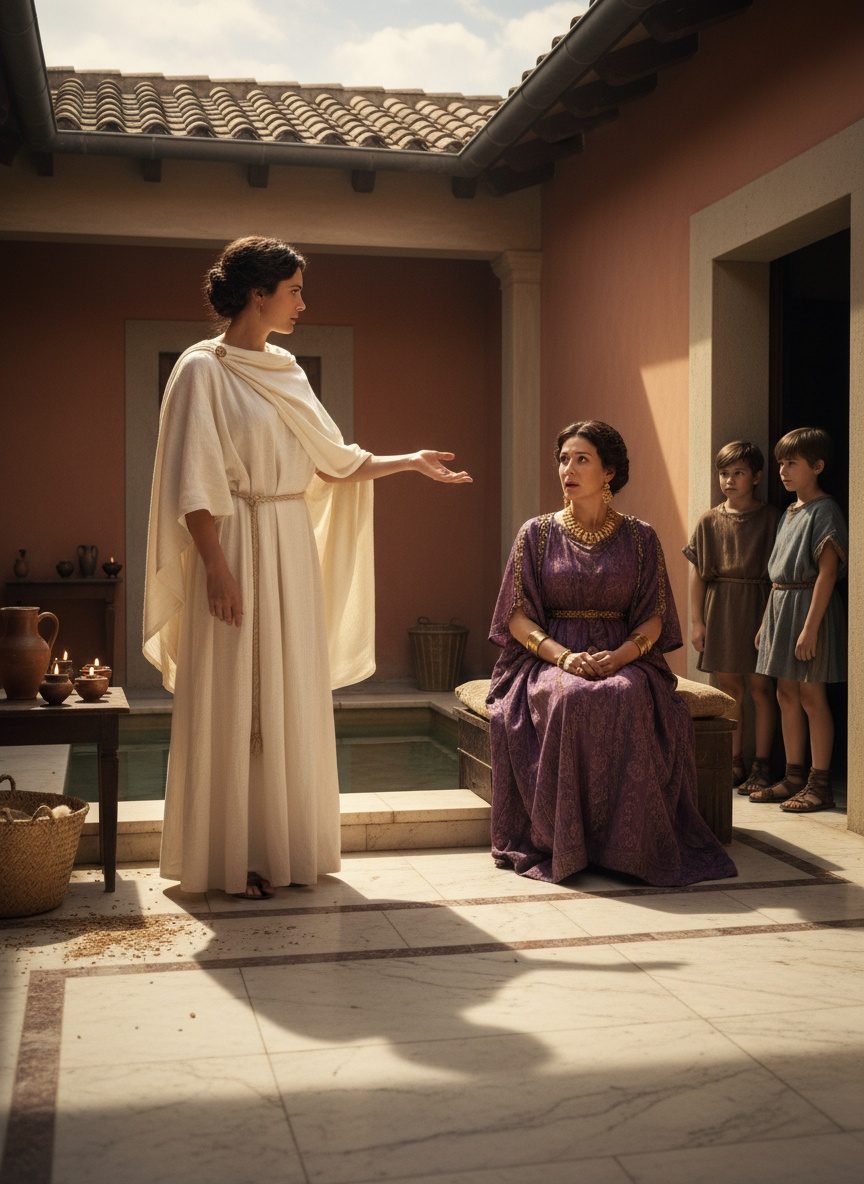
The story of Cornelia and her jewels is one of the most enduring anecdotes from ancient Rome. Picture a warm Roman afternoon, where opulent villas stood basked in golden sunlight, a testament to the wealth and grandeur of Rome's noble families. A gathering of a prestigious circle unfolded within one such villa. Among the guests was a noblewoman who, in a display of classic Roman opulence, pulled back the fabric of her dress to reveal a cascade of glittering jewels.
Admiring her wealth, the woman turned to Cornelia, expecting her to reciprocate with a similar display. But Cornelia, unperturbed and silent, gestured for her sons to join them. As Tiberius and Gaius entered the room, she uttered not a word but simply indicated towards them. This poignant and eloquent gesture spoke volumes, embodying ancient Rome's ideals of virtus and pietas—courage, duty, and loyalty to one's family and society.
It was a declaration that left observers in awe, etching a powerful moral into Roman folklore. Her sons were her treasure, a living testament to her values and the promise of future republic reforms. Cornelia's silent statement resonated throughout Rome, reiterating that glory and virtue surpassed material wealth. Her act was not merely symbolic; it was an educational narrative that echoed the prevailing social hustle of wealth against the backdrop of traditions and familial devotion. It was a moment that left legacies etched deep into Rome’s collective memory.
The Legacy of Cornelia and Her Sons
Although her sons, Tiberius and Gaius Gracchus, would later become known for their roles as reformers and tribunes—and ultimately for their tragic fates—the foundations of their enduring legacy can be traced back to Cornelia’s influence. Their dedication to agrarian reforms and efforts to address the widening chasm between Rome’s elite and its impoverished citizens were lessons inherited from their mother's teachings. Cornelia instilled within them a deep understanding of what it meant to align personal virtues with public service.
The Gracchi brothers’ tales might be shrouded with tragedy, yet their attempts to create a more egalitarian society represent Cornelia’s lasting impact. Through her sons, Cornelia shaped a narrative that would inspire not only contemporaries but also historians and political thinkers in the centuries that followed. Her ability to practice and promote values that transcended temporal wealth granted Cornelia an esteemed place in Roman history.
In our quest to understand history, the symbolism behind Cornelia’s choice shines a light on the timeless dialogue between wealth and virtue. Her emphasis on moral and intellectual upbringing contrasts the relentless pursuit of power and wealth that marked Roman conquests and remains relevant today. As we recount Cornelia’s life, we are reminded of the fundamental importance of character, education, and family. These jewels proved to be more enduring than gold, shaping history in ways otherwise unimaginable.