The early morning winds carried a gentle whisper across the sands of Thebes, curling around the valleys and through the crevices that held secrets of ages past. As the first rays of the sun brushed against the towering limestone cliffs, a golden hue descended, illuminating the Valley of the Kings with a mysticism that still clings to its stones millennia later. Here, amidst the echo of chisels and the murmur of prayers, the legacy of those who served the pharaohs lies silently. It is within this hallowed ground that Kha, the humble architect who crafted homes for the gods, and his devoted wife, Merit, chose to spend eternity.
The Architect of the Divine
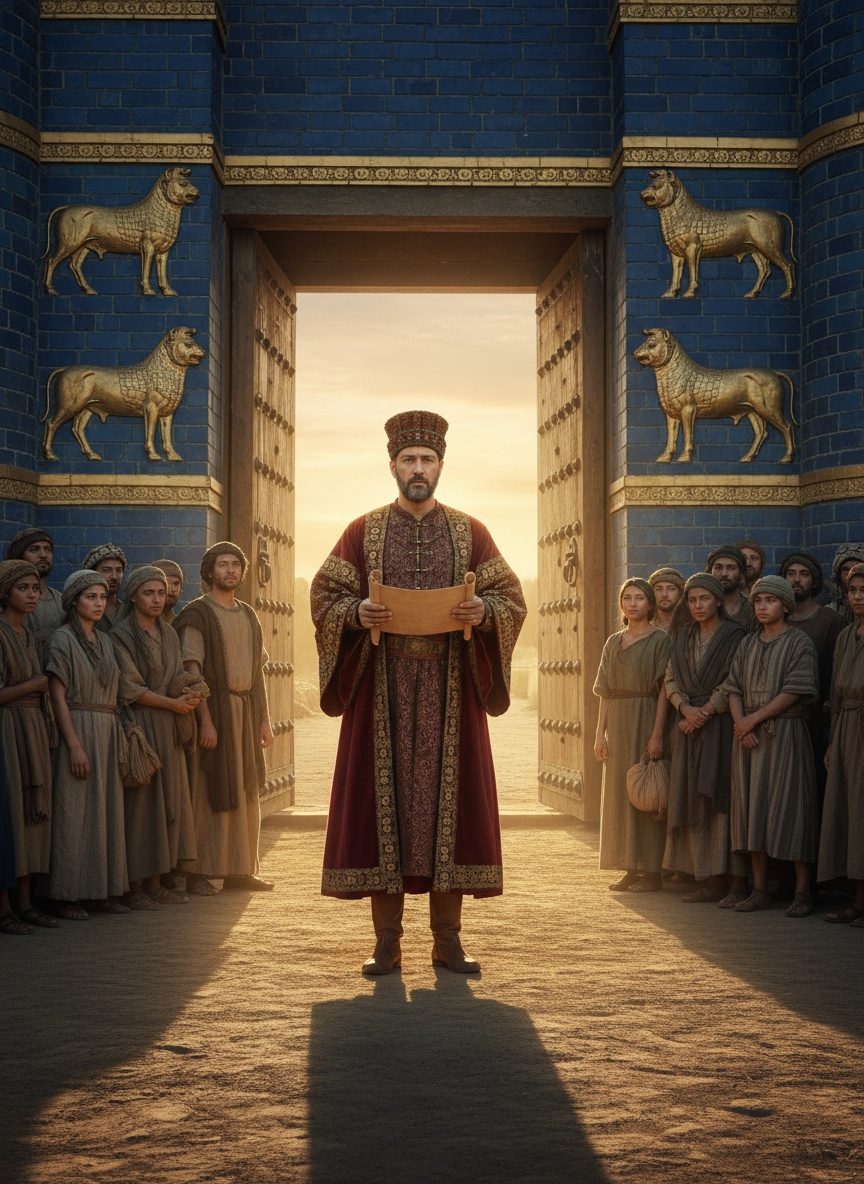
In the heart of the 18th Dynasty, around 1400 BC, Thebes was a burgeoning epicenter of power and art. The air was thick with the incantations of priests, and the bustling city thrummed with the industry of craftsmen. At the pinnacle of this tapestry of life and death stood Kha, a man whose hands had touched the very stone that would cradle the spirits of kings. Serving three pharaohs, Kha was revered not as a mere artisan but as a visionary who translated the divine will into majestic tombs.
Yet, for all his contributions, Kha's requests of the gods were humble. Unlike the opulent crypts he created for royalty, his own tomb was unpretentious by comparison, though no less filled with a personal veneration for the afterlife. Kha believed deeply in the journey that awaited after death, crafting a sanctuary adorned with depictions of daily life and symbols of regeneration that spoke to the essence of his soul.
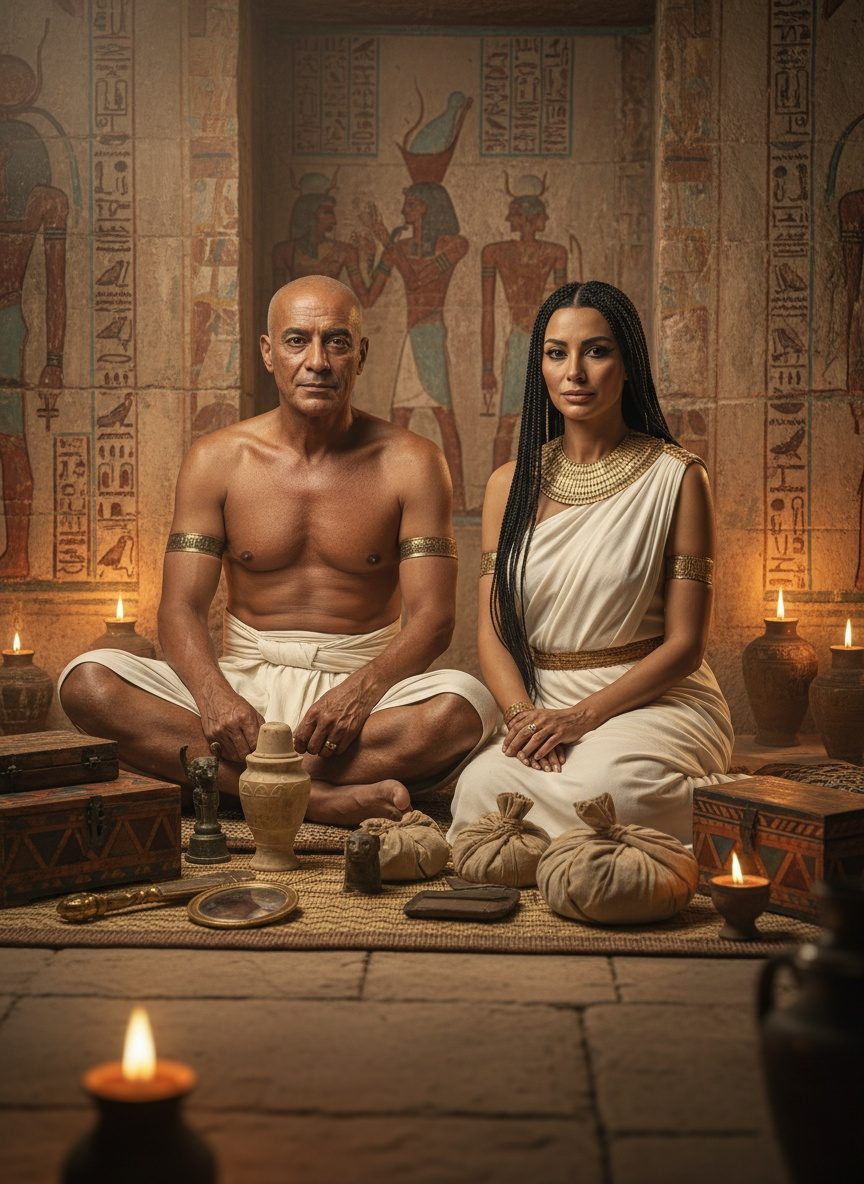
But it was not just his life’s work that echoed throughout the centuries; it was his love. For alongside Kha in his final resting place lay Merit, his wife and partner. Their decision to inhabit eternity together was not merely symbolic but deeply romantic—a testament to a shared life forged in partnership and enriched by love that transcended mortality.
A Resting Place Sealed in Time
While the bustling streets of Thebes hummed with life, the tomb of Kha and Merit was sealed in a silence that would stretch for over 3,300 years. The enveloping quiet of their chamber became a fortress against the ravages of time, preserving a tale of devotion that beckoned from its rest only in the modern era.
When archaeologists entered this world untouched by millennia, they were greeted by a scene seemingly frozen in a singular moment of farewell. Perfectly preserved artifacts lay scattered around the chamber as if merely paused between breaths. Everything spoke of a life shared in unison—from the food offerings carefully placed against hunger in the afterlife to the intricate cosmetics hinting at an eternal routine of care and beauty that Merit herself might have engaged in.
The discovery of Kha and Merit's tomb became a window into the daily life of ancient Thebans, highlighting not their greatness in a historical sense but their humanity—a couple bound not by power but by the profound simplicity of their enduring devotion. In doing so, they offered a narrative far richer than the treasures unearthed from royal tombs—one of life lived in quiet integrity and love unyielding.
The Silence That Speaks
As scholars sifted through the layers of Kha and Merit’s past, they unearthed treasures of a different kind—new understandings of the intertwining of ordinary life with the sacred traditions of ancient Egypt. Their simple yet elegantly inscribed coffins spoke of identity and status while honoring the cyclical nature of life and death. More than relics, this tomb was a testament to a shared venture into the unknown.
Beyond the material remnants, it was the intangible story that resonated most. Why did Merit choose to seal herself in this tomb? Was it an act of duty, of love, or perhaps an understanding beyond our grasp? In her choice lies an enigmatic truth about the human condition: that our most profound acts are often guided not by expectation but by sentiment. Her decision remains an embodiment of love’s enduring power, capable of seeing beyond the limitations of life itself.
The significance of the discovery of Kha and Merit’s tomb is not just in what it reveals about ancient practices but in how it connects us across millennia. It compels us to acknowledge shared human experiences—love, loss, hope—that ring as true today as they did in the shadowed depths of ancient Thebes. This story, shrouded in the mysteries of a bygone civilization, reminds us that history is not solely a chronicle of events but a treasury of the hearts that shaped them, urging us to listen to those whispers carried on the ancient winds.