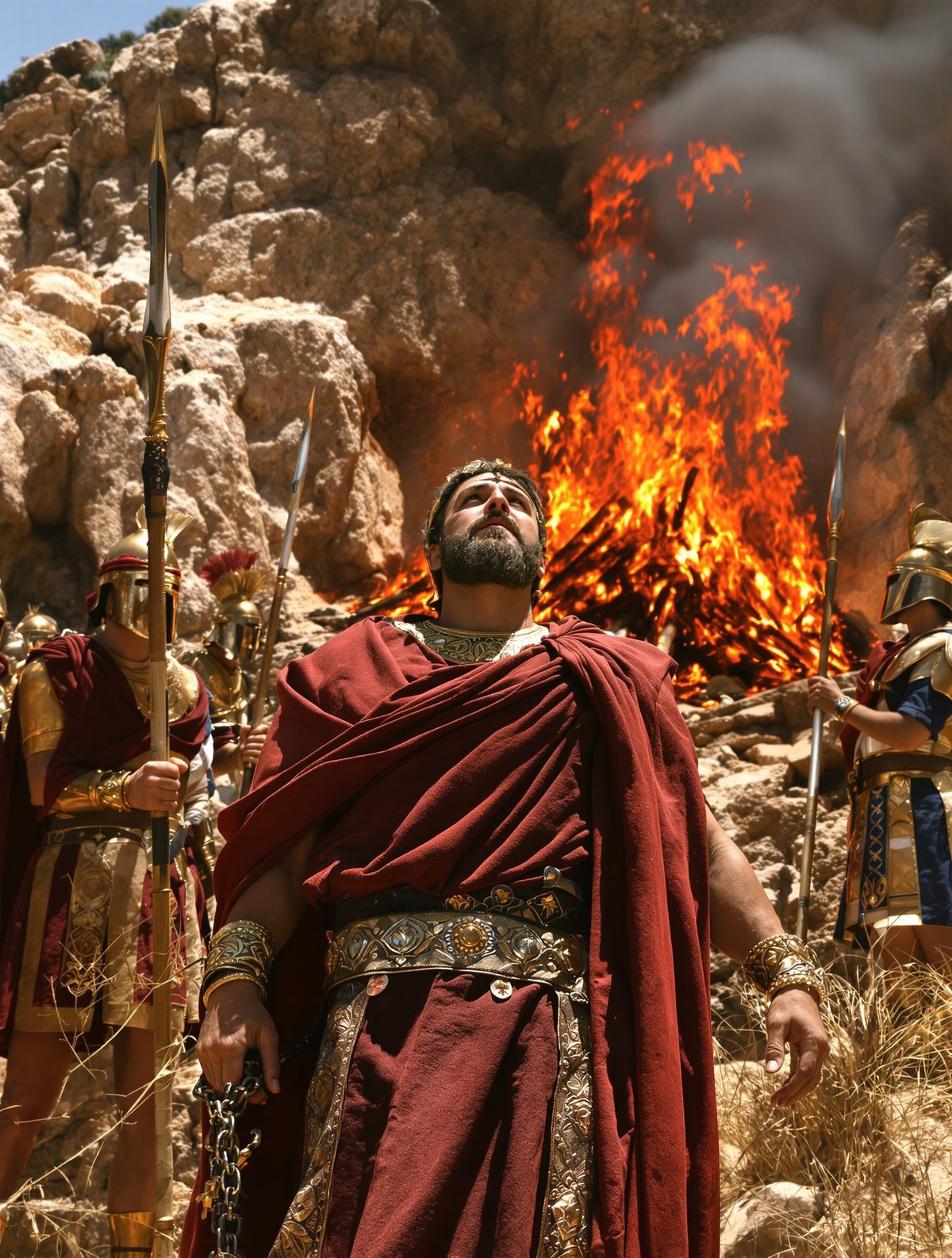
The distant sound of wailing filled the air as Croesus, the once-mighty King of Lydia, stood on the edge of despair. Flames danced and crackled around him, a fiery cage of his own making. As the smoke curled into the heavens, Croesus replayed the Oracle's words in his mind, a bitter reminder of a fate misunderstood. He had asked for victory, and in a cruel twist, he had received it — just not in the way he expected.
The Wealth of a King
Croesus reigned as king in Lydia from 595 to 546 BC, and his name became synonymous with unimaginable wealth. Legend has it that everything he touched turned to gold — or at least, that he had access to the abundant gold deposits of the Pactolus River, which flowed near his capital, Sardis. This richness not only filled his treasury but also bestowed upon him the status of the wealthiest man alive, an allure that few could resist.
Lydia, what is today western Turkey, was a land of prosperity under Croesus. The Lydians boastfully displayed their opulence through extravagant palaces and ornate temples. Yet, it was not just tangible wealth Croesus craved; he sought eternal fame and power, key drivers that would lead him to his fateful decision.
The Visit to Delphi
In 547 BC, the winds of change blew ominously from the east with the rapid rise of the Persian Empire under Cyrus the Great. Croesus was wary of this growing threat and knew that only divine guidance could lead him to the right course of action. His wealth allowed him to afford what few others could: an audience with the prestigious Oracle of Delphi.
The Oracle, Pythia, was the high priestess of Apollo and the most revered source of divine prophecy in the ancient world. Seated atop a tripod over a chasm, words of prophecy would spill from her lips, often cryptic but holding the weight of destiny itself. Croesus sent rich offerings — hundreds of gold bricks, one for every day of the year — a king's ransom intended to curry favor with the capricious gods.
Upon consulting the Oracle, he asked if he should go to war against the burgeoning might of Cyrus. Her reply was as enigmatic as it was profound: "If you cross the Halys, a great empire will fall."
Misinterpretations and Missteps
The Halys River, now the Kızılırmak, marked the boundary between Lydia and the Persian Empire. Croesus believed himself favored by the gods, interpreting the Oracle's words as a guarantee of victory over Persia. Confident of his impending triumph, he mustered his forces and crossed the river in 546 BC, eager to expand his empire.
However, the god’s language is shrouded in ambiguity, and therein lay Croesus’ tragic flaw. The dynasty that would crumble was not Persia’s but his own, a revelation only made clear as the Persian army overwhelmed his forces. A once-glorious kingdom, Lydia fell to the relentless tide of Persian domination, its wealth dissipating like smoke in the wind.
What Croesus had mistaken for prophecy was a warning; the great empire fated to fall was closer to him than he dared to imagine.
Fire and Epiphany
Captured by his enemies, Croesus was sentenced to death by being burned alive — an ancient retribution reserved for only the most formidable foes. As the flames moved in closer, a desperate cry escaped Croesus’ lips. "Solon, Solon, Solon!" he shouted, invoking the name of the wise Athenian lawgiver from whom he had once sought advice.
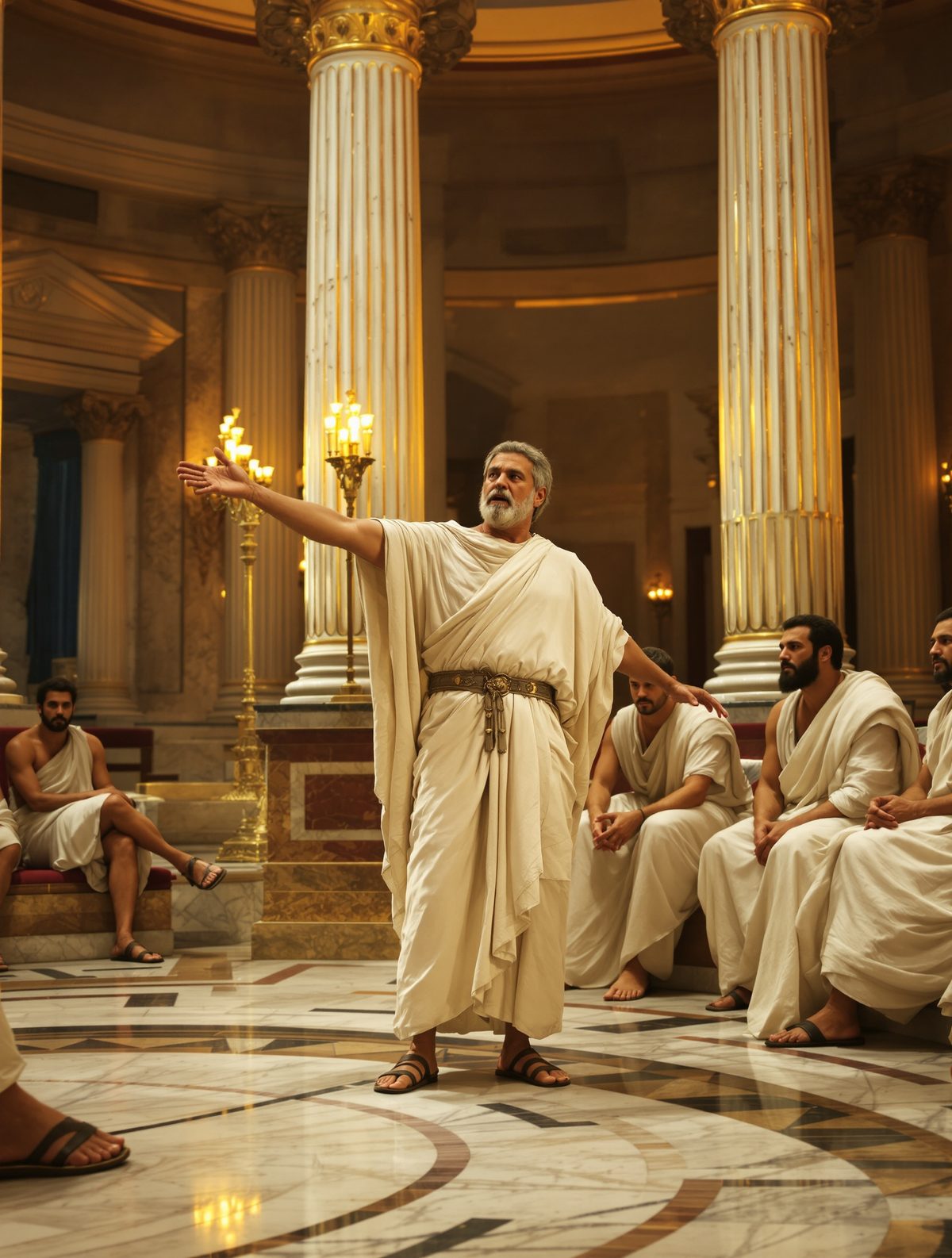
Years earlier, Solon had toured Croesus' opulent palace and, unmoved, lectured him that true happiness should only be judged at the end of one’s life. At the brink of death, Croesus understood this painful truth.
Legend says that as Cyrus, watching from a distance, heard Croesus' pleas, he ordered the pyre to be extinguished, curious about what could drive a man to call so earnestly in his final moments. The story goes that, moved by Croesus' tale and impressed by his dignity, Cyrus spared his life and made him an advisor.
The Lasting Legacy
Croesus' tale is a timeless study in the perils of arrogance and misinterpretation. Despite the richness of his reign, his legacy reminds us that wealth and power are fleeting in the grand tapestry of history. The Oracle's words resonate as a cautionary tale; they teach us that wisdom often lies in understanding beyond the surface, in questioning our desires and assumptions.
The echoes of Croesus' story persist — a reminder that the pursuit of expansion and power without fully understanding the consequences can lead to one's downfall. From the banks of the Halys to the forge of the Persian Empire, the lesson remains clear: not every victory is as it seems, and sometimes, foresight requires humility as much as intuition.