January 1919. The desert wind carried the scent of bitter dust over the battered walls of Medina.
The Stubborn Protector of Medina
Medina, one of Islam’s most sacred cities, stood at the heart of a military drama that exemplified resilience and defiance during World War I. Commanding this saga was Fahreddin Pasha, an Ottoman commander who became known as the ‘Lion of the Desert’. When the armistice was signed in 1918, effectively dissolving the once-great Ottoman Empire, Fahreddin Pasha represented an indomitable spirit by continuing to hold Medina against the advancing Arab and British forces.
The Ottoman sultan had long regarded the holy cities of Mecca and Medina as the spiritual jewel of the empire. When the Great Arab Revolt erupted in 1916, targeting the disempowerment of Ottoman rule, the capture of these cities became a strategic aim for the Allies and Arab nationalists. Fahreddin Pasha was appointed as the governor and military commander of Medina, charged with protecting the city at all costs. Determined not to let the holy city fall, he prepared his men for an unimaginable siege, knowing that surrender could destroy the remaining semblance of Ottoman influence in Arabia.
A City Besieged yet Unyielding
For over two years, Fahreddin Pasha and his garrison of approximately 5,000 soldiers endured relentless attacks and a suffocating siege. By the end of the war, Medina had become an isolated island in a sea of hostility. The city faced acute shortages of food, water, and medical supplies. The soldiers were reduced to a meagre diet of dates and the occasional camel or horse meat, as Fahreddin Pasha’s personal food reserves sustained them.
The siege of Medina became a military anomaly of the war. Throughout this ordeal, Fahreddin Pasha communicated with the Ottoman command through a perilous telegraph route that snaked across unyielding desert sands, a miracle of survival considering the hostile environment. His troops, fortified more by faith than food, revered him for his unwavering determination.
While most of the Ottoman Empire had succumbed to the Allied forces and internal uprisings, Fahreddin Pasha’s resolute stand in Medina became a point of pride for many Ottomans. His commitment to the city was matched only by his austere and stoic leadership. Stories emerged of Fahreddin Pasha carrying a Qur'an in one hand while issuing orders with the other, underscoring his spiritual and military resolve.
The End of a Siege and a Gesture of Honor
In January 1919, faced with the irrevocable reality of supply shortages and the overwhelming odds against him, Fahreddin Pasha made the painful decision to surrender. When British officers finally entered the thoroughly beaten city, they found not an embittered commander but a man whose eyes brimmed with unshed tears at the thought of leaving the sanctuary he had so zealously protected.
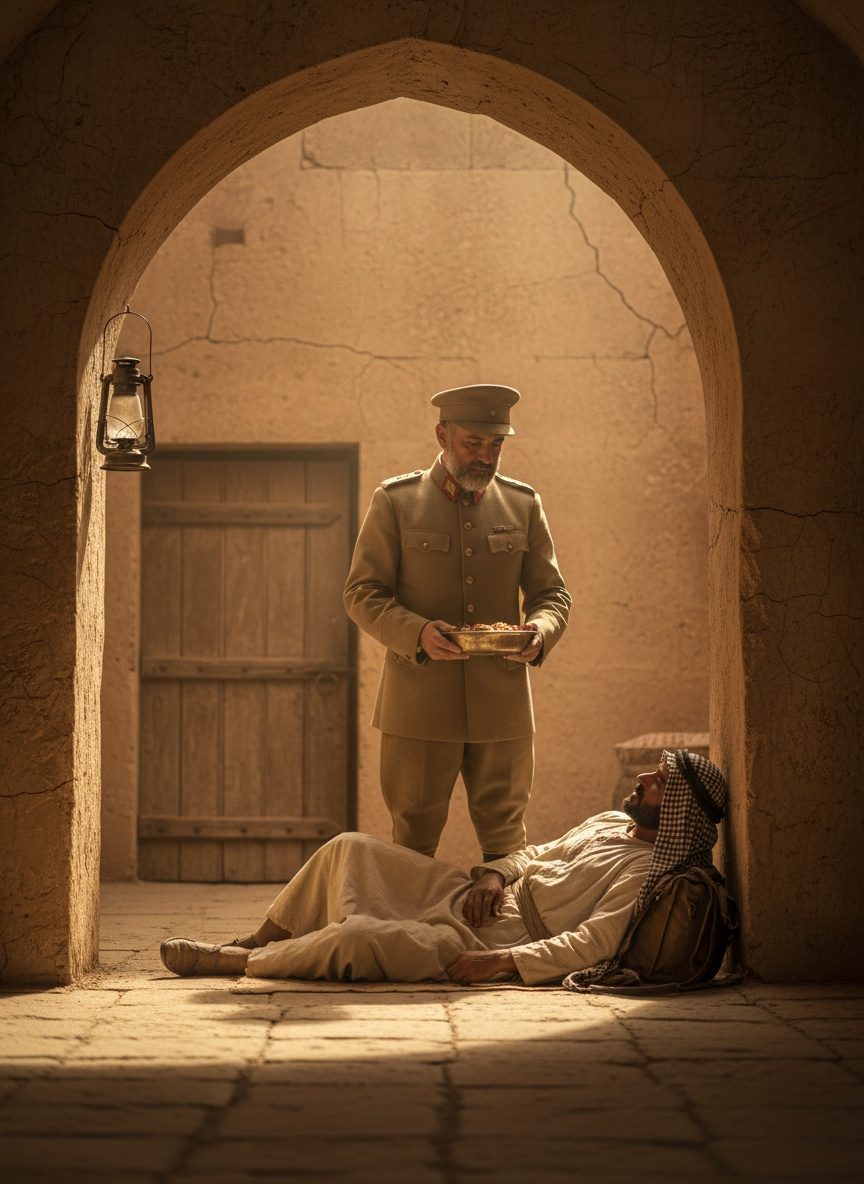
Despite the privations suffered by his men, Fahreddin Pasha instructed his followers to share what little provisions remained with the wounded enemy soldiers. This extraordinary act of compassion and honor won him the respect of both his allies and adversaries. When he emerged from the city gates to officially surrender, it was with full military honors — a rare mark of respect from the British officers and Arab leaders who had come to recognize in him a kindred spirit of courage and dignity.
In the annals of military history, the sight of Fahreddin Pasha feeding his wounded foes remains one of the most poignant images of wartime chivalry. It was the culmination of a long struggle fought in harshest conditions, a testament to the humanity that can persist even amidst the desolation of warfare.
A Legacy Carved in Stone
The story of Fahreddin Pasha and the Siege of Medina is more than just an episode of military endurance; it is a narrative rich with the complexities of loyalty, faith, and the deep connections formed between people and their faith. The fortifications that once defended Medina have long since crumbled, but the moral fortitude displayed by Fahreddin Pasha endures as an inspirational tale.
Why does this story matter? Because it reminds us that amid the chaos and ruin of war, there can exist moments of transcendence, where human decency defies the bounds of conflict and animosity. Fahreddin Pasha's legacy, enshrined in the sands of Medina, offers us a narrative not just of an empire's collapse but of the dignity that can remain unyielded in the face of inevitable defeat.