1918. Dust hung heavy in the air over Medina, a city suffocating under the weight of war and siege. The evening sky, painted with desperate hues of orange and crimson, bore silent witness to human resilience that defied logic.
The Stubborn Defender of the Prophet's City
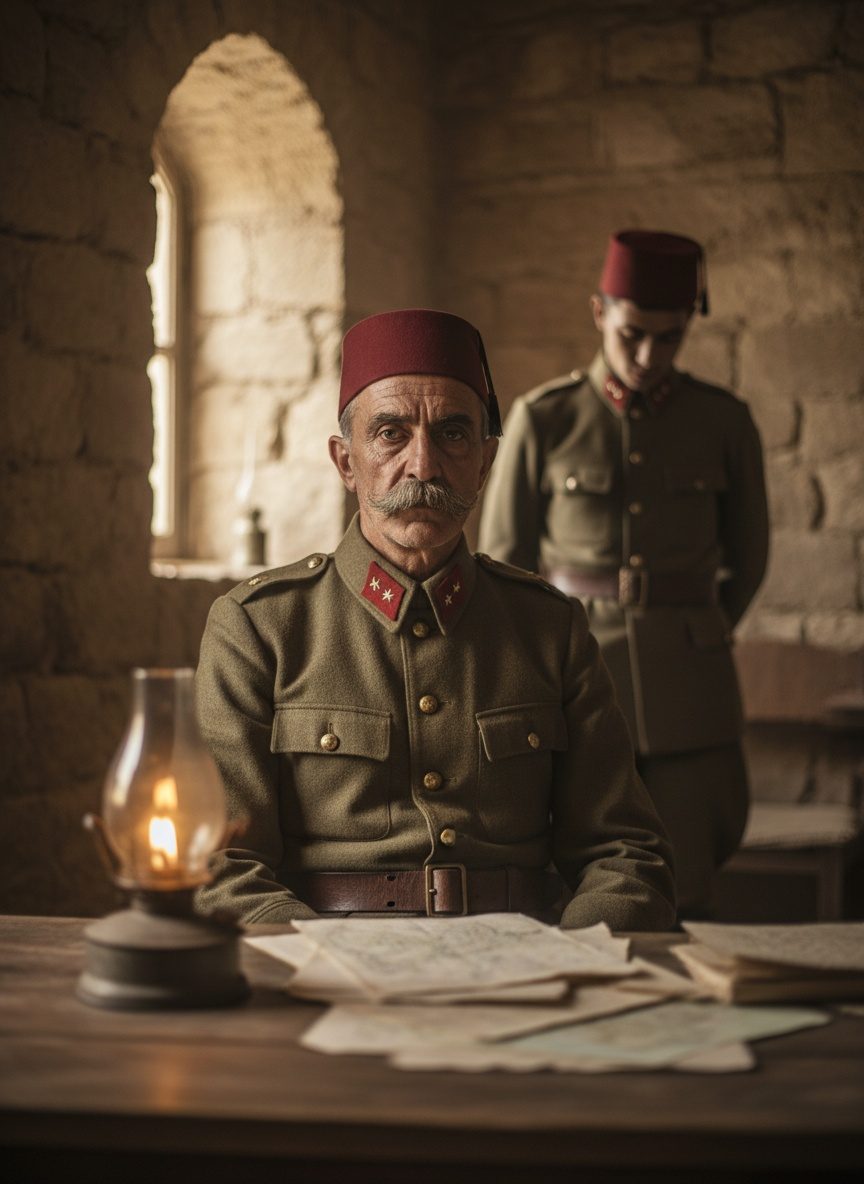
Fahreddin Pasha was a man of unwavering conviction. As the Ottoman Empire cracked and crumbled around him, he stood resilient, a lone sentinel among the ruins, refusing to relinquish Medina—the city of the Prophet Muhammad and a bastion of spiritual significance. For nearly two years, Pasha conducted his unyielding defence, transforming this hallowed ground into an arena where loyalty and defiance intermingled.
During World War I, the Ottoman Empire, once a formidable force straddling three continents, began to capitulate under the pressure of Allied and Central Powers. Commanders everywhere laid down arms, relinquishing territories faster than treaties could be rewritten. Yet, under Siege and countless odds, Pasha stood tenacious in Medina. Despite the lack of reinforcements or orders from Istanbul, his raison d'être was explicit: Medina was not a military theatre; it was a sacred trust.
This fierce devotion confused and frustrated his adversaries. With supplies dwindling, the perennial question hung in the air: Why persist? But Fahreddin's motives were not simply the machinations of military logic. To him, surrendering Medina was akin to abandoning his faith, an unthinkable betrayal that no war or peace could justify.
An Act of Humanity Amidst Desperation
As the months turned to years, Medina, cut off from the outside world, began to starve. The abundance of the past was reduced to scarce, precious morsels. Food became a currency more valuable than coin or creed, and the city's once-thriving populace transformed into silent phantoms wandering half-alive through its dusty streets.
Fahreddin Pasha, the unwavering warrior, had yet another face—that of unexpected compassion. With resources strained to the breaking point, he faced an inconceivable choice: feed his enemies or his men. He chose the former, opting to nourish Arab prisoners before his Ottomans, an act only fathomable in circumstances that blur the lines between humanity and strategy.
This decision could have courted mutiny, but instead, it fashioned an indelible bond between the commander and his subordinates, founded not on the iron will to fight, but on a shared tenacity to endure. His compassion was not a gesture of reluctant charity, but a testament to his belief in the dignity of all lives, a belief that transcended racial and cultural divides.
Through these actions, Fahreddin Pasha imprinted his humanity upon a war-torn city. The starving, prisoner and defender alike, found in his leadership a rare honor, one not defined by conquest or capitulation, but by shared suffering and shared survival.
Surrender to the Inevitable
By January 1919, the protracted agony of Medina’s siege reached its unalterable climax. All across the former Ottoman world, lines were redrawn, and boundaries reshuffled as empires found themselves on the chessboard of a new geopolitical order. Though every logical calculation whispered surrender should be inevitable, conceding was anathema to Pasha, as alien as the raging storm of artillery that framed his vigil.
The inevitable order to lay down arms arrived not from superior command, but from a creeping reality as tangible as the fatigued soldiers among Medina's garrison. Pasha, burdened yet unbowed, faced his moment of surrender in the early months of 1919.
Despite his resolute front, the act of handing over the city was no mere military ritual; it was a matter steeped in profound sadness, etched in common humanity, and variegated by the tears rolling down the cheeks of an indomitable commander. Pasha crafted his farewell in a flood of emotion, aware that surrender was not a cowardice act but a nuanced, multi-layered sacrifice.
Why Fahreddin Pasha chose to abide in Medina beyond rational calculation remains a point of historical intrigue. Was it merely a sense of duty convoluted by loyalty, or something more—a transcendent hold on sacred stewardship? As he finally withdrew from the city, one cannot help but consider whether, in his dogged defence, he sustained something far more intangible: the spirit of unity between individuals cast against the same crucible that had once sought to divide them.
Fahreddin Pasha's long vigil in Medina resonates as a narrative where humanity can find itself mirrored in the shadows of history—not as a chapter of continuity but as an epochal reminder of endurance, conviction, and the complexity of decisions made amidst the harshest of adversities. Within the walls of that beleaguered city, faith and tenacity found new expression, illustrating the duality of war and the binding sinews of common struggles—lessons profound and untaught, yet never to be forgotten.