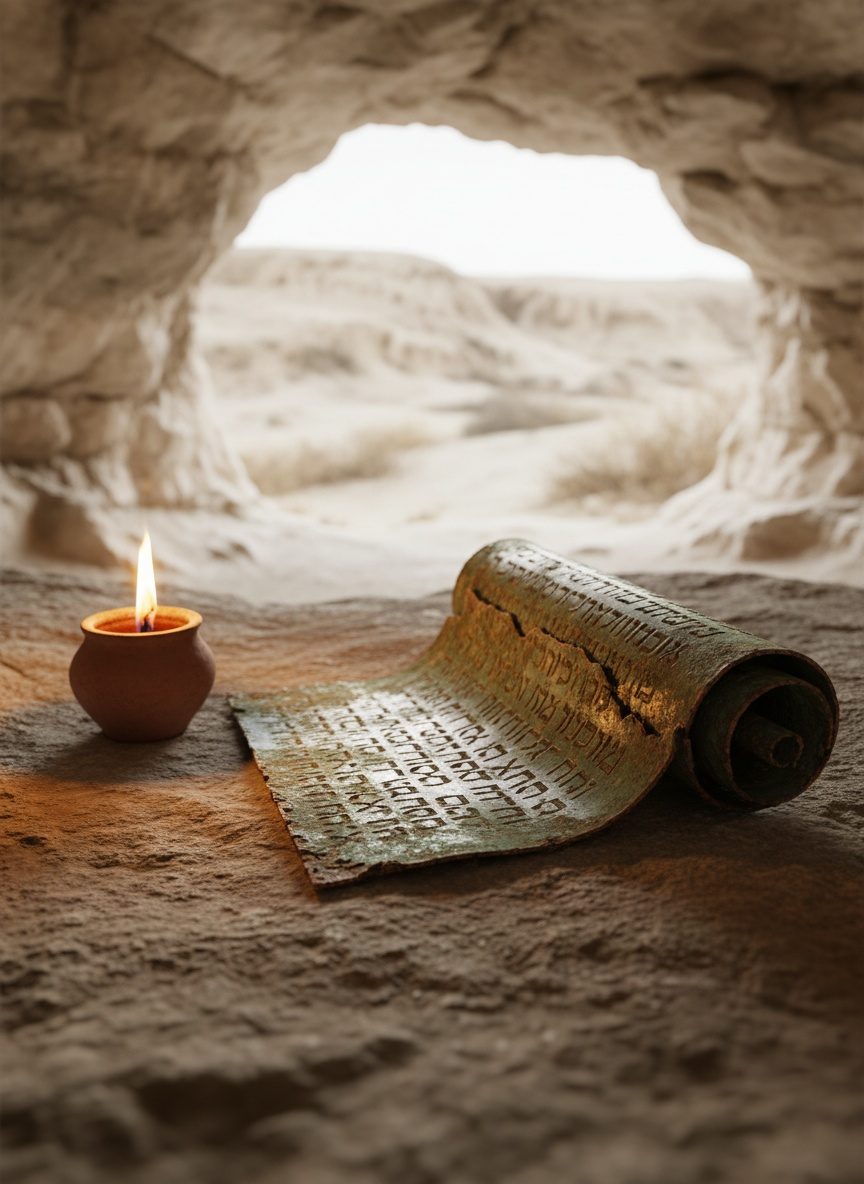
The Copper Scroll is a map to untold riches. No one has found it yet.
A Treasure Hunt in the Dust
In the vast and unyielding landscape of the Jordanian desert, where sun scorches rock and sand alike, a band of archaeologists made a discovery that would spark imaginations and confound treasure seekers for generations. It was 1952, in the somber silence of Cave Three at Qumran, a site already famous for yielding the Dead Sea Scrolls. Yet, this was no ordinary scroll of prophetic musings or ancient teachings. Here lay a document hammered into copper sheets—a material as enduring as the mystery it proclaimed.
The Copper Scroll is unlike its parchment and papyrus cousins nestled in nearby caves. Its copper surface was inscribed with a detailed list—one that outlined the locations of what some believed could be the greatest treasure trove known to history. It spoke of gold and silver measured in fantastic quantities, alongside sacred vessels and precious artifacts, hidden away in sixty-four distinct locations. The items described are treasures of such legendary status that they could rival the fabled riches of Solomon's Temple.
With excitement running high, scholars and adventurers scrutinized every copper-bound word, hopeful of unlocking the locations with cryptic names and markers. Each entry suggested not just wealth but a connection to a time and a people long since faded from memory. The scroll, with its tarnished sheen and enigmatic content, brought forth visions of clandestine priests hiding wealth during turbulent times, maybe during the Roman annexation, to preserve their culture and faith from plunder. Yet, despite exhaustive analysis and fervent expeditions, the treasures, if real, remain elusive as desert mirages.
The Enigma and the Experts
The Copper Scroll's mere existence raises more questions than answers. Unlike any other Dead Sea Scroll, it's metal-crafted nature suggests its creators meant for it to endure over ages, as if speaking to posterity from an era steeped in conflict and change. Dated to around 50–70 CE, a time when Jewish society faced seismic shifts, the questions multiply—who authored this list? What was the true purpose of these secreted treasures? Was it a safe-keeping directive or a red herring, perhaps meant to distract or divert?
Archaeologists and historians have pored over the scroll, seeking clues within the language and style. It's unlike typical Hebrew, inspiring theories that the text might have been more technical, akin to an accountant's shorthand or a priestly inventory. The destinations listed span the landscape of ancient Judea, featuring place names either lost to time or altered beyond recognition, rendering each speculative journey a puzzle unto itself.
The methodologies employed to disseminate the scroll's instructions further perplex. Origins linking the Copper Scroll to the fabled Second Temple treasures add a layer of grandeur and melancholy, considering the Jewish revolt’s tragic end in 70 CE with the Temple's destruction. This narrative frames the scroll as an artifact belonging to an epoch of religious fervor and resistance. For enthusiasts, these speculations shape a landscape for thrilling debate and exploration but offer scant in the way of resolution.
In Search of the Invisible Treasure
While the Copper Scroll tantalizes with its promise of unimaginable riches, attempts to locate them have consistently met with frustration rather than fulfillment. Accounts of fruitless digs, calculations drawn and redrawn, and expeditions fading into forgotten footnotes testify less to failures of determination and more to the multifaceted challenge posed by fading histories and converging legends. In this quest, the process often becomes as rich a journey as the loot it purports to promise.
Adventurers fueled by dreams of gold and silver dare the harsh desert clime only to encounter silence, landscapes transformed, or foundations lost beneath human development and centuries of change. While some treasure hunters persevere, convinced that beneath the rubble lie fortunes, others turn their scrutiny to historical records, seeking to bridge the chasm between the Copper Scroll's coordinates and the modern world.
Yet, perhaps the scroll's true wonder lies not in recovered relics but in its unyielding mystery. It serves as a testament to our enduring fascination with the past and the reverberating call of untapped stories inscribed long ago. Imagine the glint of a long-lost vessel reflecting starlit tales of history or the echo of clinking coins that once passed through hands now vanished in time. Such imaginings compel a relentless pursuit and reminder: some treasures are found not in what they reveal but in the relentless search they inspire.
With each retelling, the Copper Scroll invites us to ponder the nature of value, the fragility of empires, and the echoes of history traced in word and metal. It challenges us—and future generations—to sift through the sands of time for answers, even if some mysteries, like treasure chests locked and buried, remain forever beautifully out of reach.