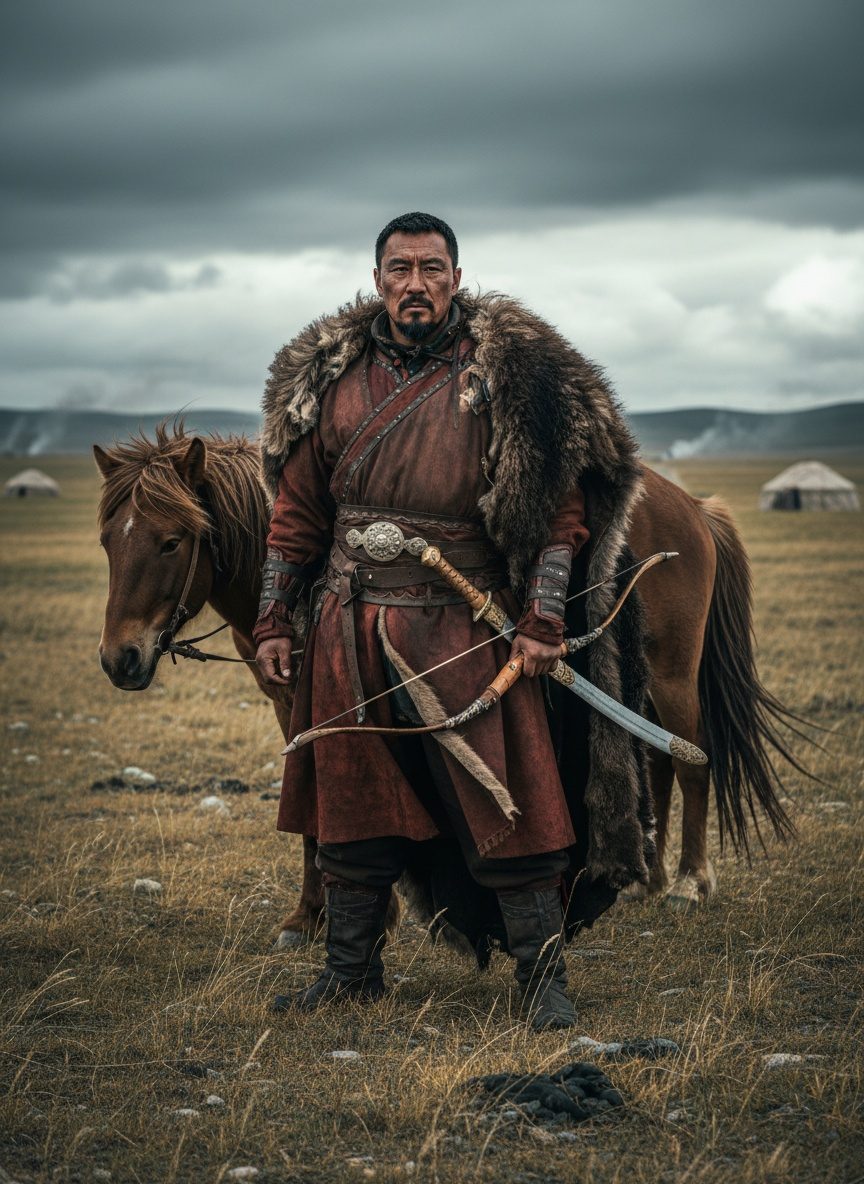
Genghis Khan's legendary conquests shaped half a continent. Yet, his most enduring legacy requires no map.
A Genetic Bombshell
The year 2003 sent reverberations through the corridors of history and genetics alike when scientists unveiled a discovery: one in every 200 men alive carried a Y-chromosome traced back to the Mongol Emperor himself, Genghis Khan. This wasn't just anecdotal heritage whispered through family stories, but a DNA-etched truth stretching back over eight centuries. Picture a wide thread extending through time, binding men across Asia, spanning from the steppes of Mongolia to the bustling cities of present-day China, and even further afield.
For a figure like Genghis Khan, whose empire once spanned vast swathes of land, this genetic influence was paradoxically intimate. Here was proof of a past leader whose legacy was not only about forgotten battles or dusty annals; it coursed through the veins of millions, unnoticed yet omnipresent. As these DNA tests circulated, a new question arose: could someone today prove their descent from such a titanic historical figure?
Undisputed Master of the Steppe
To understand how this genetic legacy came to be, we need to revisit the time of Genghis Khan's reign from 1206 until his death in 1227. Born as Temüjin, he united the fractious Mongolian tribes, forging them into a fearsome and cohesive force. His empire extended from the Caspian Sea to the Sea of Japan, an achievement reflected not only in political dominance but also an unprecedented influence over the genetic tapestry of Eurasia.
This dominance came at a cost. Genghis Khan and his descendants practiced polygamy and established extensive harems. It allowed his genetic material to be disseminated widely and effectively across his vast territories. The empire's leadership hierarchy encouraged such prolific reproduction, ensuring that his Y-chromosome would find its way into as many lineages as possible; a kind of biological blueprint of conquest that remains inscribed today.
Echoes in Modern Day
In the bustling courts of modern-day Kazakhstan, Mongolia, and other former stomping grounds of the Mongol Empire, individuals bearing the Khan name walked with a subtle new stature. A family tale taken with skepticism could now be a genetic reality. Courts, legal systems, and genealogy experts found themselves at the frontline of these identity claims. Was it possible to walk into a courtroom and prove with certainty that one’s lineage traced directly back to Genghis Khan?
Indeed, the very concept seemed more fitting for legend than reality. However, the genetic link was now an established fact, and for some, this was enough to seek recognition—though such claims were often symbolic. The undeniable connection to one of history's most formidable leaders raised personal stakes in battles over land, nobility, and identity. It was a fight not just over who they were, but who they could claim to have been.
The Yingli Connection
Under the shadows of Almaty's mountains in Kazakhstan, one man unearthed something startling. His claim of direct descent stood amidst family histories and artifacts, a personal saga that echoed a prideful resonance with a global chorus. He wasn't alone. Across the genetic map, various people began uncovering connections to the historical juggernaut, turning ancestry tests into modern-day treasure hunts.
These discoveries changed lives. They transformed cultural identities and breathed new life into historical narratives. Tourist industries in these regions saw a boon as newfound 'Khans' sought to walk the same earth as their fabled ancestor. Traditions imagined lost, resurfaced. Yet, science remained the true judge, impartial and revelatory, marking an extraordinary mingling of heritage with modern curiosity.
Where Legacy Meets Modern Identity
As remarkable as Genghis Khan's influence on genetics may seem, it portrays a larger truth about humanity's interconnected past. It reminds us that history is never fully behind us but continues to shape and redefine our present identities. This ancient conqueror's chromosomal footprint persists today, unnoticed yet omnipresent.
Why does this story matter? It's a striking example of how the echoes of history can manifest in places often overlooked—within us. As descendants of history's movements, we carry stories that shape, and at times, redefine who we are and who we aspire to be. Each person carrying Genghis's genetic legacy is a living testament to the intricate web of human lineage, a narrative unwritten until discovery unlocks its tale. In this unfolding saga, Genghis Khan reigns not on a throne, but invisibly, coursing through the veins of humanity itself.