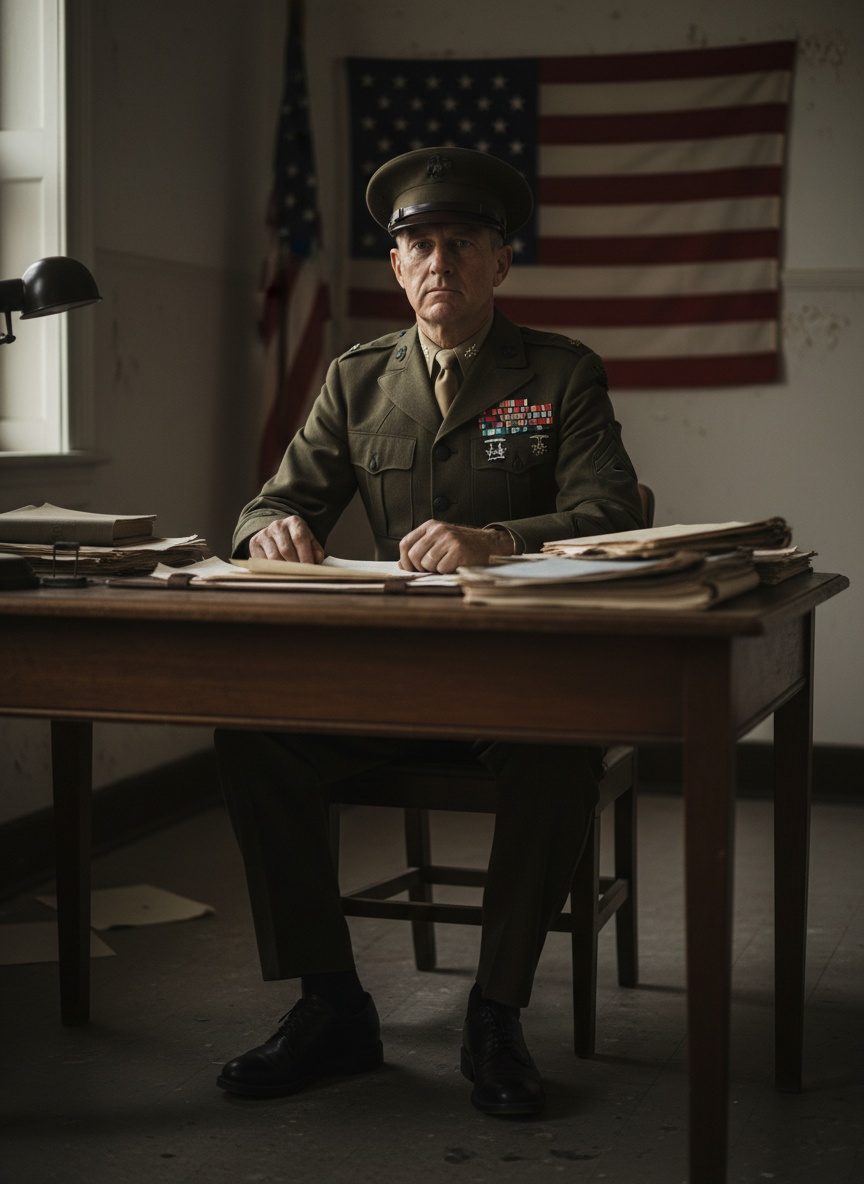
The damp chill of an early morning mist hovered over the streets of Philadelphia in 1935, cloaking the city in an eerie grey silence. The muted clatter of hooves on cobblestone punctuated the stillness, each sound reverberating with the echoes of a conflict not long past. In a modest office, far from the clamor of battlefields and the roar of charging soldiers, one man’s pen moved purposefully across the page. This was Major General Smedley Butler, a man who had waded through the fires of war and self-reflection to emerge with a confession that would shake the foundations of American imperialism.
The Warrior's Path
Beneath the steely gaze of a young Smedley Butler, the world was an expansive theatre of burgeoning ambitions and geopolitical chess games. Born into a family with a military tradition, Butler plunged into the currents of conflict at just 16, enlisting in the Marine Corps, where he would eventually find himself battling in far-off lands. The sun-baked lands of Cuba, where whispers of Spanish rifles cut through the humid air, were his first test. Each deployment pulled him deeper into the web of international entanglements, from the torrid revolutions in Haiti to the complex skirmishes in the Philippines. He earned not one, but two Medals of Honor, cementing his reputation as a distinguished officer. With every campaign, his understanding of military might and its purpose began to change, igniting the spark of doubt that would blaze into full recognition.
Empire’s Machinery
As Butler waded through the quagmire of early 20th-century conflicts, the realization that gnawed at the fringes of his consciousness became unavoidable: across each theater, whether the seething jungles of Nicaragua or the sun-drenched hills of the Dominican Republic, the battles were not merely waged for ideological supremacy or national security. They were operations with a sinister undertone. In Haiti, his actions quelled uprisings that opposed American commercial interests. In China, his presence served as a bulwark against threats to foreign investments. The machinery of empire grinded on, squeezing the lifeblood from the land for the benefit of sugar interests and conglomerates, with Smedley Butler as an unwitting cog in its calculated fervor.
The Turning Point
By the time Butler retired in 1931, a pall of disillusionment colored his view of the very battles that had defined his life. Shielded by the respect his rank afforded him yet burdened by an unspoken guilt, he began to unravel the complex tapestry of his military career. Speech by speech, his discordant voice rose against the tsunami of militarism, declaring what seemed impossible from a man so deeply embedded in its culture: that he had been a "racketeer for capitalism," serving as a high-class muscle for business interests seeking gains beneath the guise of patriotic duty. His forthright revelation sent shockwaves through an America that worshipped its war heroes and seldom questioned their aims.
A Revolutionary Revelation
Butler’s 1935 book, "War Is a Racket," reads not just as a memoir, but as a manifest of upheaval, an alarming critique from a man who had witnessed his compatriots spill blood under the banner of commercial pursuits rather than noble causes. He dissected the harsh truth that war, for all its valor and glory, was also an unspoken affirmation of capitalistic interests. It was a confession lodged in the conscience of a nation wrestling with its identity as a burgeoning world power. His words resonated in corridors of power, challenging policymakers to re-evaluate the very roots of American interventionism.
More than Just a Confession
In the final analysis, Smedley Butler’s story matters not merely for its dramatic pivot from celebrated soldier to outspoken critic, but for the shadow it casts upon our understanding of warfare and capitalism. His revelations compelled America to face uncomfortable truths about its pursuits: the unsettling truth that the sacrifices of war might be less about defending democratic ideals and more about lining corporate pockets. Today, as nations navigate the delicate balance between military engagement and economic interests, Butler’s candor serves as both a cautionary tale and a guiding light, urging future generations to scrutinize the motives behind the battles they wage and the causes they champion.