In the heart of ancient Mesopotamia, amid the sun-baked plains of Sumer, a tale of power, exile, and resilience unfolds. Nearly five millennia ago, an extraordinary woman named Enheduanna wielded influence as both high priestess and poet. Her words, etched into history, bear witness to a story of political upheaval and personal courage. Though time attempted to erase her legacy, Enheduanna's voice emerged resiliently from the shadows, ensuring her place as the first recorded author in human history.
The Rise of a High Priestess
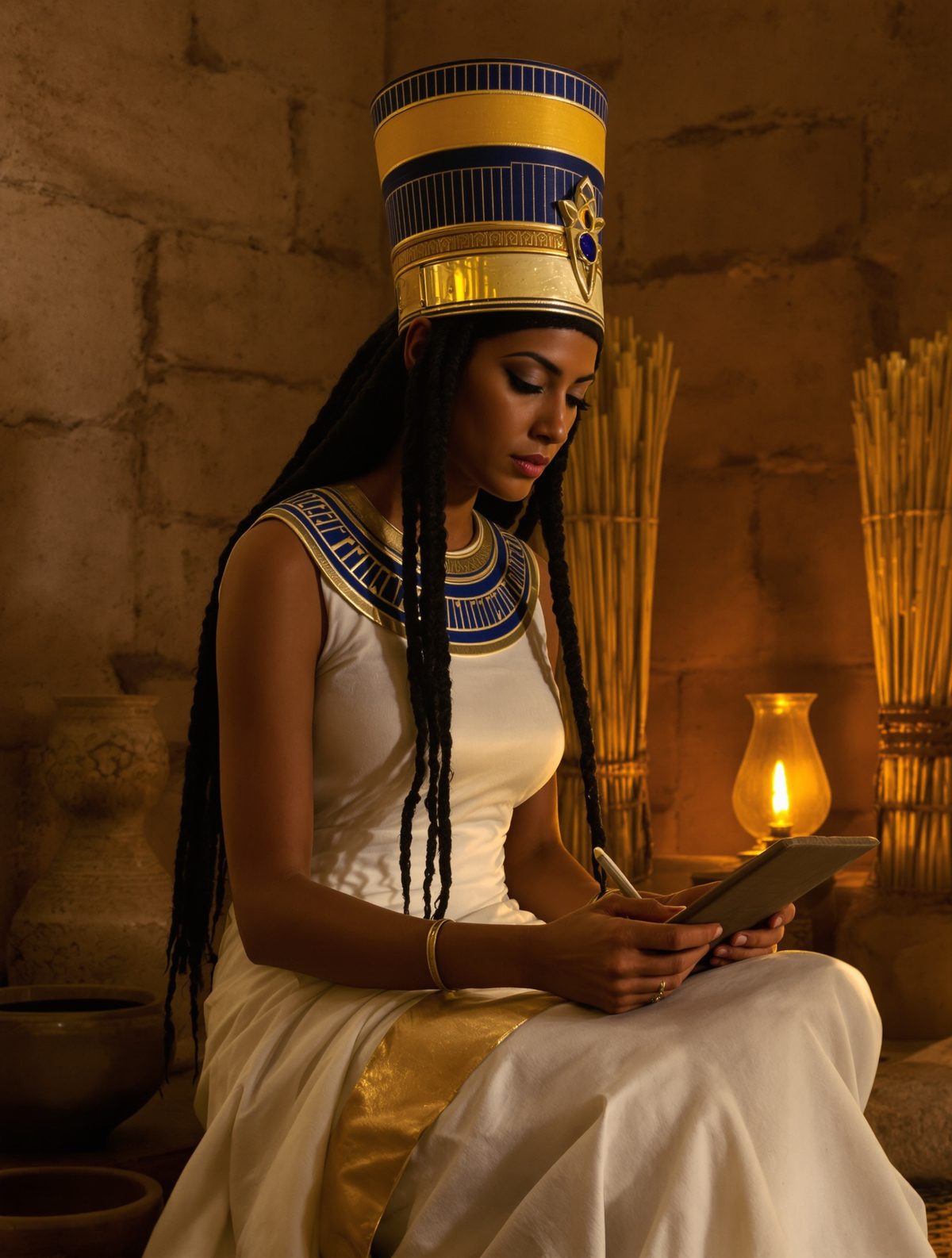
Enheduanna was born around 2300 BCE, a daughter of the legendary Sumerian king Sargon of Akkad, renowned for founding the first great empire. Her rise to prominence, however, was shaped by more than her royal lineage. She was appointed En priestess of the moon god Nanna at Ur, a role that cemented her as a religious and political powerhouse across Sumer. Enheduanna's position was not just ceremonial; she wielded substantial influence over the spiritual and cultural life of the region.
Imagine the bustling city of Ur, resplendent with its ziggurats rising against the desert expanse. Enheduanna's presence in this vibrant metropolis wasn’t merely administrative; she was the bridge between the divine and the earthly realms. Her hymns and poetic works celebrated the gods and pleaded for their favor, reflecting the zeitgeist of a civilization seeking order and divine support. These compositions were meticulously inscribed on clay tablets, ensuring that her name, and stories, echoed through the corridors of time.
The Usurper’s Treachery
Enheduanna's world was upended when a political coup thrust the city into chaos. Her father’s empire, like all empires, faced threats from without and within. The city of Ur fell into the hands of the usurper, Lugalanne, who sought to sever the spiritual and political ties that Enheduanna had carefully nurtured.
Stripped of her title and exiled from her own city, Enheduanna faced a calculating enemy determined to rewrite the power dynamics of Sumer. Her removal was an act designed not merely to silence a powerful woman, but to weaken an entire religious fabric that supported her father’s lineage. Cast out from the sacred precincts of the temple, she found herself in a perilous limbo, a pawn in a brutal game of thrones.
Writing Her Way Back
In the face of such adversity, Enheduanna’s voice found strength in her exile. Separated from the temple, she composed a cycle of poetic lamentations and hymns, articulating her anguish, resilience, and faith. The most poignant of these is her "Exaltation of Inanna," a masterpiece where she calls upon the goddess for justice and restoration.
"I, Enheduanna, will recite my prayer; I will utter my heart's great sorrow. My lady, I will tell you: this fits you." Through these words, she crafted an intimate plea to Inanna, whom she equated with power, love, and war. Enheduanna's use of personal pronouns was a revolutionary act, marking the first usage of an individual's perspective in written history. This singular voice painted a striking picture of human vulnerability and defiance, giving her authorship a distinctly modern resonance.
Remarkably, these works not only articulated her struggle but also catalyzed her return. Her skillful use of language and religious influence rallied support, and Enheduanna was reinstated to her position, a triumph of intellect and spirit over raw might.
The Legacy of a Forgotten Voice
For centuries, Enheduanna's name faded into the recesses of history, her contributions overshadowed by time and successive cultures. It was not until the mid-20th century, when archaeologists unearthed her clay tablets at sites like Ur and Nippur, that her story began to reemerge. These discoveries revealed not only her literary genius but also her unique role in the melding of art, religion, and politics in the ancient world.
As scholars deciphered her work, they uncovered a dual legacy: Enheduanna was not only a vital figure in the canon of world literature but also a powerful reminder of the enduring struggle for women's voices throughout the ages. The exquisite rhythm and profound imagery in her hymns foreshadowed the elegies of poets across millennia, revealing a timeless thread of human expression.
Why Enheduanna Still Matters
Enheduanna's story is not just one of the past; it resonates powerfully today. Her resilience in the face of overwhelming challenges speaks to the universal fight for expression and recognition. In her era, women’s roles were often diminished or altogether invisibilized, yet she wielded her pen to carve an indelible mark on history.
In an age where voices are still silenced and narratives rewritten, Enheduanna's legacy serves as a potent reminder of the power of words to transcend time and oppression. Her life urges us to champion those whose stories remain untold and to ensure that the ink of our experiences is never erased. Her voice, echoing across the millennia, challenges us to preserve the sanctity of expression and to honor the origins of our literary heritage.
Enheduanna may have been forgotten, but her words, etched into clay, demand remembrance. Through them, she whispers to us today, urging us to bear witness to the resilient human spirit encapsulated in the art of storytelling.