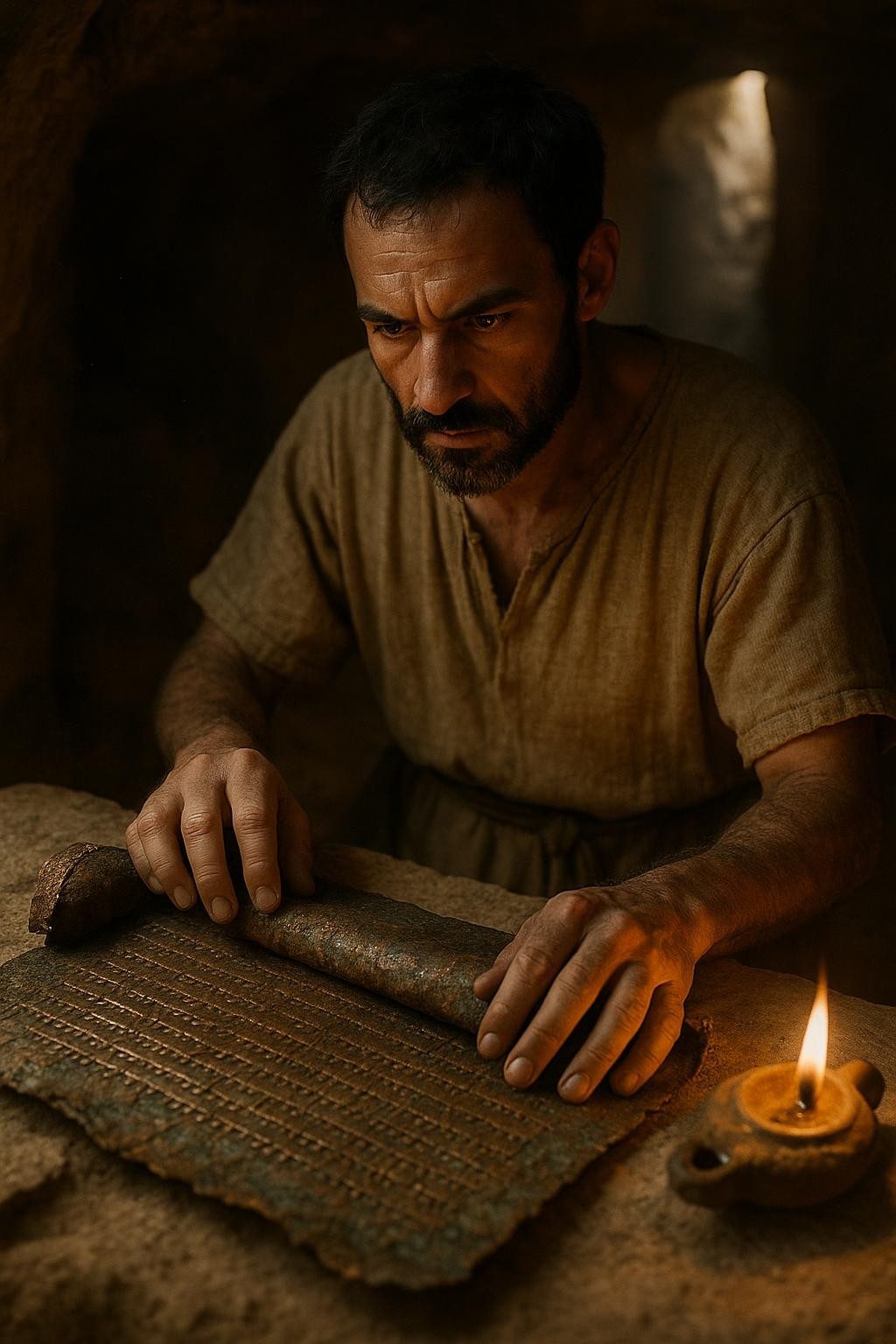
The name Enheduanna might be unfamiliar to many. That's exactly why her story is so extraordinary.
The Shadowy Form of a High Priestess
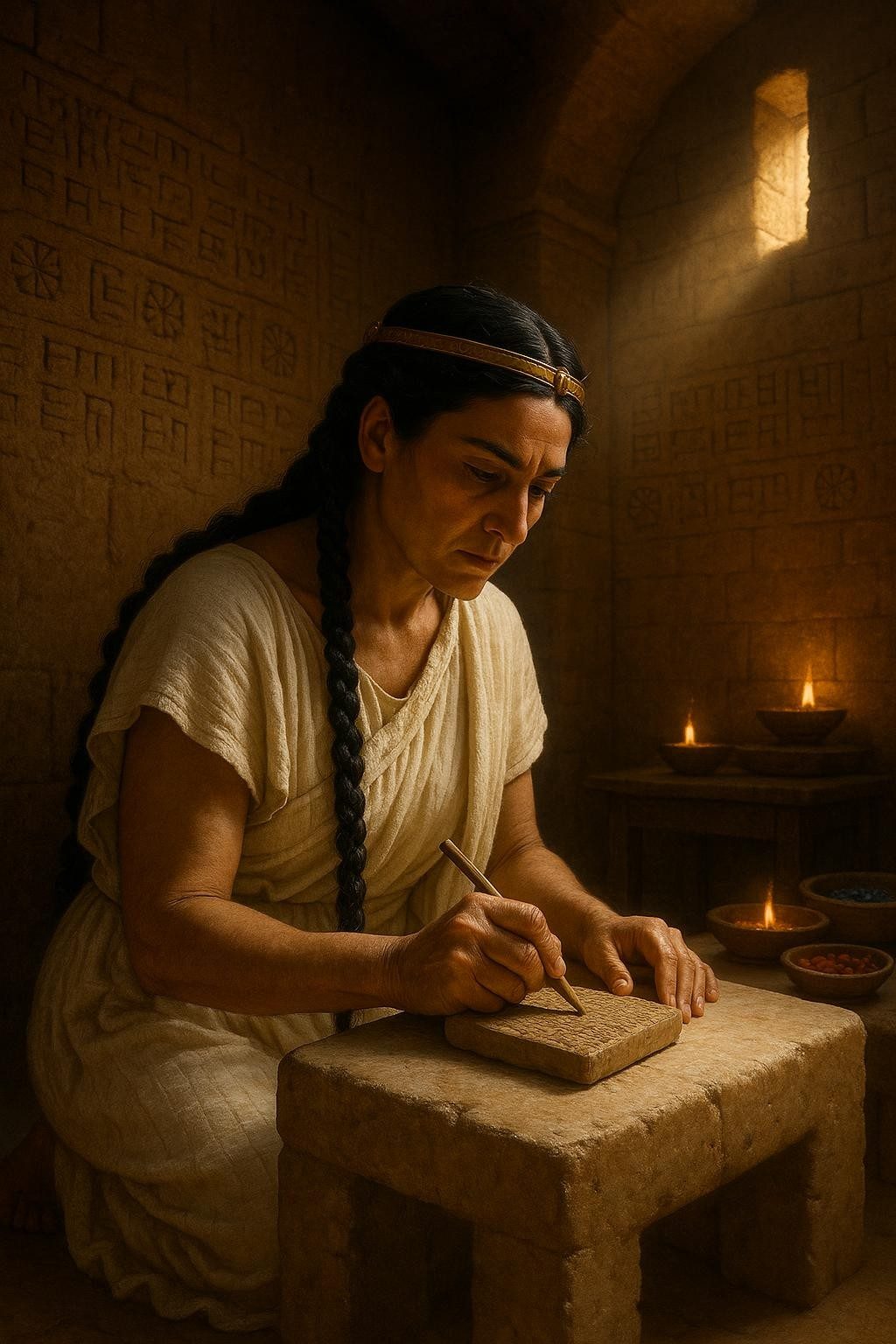
In the ancient land of Sumer, nestled in what we now call southern Iraq, the civilization bore witness to something remarkable. Around 2285 BCE, within the sacred halls of Ur's towering ziggurat, an influential figure emerged from the shadows to illuminate her name across the sands of time. Enheduanna, the high priestess of the Moon God Nanna, did something unprecedented. She inscribed her name onto clay tablets, not just as an identifier but as a declaration of authorship—branding her soul into the legacy of literature itself.
Picture the bustling life of ancient Mesopotamia, where each sunrise spills over sprawling cities of mud-brick structures, and ceremonial chants fill the air around ziggurats, those grand, layered pyramidal temples that dominate the skyline. It is here that Enheduanna, daughter of Sargon of Akkad, ruled as the high priestess. She was a woman of power in a domain typically reserved for men; yet, she wielded her influence with both grace and authority, mediating between the divine and earthly realms.
Carving Words, Shaping History
As we peer back into this world through the prism of historical texts, we find Enheduanna holding a place of singular importance. Her hymns, dedicated to the goddess Inanna, resonate with an eloquence that speaks to both religious fervor and personal conviction. The lines she composed are more than mere prayers; they are sophisticated works of art that explore theology, emotion, and the human condition.
What sets her apart, beyond her acclaimed literary talent, is the audacity of self-identification in her writing. "Enheduanna, I have become the High Priestess," she proclaims in her works. Unlike the anonymous scribes of her day who labored in obscurity, she dared to claim her creations, imbuing them with a voice and identity that would echo across millennia. Her articulations were carved with a reed stylus into wet clay tablets—a process both delicate and enduring, freezing her verses in time as testament to her pioneering spirit.
The Song of Inanna
Enheduanna's hymns to Inanna do more than recite divine praises; they lay bare the complex relationship between human and deity, expressed through vibrant imagery and metaphor. Inanna, a formidable goddess of love and war, is not merely celebrated for her beauty and strength. Instead, Enheduanna delves into multifaceted depictions of divine wrath, compassion, and justice, presenting Inanna as a formidable and nuanced figure.
Consider the vivid portrayals within these hymns: from the shifting constellations to the swelling tides, Inanna's might is painted with linguistic precision that conjures vivid, tangible images for the reader. Through Enheduanna’s words, the goddess’s attributes become as palpable as the clay tablets themselves. Such was the power and range of Enheduanna's poetry—drawing not only from her role as a spiritual leader but also as a woman articulating the trials, tribulations, and triumphs of her existence.
The First Author, a Timeless Legacy
The significance of Enheduanna extends beyond her literary prowess. Her life's work marks a shift in cultural appreciation for the individual voice, laying groundwork for the evolution of authorship as a recognized and celebrated concept. This emergence of individual narrative in writing began to shape our understanding of authenticity and owner of thought—a mental leap that would resonate throughout literature in the ages to follow.
Her hymns were not forgotten; they transcended centuries, copied and recopied by scribes who preserved her words for generations. Her legacy would arise from the flow of ancient Euphrates to ripple through the corridors of academia, art, and history. Enheduanna's contribution is acknowledged today as not only the earliest known named author but also a trailblazer for female voices in a male-dominated cultural landscape.
Why Enheduanna’s Story Endures
More than 4,000 years have passed since Enheduanna etched her name into clay, yet her narrative remains profoundly relevant. In a world where authorship and intellectual property are fiercely defended, she reminds us that the struggle for identity and recognition is a timeless pursuit. Her bold declaration of self within her works challenges us to consider the power of voice and the courage required to wield it.
Enheduanna's life and legacy urge us to acknowledge the underestimated contributions of women throughout history and recognize the untold stories that may still lay hidden. Her narrative is not just an account of historical firsts; it is an enduring symbol of resilience, creativity, and the unyielding human spirit that seeks expression and understanding across all ages. Within the image of a lone woman inscribing her name before the divine, we find a call to honor the past by daring to leave our own mark on the world.