Most of us don’t expect to uncover gripping drama at a Viking feast. Except, in the hall of King Eirik Bloodaxe, poisoned cups and carved runes were the star attractions.
The Feast Like No Other
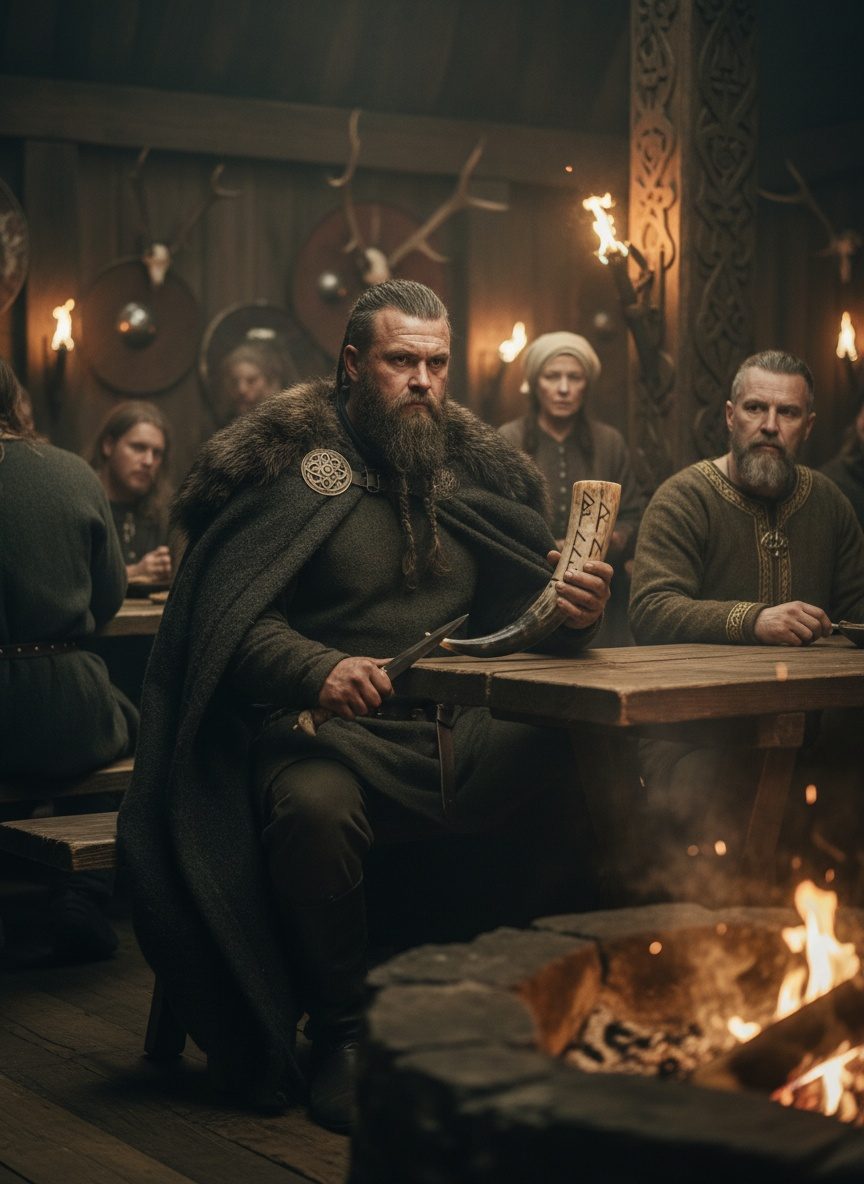
The air was heavy with the mingling scents of roasted meat and ale, blending endlessly with the smoke that curled from the hearth fires. The hall was loud, its timbered roof echoing with the laughter and rough singing of warriors who had lived through countless battles. It was here, amidst this raucous celebration, that a subtle threat lingered in the shadows, aiming directly at Egil Skallagrímsson, a man known not only for his epic deeds but his biting words.
Egil, a renowned skald — a Viking warrior-poet — had already etched his name into the annals of history through his powerful sagas and poems that could both honor and shame kings. His poetry, as sharp as his battle axe, had previously inflamed this very king. King Eirik Bloodaxe, a monarch with as fierce a reputation as his gruesome moniker, was not the sort to forgive lightly. Thus, a plan was concocted, all under the guise of merriment and brotherhood. Egil was not meant to leave this feasting hall alive.
A King's Icy Resolve
King Eirik Bloodaxe was amongst the most feared rulers of the Viking Age, a man celebrated for his martial prowess and dreaded for his merciless nature. Intrigues and power plays defined his reign. Upon arriving at the feast, Egil bore witness to the king sitting enthroned, his eyes like polished flint, cold and calculating over the feast that seemed eerily festive for its deadly undercurrent.
To Eirik, appeasing or eliminating threats swiftly was a matter of survival and strength. And Egil, with a poem that had smeared the king’s dignity, had irreversibly marked himself as an adversary. It was said that words held power, and Egil knew too well the precarious nature of a king's ego — a lesson taught through the tolls of kinship discontent and honor-bound feuds.
The Horn and Its Warning
As was customary, a horn of ale was passed around, each guest receiving it as both a gift and a gesture of communal trust. But as the horn was proffered to Egil, a shadow passed over his intuition like a storm cloud over a sun-hardened landscape. It was a simple horn, richly carved to reflect the grandeur of the occasion — or so it seemed. Under its open mouth lay a whisper, an insipid mist of betrayal known only to Egil.
Legend has it that it was not just mere suspicion that called Egil to action but the presence of runes, sacred and secret — the language of the gods. Before lifting the cup to his lips, Egil took a blade, slicing into his palm, his own blood the ink needed for the arcane letters. To the onlookers, it might have seemed a ritualistic charm every bit as ancient as their own existence, but for Egil, it was a matter of life and death.
The Unraveling Magic
The hall fell into a tense silence. All eyes watched as Egil, with deliberate precision, carved the runes into the horn. As though holding an audience on its tightrope of unfolding fate, Egil spoke the runes’ powers, bridging the mortal and the divine. When Egil finally raised the cup, his words woven into the fabric of the vessel’s very structure, there was a moment suspended in expectation.
With an audible crack, the horn shattered — its presence rent violently in pieces that cascaded to the floor, followed by a desperate exhalation from those attendants closest to the spectacle. In that instant, the King’s intentions lay bare before all who had gathered. The poison, meant for Egil, was revealed as surely as if the annals of history themselves had opened to recount the coming betrayal.
Why Legends Never Fade
Egil’s poem to commemoration on that night never reached parchment or skald's lips, yet its memory lives with a potency undiminished by time. Though perhaps embellished over generations of retelling, this account serves as a stark reminder of the darker depths humanity can dip into when confronted with vanity and vengeance — that intangible, incurable need to dominate with no reckoning of kindness.
It’s not swords and axes that always decide the fates of kings and heroes, but words, searing and sharply uttered as arrows in flight. Egil Skallagrímsson didn't just defuse a plot to end his life; with eloquence and intuition, he turned the tables on one of the Viking Age's most feared rulers. Indeed, whether by the sword or the spoken word, those who carry the courage to face down kings, like Egil, are destined to be remembered long after the last mead has been drunk in their honor.