Diagoras of Rhodes watched proudly as his sons stood victorious at the most revered games in ancient Greece. But the real story of that day was etched not in the fleeting cheers of the crowd but in a single tear from an old man's eye.
The Greatest of Champions
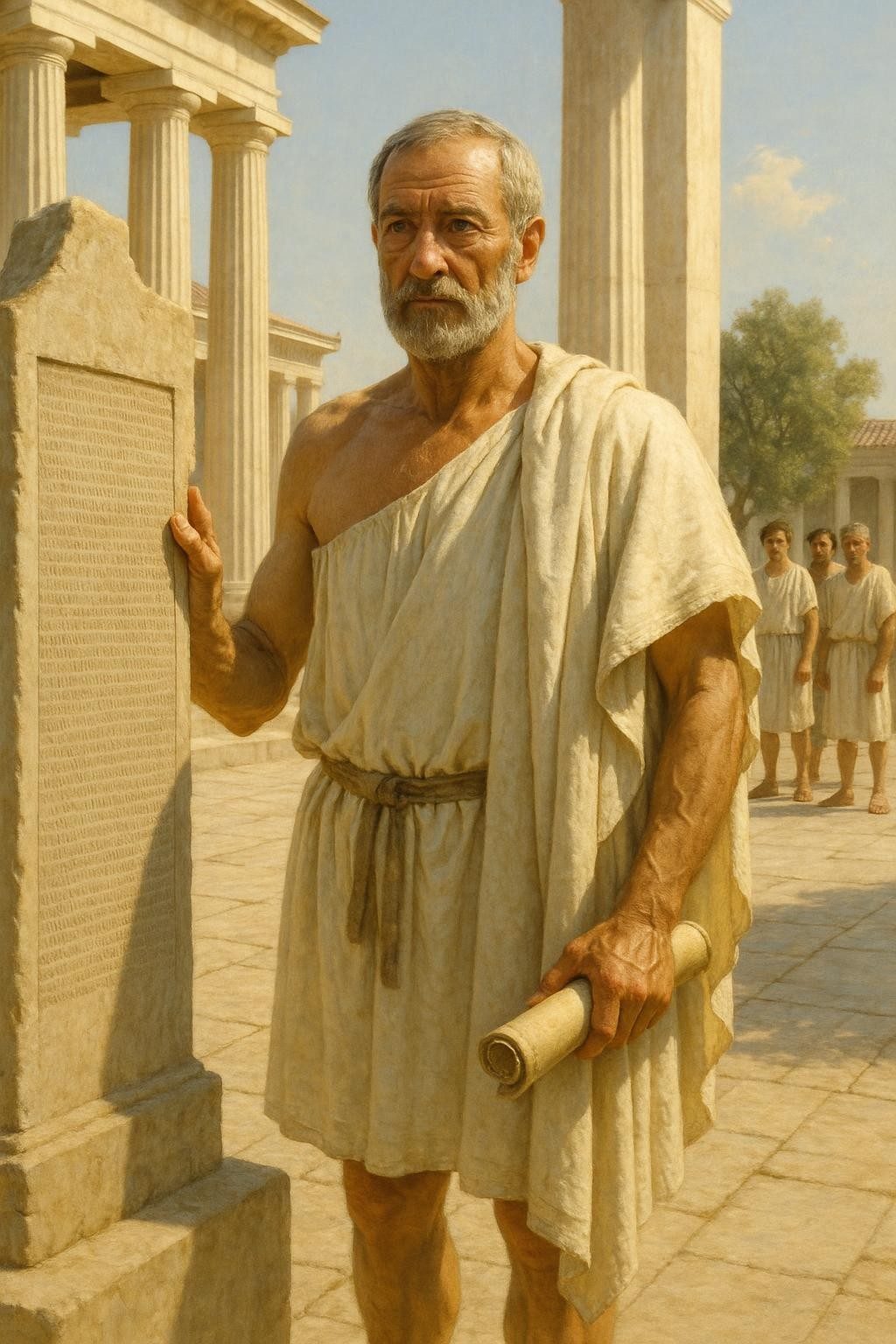
Diagoras was no stranger to the roar of the crowd. Known throughout the ancient world as one of the most celebrated athletes, he hailed from the island of Rhodes. His prowess wasn’t limited to one discipline but spanned across various games, reflecting the ethos of the ideal Greek athlete. Pindar, the esteemed poet of Greece, once commemorated Diagoras in his lofty verses, immortalizing him as the greatest of champions. Indeed, his achievements had already secured his place among the stars of his time.
But the day in Olympia, 448 BC, wasn’t about Diagoras stepping into the competition once more. Instead, he came as a father, one whose legacy was about to shine through his offspring. The scene: Olympia, a cauldron of fervor and anticipation where spectators gathered to witness feats of athletic excellence blended with divine reverence. Diagoras could feel the familiar beating of his heart echoing his sons’ promises to fight, just as he had in years past.
A Legacy Continued on the Podium
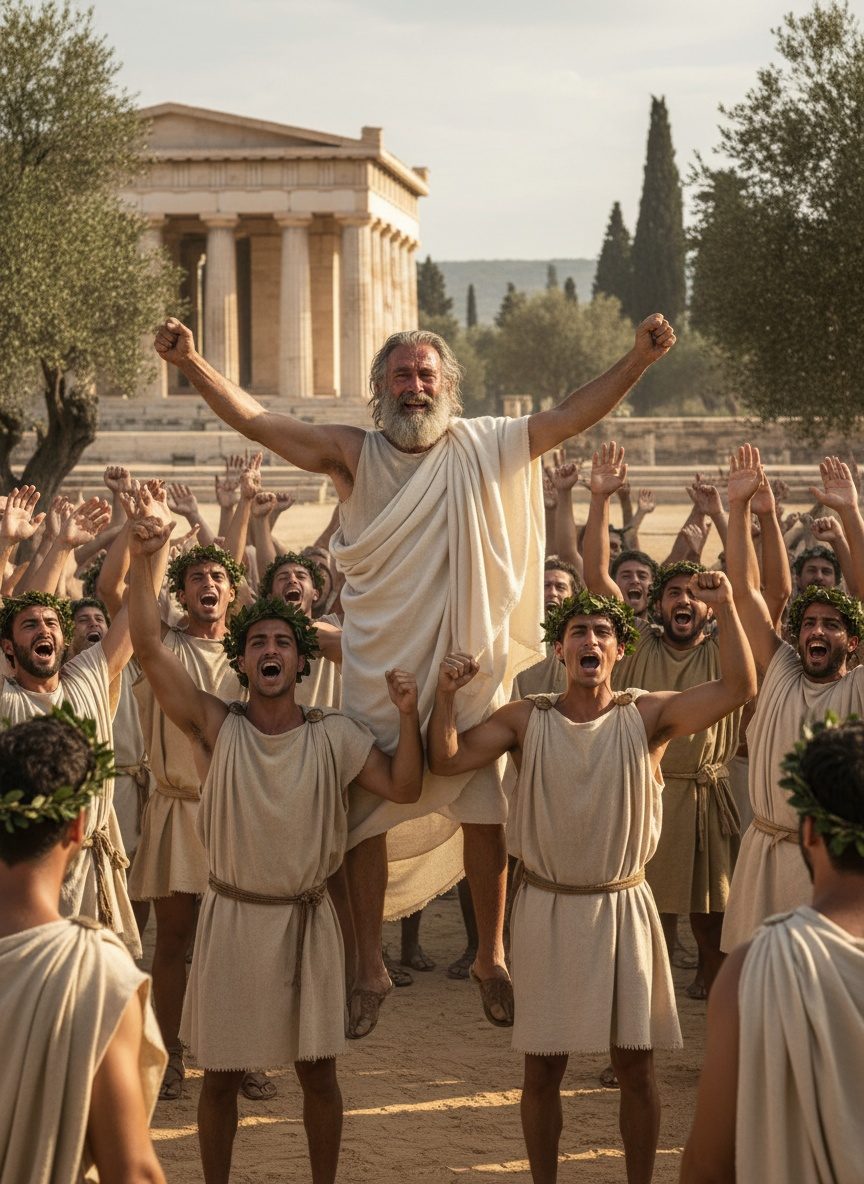
Diagoras' sons, Damagetos and Akousilaos, demonstrated remarkable skill and strength, akin to their father but distinctively their own. Together, they climbed the same heights that their father had conquered; the sacred podium where champions stood was now theirs to share. The spectators roared, not just for the sons but for the continuance of a remarkable legacy.
In ancient Greece, such a lineage of victors was more than familial pride; it was proof of a divine favor, the blessings of the gods manifested through bloodlines. To stand on the Olympic podium was not just to claim victory but to engage in a silent dialogue with immortality. A Spartan, witnessing the scene, voiced what many began to feel in their hearts: “Die now, Diagoras; nothing greater will ever come.” The sentiment was both bleak and exalted, recognizing the peak of human experience and the inevitable descent that must follow.
The Cry of an Old Man
Diagoras stood, tears welling in his eyes, understanding that his sons' triumph doubled-back to honor him, his life, and his own victories. Witnessing the heights of glory attained by his children, who now cloaked him in the same laurel wreaths that whispered of his youthful days, was profoundly moving. In that moment, a culmination of life's most fulfilling desires — love, pride, legacy — gripped him with anointed sorrow.
The Greeks believed in kleos, the glory that outlasts mortal life. Unlike the transient roar of the game, kleos echoed through generations. Watching his sons encapsulate this cycle of life, Diagoras understood not just his individual impact on history, but a renewal of life’s grand narrative. The tear wasn’t simply sadness or joy; it was an acceptance of life’s poetic circularity.
An Unforgettable Echo
The story of Diagoras and his sons became legend, whispered through gymnasiums and painted on pottery, a story that transcended time, speaking the universal language of familial bond and human striving. This scene represented more than athletic victory; it stood as a mosaic of human experience, connecting the threads of competition, kinship, and fulfillment.
The idea that the apex of experience may reside not in singular achievement but in shared success resonated deeply with the hearts of the Greeks. Diagoras' tear was a symbol resonating with humanity’s deepest inquiries: What makes a life fulfilled? How does one measure greatness?
The Endless Struggle
Today, Diagoras' story serves as a haunting reminder of what it means to truly live. The idea that one could be so at peace with one's fate — to be encouraged to die at the peak of life's richness — challenges us, especially now, as we strive for our own timeless legacies. It invites an introspection into our pursuits and dreams. Like Diagoras, whose legacy was carried forward through the success of his sons, we are reminded that achievements often find immortality through others.
In the eternal archways of human experience, where hopes and triumphs intermingle, Diagoras walked with a smile and a tear, contented, knowing that his story — their story — would ripple through time like a gentle whisper in the grand narrative of history.