In the sprawling empire of Persia, amidst the statuesque pillars of Susa, a momentous event unfolded that forever changed the fate of one man. Here, defined by its magnificence and imperial grandeur, the Persian court was the epicenter of power. Yet all the marble and gold in the world could not ease the anguish of the most powerful man on earth, King Darius the Great. Hunched in pain from a crippling ankle injury, despair shadowed the king's once-dominant prowess. Courtiers craned forward in nervous anticipation, yet none dared approach—except for one Greek slave, Democedes. The intricacies of his journey to this pivotal encounter reveal a tale of resilience, unlikely alliances, and a quest for freedom.
The Slave's Journey: Chains Across Empires
Democedes’ odyssey began on the affluent islands of the Greek city-state of Croton. A gifted physician in his own right, his reputation for medical excellence spread far and wide across the Hellenic world. However, the winds of fate transported him to the shores of Persia, a pawn traded between conquering empires. Captured by the Persian forces during one of their relentless expansions westward, Democedes was reduced to the status of a slave, a transition that would have thwarted lesser men but one that only steeled his resolve.
As he was paraded through the city streets of Susa, the towering ziggurats cast long shadows over him, each step a testament to his fall from grace. Traded like an exquisite piece of human cargo, he found himself in the possession of the Persian elites. Yet, even in chains, his mind was unshackled, always seeking opportunities that lurked in seemingly impossible circumstances.
From Despair to Hope: Entering the King's Chambers
The Persian court, renowned for its affluence, was also notorious for its rigorous expectations. The physician slaves were numerous—a testament to the empire's vast resources—but none could alleviate the king's suffering. Failed attempt after failed attempt saw the royal physicians apportion blame amongst themselves. Darius’ ankle, a stubborn Achilles' heel, resisted all remedies known to the Medes and Persians.
In desperation, an unlikely suggestion emerged from the whispers of the courtiers: why not try the Greek slave? Democedes, when beckoned to the king’s chamber, brought no potions, incantations, or exotic concoctions. Instead, he carried with him the knowledge passed down from a venerable lineage of Greek physicians, derived from practices imbued with logic and acute observation. His methods, grounded in simplicity, echoed of home but bespoke innovation to the dazzled onlookers.
The Healing Touch of a Greek
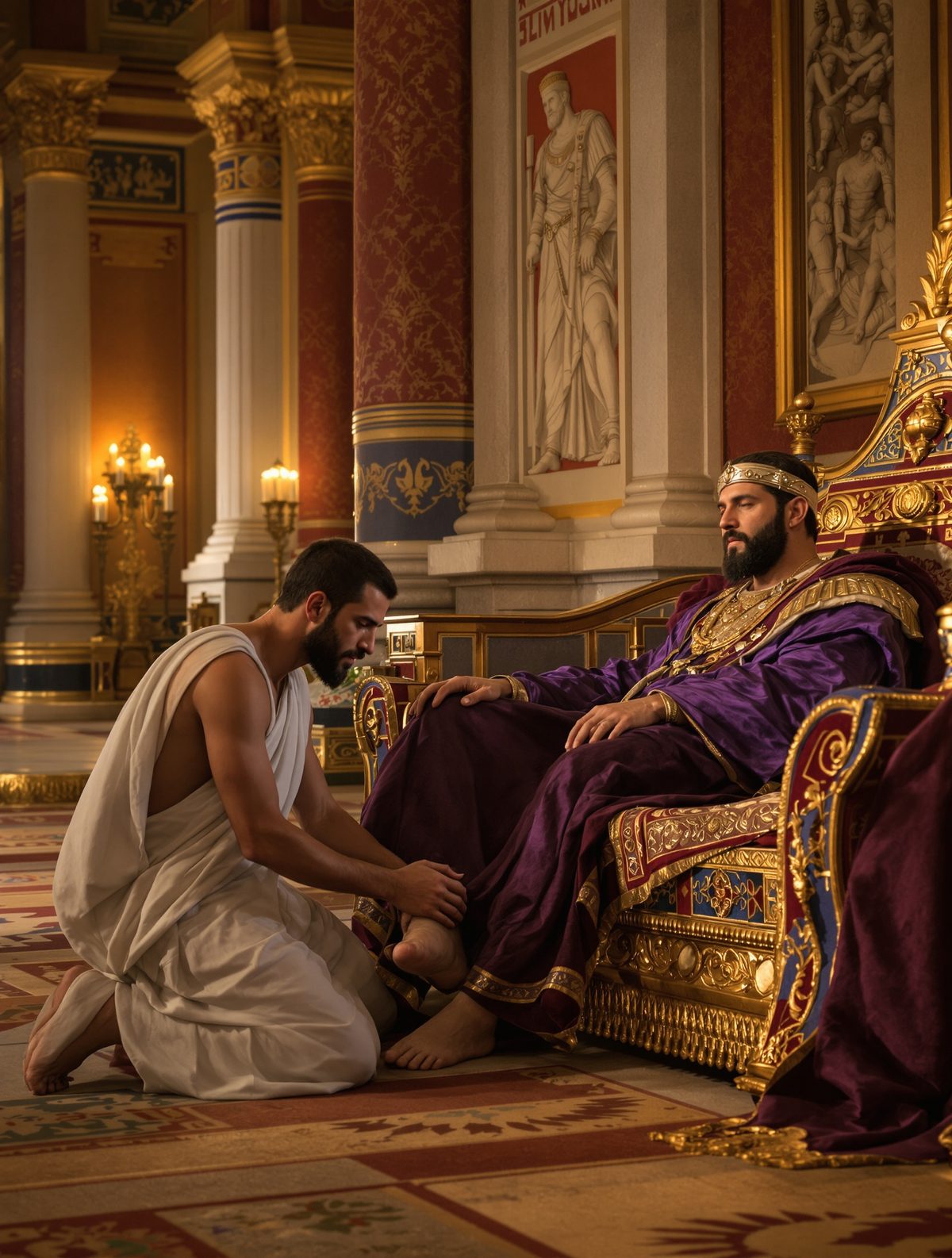
As Democedes stooped to examine the inflamed ankle, silence engulfed the room. He worked methodically, applying gentle wraps and proposing exercises and baths—a radical departure from the procedures that had preceded him. The room watched in silent awe as he demonstrated techniques no Persian had ever seen, passed down from the Asclepian sanctuaries of Greece.
Miraculously, the stoic monarch sensed the easing of his agony, and within days—a shorter span than any royal sage dared hope—the king rose, weight upon his repaired limb, an image of restored might. Darius the Great, now free from the clutches of pain, inquired of Democedes his ruination, suspecting the work of mystical origin.
The Price of Freedom: A Bold Demand
Yet, what did this Greek slave demand for such service rendered? Offers of gold, precious jewels, even lands were laid at his feet, but Democedes had only two requests: his freedom and a letter home. The court erupted in confusion, for such humility was deemed alien in a realm governed by excess. Curiosity piqued, Darius agreed, his favor won by the slave's humble audacity.
Thus, Democedes secured not only his freedom but an opportunity to reconnect with the sunlit shores of his homeland. His journey homebound would not be direct nor devoid of its own share of peril, but it signified a triumph over his adversities.
The Ripple Effect: Changing Fortunes and Perspectives
Democedes’ return illustrated a pivotal moment in intercultural exchanges between the Greeks and Persians. It shattered preconceived notions of mistrust and paved paths for future intersections of knowledge in medicine, philosophy, and governance. Subsequent events, leading up to the Greco-Persian conflicts, bore witness to a dichotomy of shared admiration yet contested dominion.
In a broader sense, Democedes’ tale underscores a timeless lesson—how knowledge and perseverance can transcend boundaries, challenge established norms, and incite change beyond one's immediate influence. His journey from bondage to freedom speaks to the power of human ingenuity and resilience in the face of adversity.
In today’s ever-globalizing world, where cultural exchanges thread deep into the fabric of societies, Democedes’ legacy offers a compelling perspective on the impact of individual actions—a testament to the enduring power of knowledge and courage that knows no bounds.