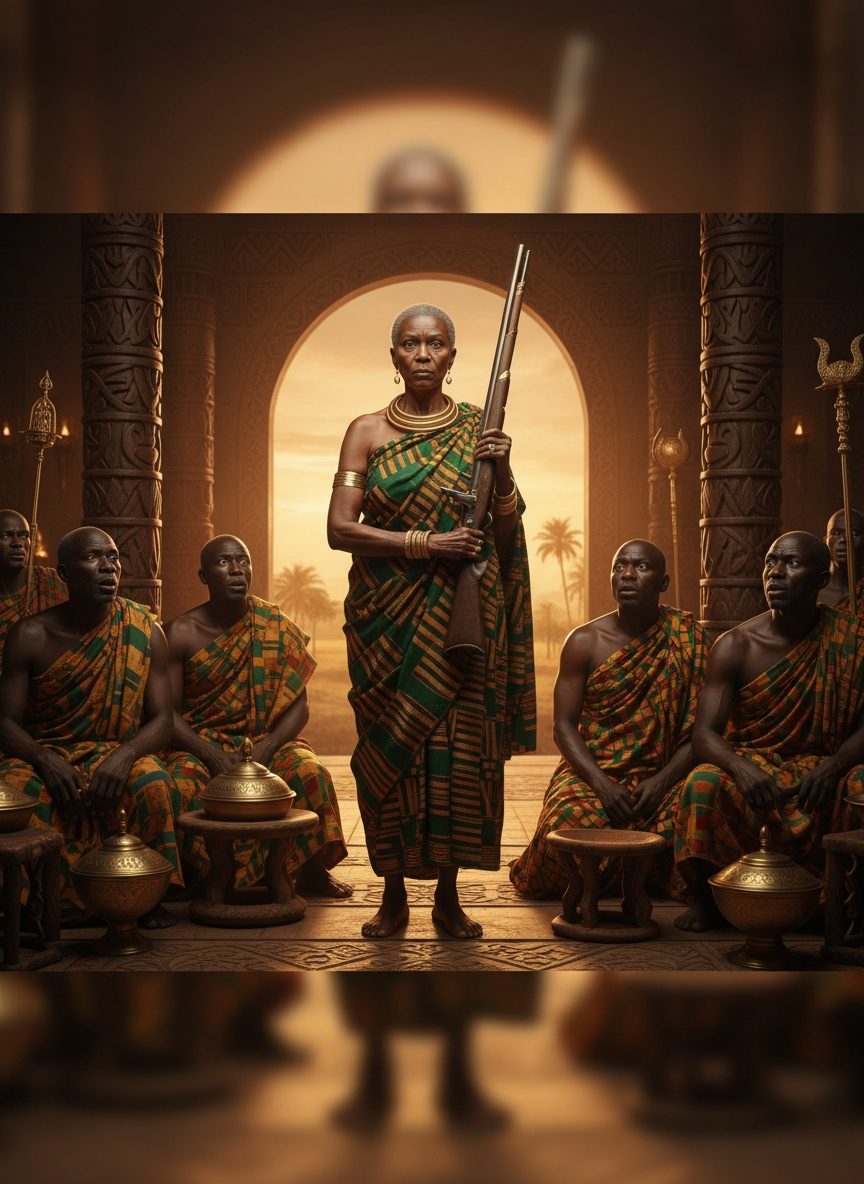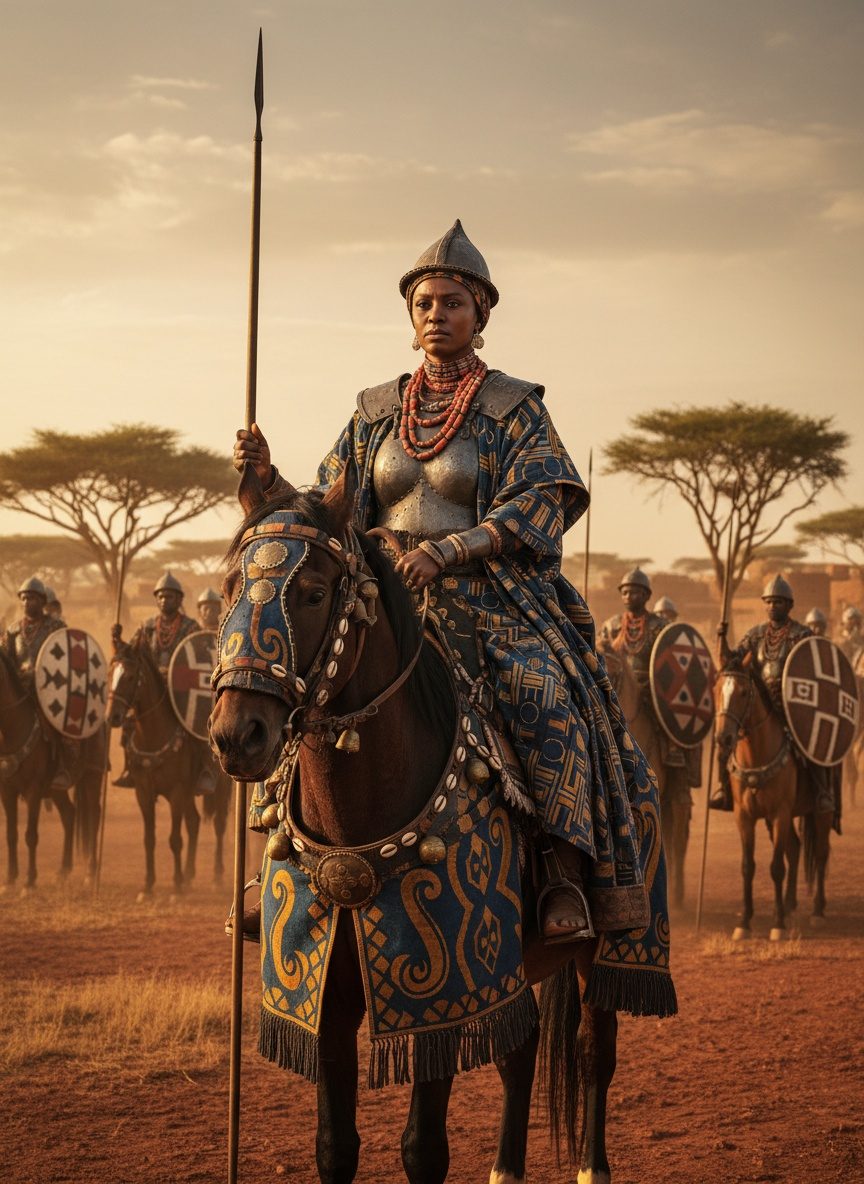
The midday sun bore down relentlessly upon the savannah, casting long shadows across the sprawling landscape that stretched toward infinity. The air shimmered with heat, creating ghostly mirages on the horizon. It was in this unforgiving terrain that Queen Amina of Zazzau prepared for war. Her eyes, fierce as the desert hawk, scanned the horizon for any sign of trouble. Her resolve was unyielding, her posture as unflinching as the mountains of northern Nigeria that had stood since time immemorial. But despite the tranquil appearance of the land, Amina's heart raced with the thrill of what lay ahead, for war was the symphony she orchestrated with unerring precision. This was 1576, and Amina was about to ride into her thirty-fourth campaign. Her enemies, scattered across the horizon, trembled at the thought of facing her indomitable army. Few could match her skill on the battlefield, and fewer still dare defy her terms of surrender.
The Warrior Queen of Zazzau
As the ruler of the Hausa kingdom of Zazzau, Queen Amina wielded power that was uncommon for women of her time. In a patriarchal society that often relegated women to the sidelines, Amina was a blazing exception, her prowess as a leader matched only by her skill in warfare. Her father, King Nikatau, had recognized her potential early and nurtured it carefully. When the time came, Amina ascended to the throne, not with a meek acceptance of her fate, but with the determination to expand her kingdom and secure its prominence among the Hausa city-states.
She eschewed tradition and refused the many suitors who came knocking, opting instead for a different path. A sword was her chosen companion, and she wielded it with deftness and precision that matched the greatest warriors of the era. Her forces, loyal and well-trained, were an extension of her strategic genius. Under her leadership, Zazzau’s influence spread rapidly over West African territories, creating alliances and subjugating enemy forces in equal measure. The lands she conquered were transformed and contributed to the kingdom’s wealth, with resources flowing back to Zuma, the heart of her ever-expanding domain.
Amina's campaigns were not chaotic raids but well-planned endeavors. She recognized the importance of trade and infrastructure and thus secured control over trade routes and built fortified walls around the territories she conquered, fortifying what would become critical centers of commerce and culture in the region. Her skill in combining might with diplomacy made her reign one of both awe and fear throughout the land.
The Unassailable Onslaught
Each military campaign under Amina's command followed the same method of precise execution. Discipline within her ranks was unparalleled, and her cavalry, known for its speed and agility, was the stuff of legend. Her strategies blurred the lines between traditional warfare and innovative tactics absent in the military doctrines of her adversaries. She leveraged the element of surprise and the psychological warfare that her reputation alone afforded her. Allies and enemies alike watched in admiration as her forces spread across valleys and up the mountains, claiming victory after victory.
But conquest was not her only weapon. Amina understood the importance of integrating the displaced people within her empire. Rather than subjugate her newfound subjects, she offered them roles in her burgeoning empire, provided they accepted her rule. This deft combination of conquest and cooperation expanded her influence and control, leaving a lasting cultural impact long after swords were sheathed. As she returned from these campaigns, Amina carried not only the spoils of war but also the wisdom of newly acquired lands, ensuring that Zazzau thrived under her watchful eye.
Throughout her rule, Amina encountered resistance, but the courage she inspired in her followers and the reputation she garnered made her empire resilient. Her contemporaries scrambled to adopt her methods, though few could match her tactical genius. In her wake, she left an insurgent empire, a patchwork of cultures unified under her indefatigable strength. The whispers of her journey reverberated far beyond Zazzau and echoed across the annals of African history with the steady rhythm of a living legend.
The Enduring Legacy
After three decades of relentless campaigns and leadership, Amina of Zazzau returned to her kingdom with an authority unchallenged. Her name was etched into the landscape she helped forge, echoing through the generations with tales of unparalleled bravery and unerring ambition. Yet, despite her towering achievements, history, in time, began to obscure her legacy beneath the sands of forgetfulness. The chronicles of Al-Andalus do not speak of her; the archives of Borno hold no scroll dedicated to her accomplishments. It was not through negligence but perhaps through design—Amina’s life was a chronicle inscribed in the heart of her people, rendering books unnecessary.
Amina’s story endures as a testament to the heights women in African history have ascended, refuting the notion that leadership was a domain solely for men. Her life challenges modern perceptions, urging us to look deeper into the shadows of history for the figures who defined their eras through action, diplomacy, and conflict. In Amina, we find a leader who was as complex as she was capable, embodying the strength and intellect that defied her times.
Now, as we look back to this fabled warrior queen of the Hausa lands, her path through history offers a vital lesson: true power and leadership stem not merely from conquest but from the ability to uplift those we hold under our banner. Amina’s legend is both a reminder and an inspiration, one that nudges us to reconsider the narratives of our past and recognize the incredible tapestry of individuals who have shaped the world we live in today.