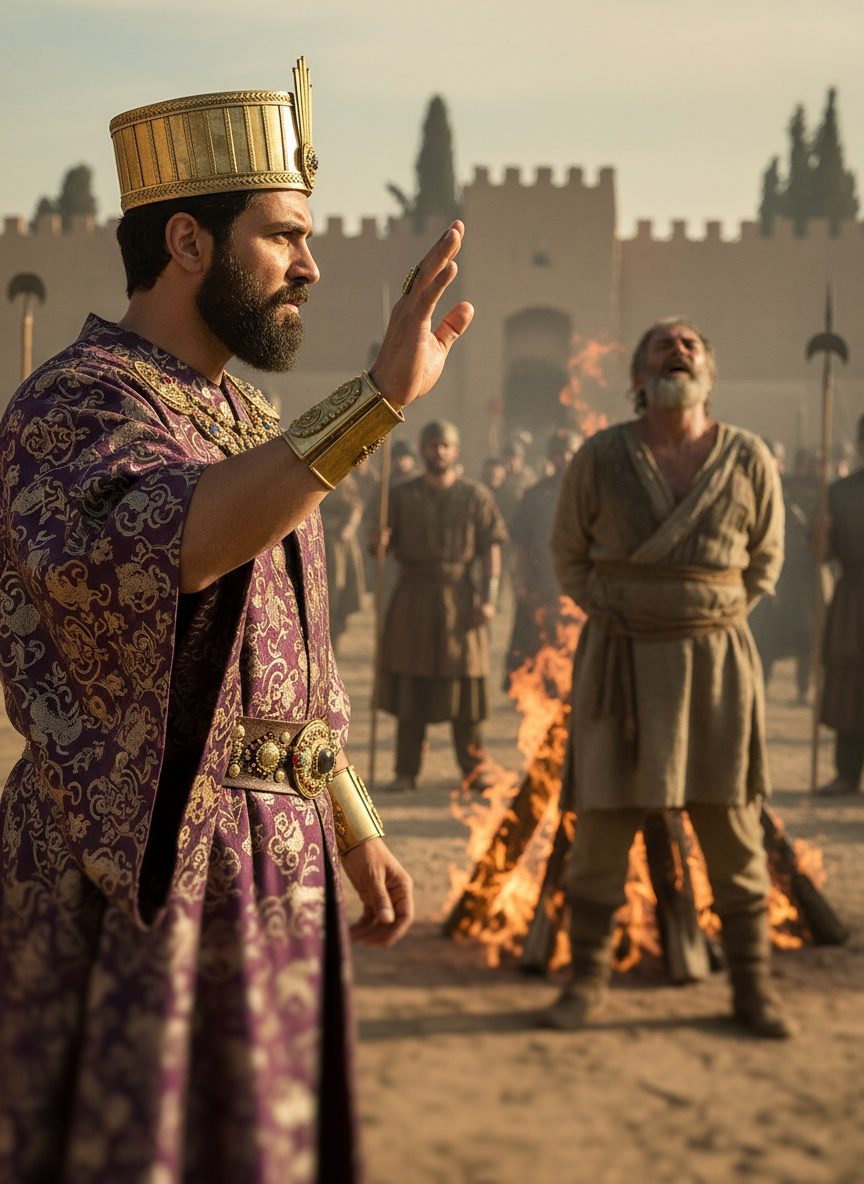
Darius the Great, the ruler of the most expansive empire the world had ever seen, knew fear. It wasn't the spear of an enemy or the betrayal of an ally but a defiant word — no.
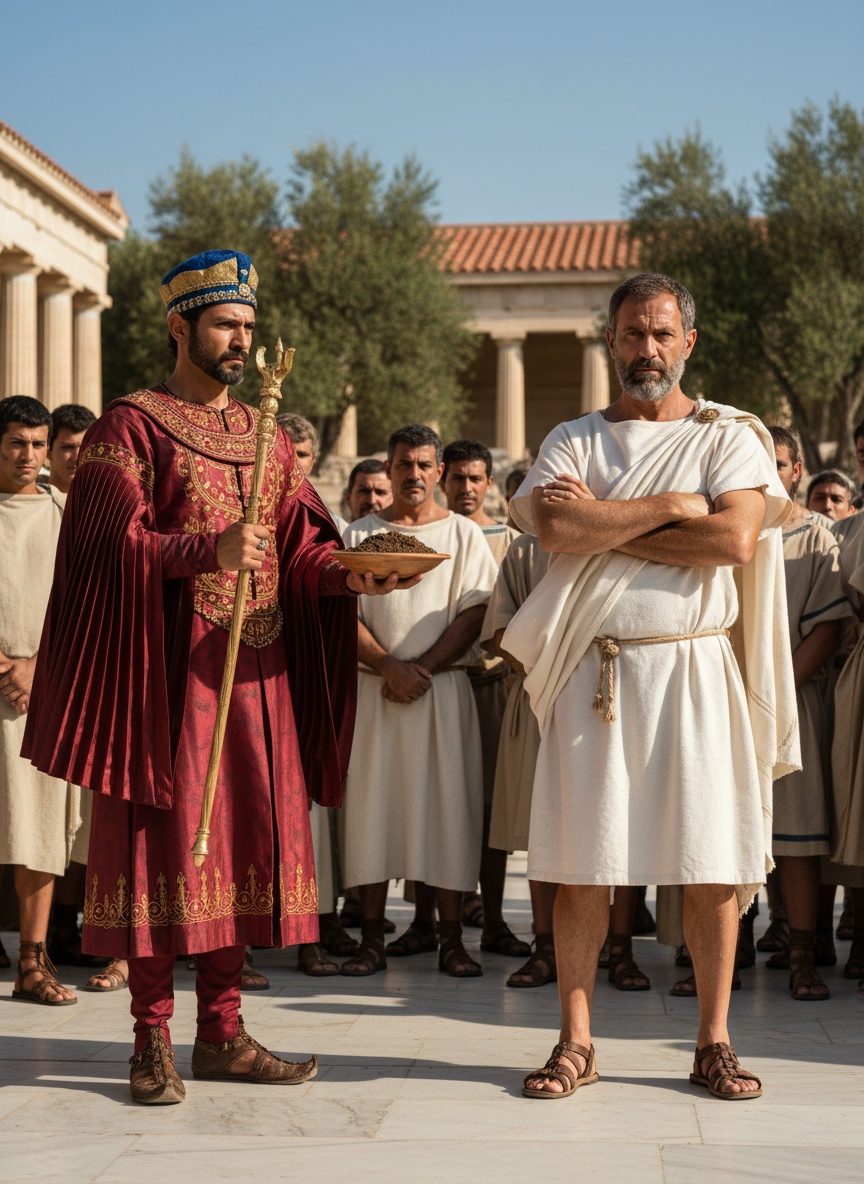
The year was 490 BC. The stage was the ancient Mediterranean, a world dominated by majestic mountains, deep forests, and the azure stretch of the sea cradling the ambitions of empires and city-states. Across this rich tapestry, the Achaemenid Persian Empire sprawled, a colossus poised above the fragile independence of the Greek city-states. Darius I, the Great King, whose reign marked the pinnacle of the empire's power, craved order. His empire was a mosaic, and each piece that lay beyond its peaceful borders was an unfortunate source of chaos. Greece, in its glorious disunity, was just such a piece. To stitch it into his pattern of control, Darius sent heralds to demand symbolic tokens of submission, asking for "earth and water" from Athens and Sparta — a gesture that held the weight of surrender.
The Athenians were no strangers to Darius's methods. The city's political landscape had long been a whirlwind of shifting allegiances and political upheavals. Just a few years prior, at the end of a tumultuous period of internal strife, Athens had flirted with Persian influence. This recent history — both a blessing and a curse — sharpened their resolve to stand firm against the empire's advances. The demand for earth and water, however tokenistic it might seem, struck at the core of their hard-won independence. The response was as blunt as it was audacious: the heralds found themselves unceremoniously deposited into a deep pit, stones sealing their fate and echoing the Athenians' silent answer.
In Sparta, a society built on martial prowess and unfailing discipline, the arrival of Persian messengers met with an equally harsh reception. The Spartans, renowned for their concise speech and ruthless efficiency, lived by codes that glorified freedom and martial valor. The messengers were taken to a well, and spat within lay the Spartan message — they could find their earth and water at the bottom. It was a scene that encapsulated the Spartan ethos: direct, unyielding, and shockingly effective in its simplicity. The message was clear; the Spartans would sooner die than live under the shadow of another's dominion.
To understand the enormity of these actions requires a leap into the mindset of the time. Darius was not merely a distant ruler. To the known world, he was a living god, ordained by Ahura Mazda, presiding over an empire that stretched from the Indus Valley to the sands of Egypt. His reach extended into every city, his eyes and ears ghostly watchers who wove networks of espionage that penetrated even the farthest corners of his realm. Accepting his demands was a formality for many, a token deposited like tribute on an altar. Resistance was unthinkable, and yet here it was, embodied by two fiercely independent city-states clinging to the rocky soils of Greece.
The ramifications of these actions drenched the following years in a visceral, unrelenting struggle. Darius’s rage was a tempest both feared and respected within his court. Athens and Sparta's audacity kindled a spark that would ignite the flame of the Greco-Persian Wars, a series of confrontations that tested the limits of courage and endurance. The naval battles, the clashes on fields shadowed by mountains, were dramatic counterpoints to the still and silent defiance of earth and water. Every Greek success, from Marathon to Thermopylae, echoed that same initial *no*, resonating within the crags of history.
But within this narrative lies a deeper story. It is more than battles, more than blood and sweat. It is about the indomitable will of a people, a tale spun from the fibers of resistance that challenges the notion of absolute power. For all of Persia's glory, its grandeur was met by the solitary resolve of a handful. In the wake of Darius's chains came clarity; a realization that under the weight of impossible odds, the Greeks could stand defiant not through numbers, but unity woven through shared purpose.
And so, the pit in Athens, the well in Sparta, became symbols, moments where stark defiance reshaped destinies. At its core, this story leaves us with a powerful message across millennia: even the mighty can be confronted not by might alone, but by the power of conviction. In a time when surrender could mean survival, they chose a different path — a testament that defiance in the face of oppression can ripple through history, reflecting the unyielding spirit of those who dared to say 'no'.