A Greek doctor named Democedes once served as the savior of a crippled Persian king. Yet, his own freedom was valued more than any throne.
Rebellion and Chaos in the Persian Empire
In 521 BC, the Persian Empire, which stretched mightily over three continents, found itself plagued by tumult and insurrection. The throne sat uncertainly beneath the great King Darius I, whose rule, though expanding, was under pressure from internal strife. Within this grand tapestry, a Greek man named Democedes of Croton found himself tangled in the destiny of empires.
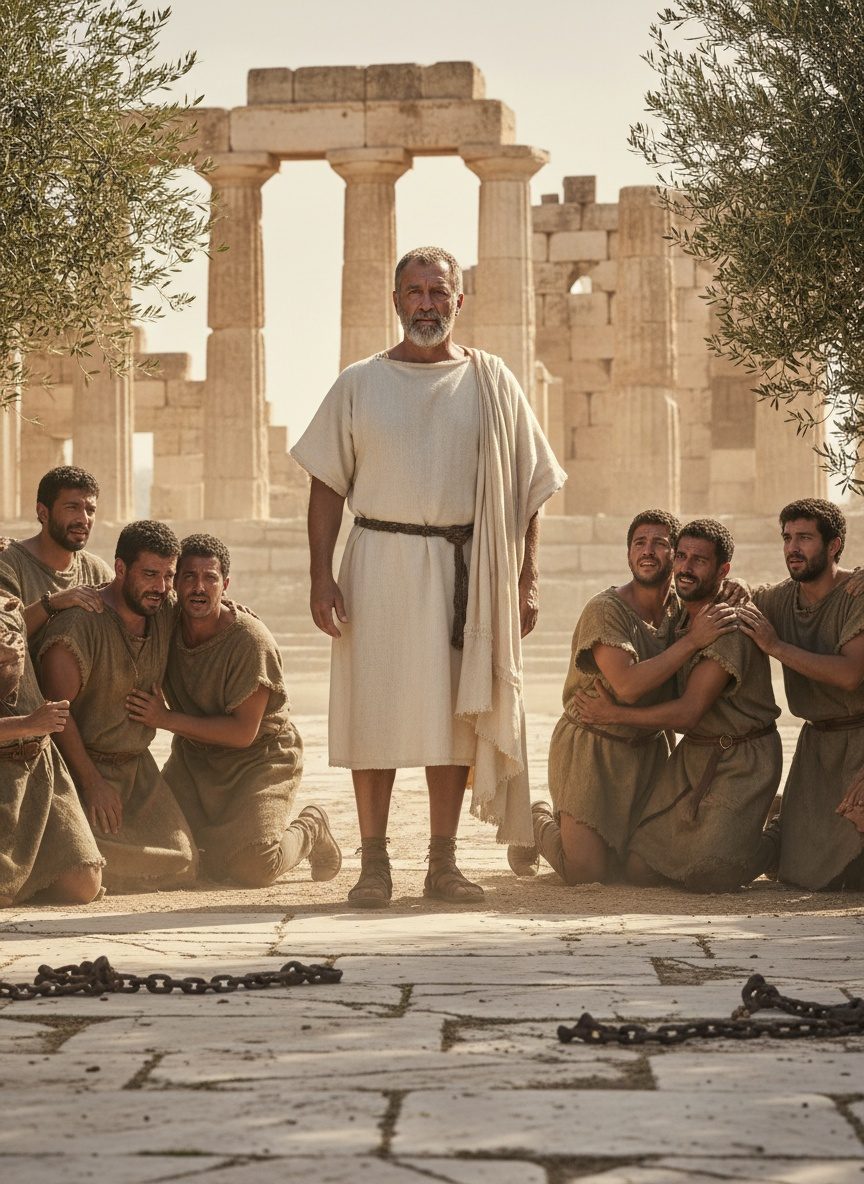
Before fate cast him into Persia, Democedes had grown up in the vibrant Greek city-state of Croton in southern Italy. Known for its athletes and medical school, Croton was where Democedes honed his skills as a physician, quickly earning a reputation for being one of the wisest healers of his time. However, fortune took a harsh turn when Democedes found himself enslaved during a series of Persian conquests.
As a slave, Democedes was dragged far from his home, a pawn in the service of the immense Persian Empire, whose complexities and splendor were unmatched. The halls of Susa, the capital, echoed with languages and customs from every corner of Darius's vast realm. Democedes, a foreigner in an alien court, learned quickly the language of survival, blending in as best as possible while keeping his talents hidden.
The Test of a King's Trust
King Darius, despite his strong leadership, succumbed to a mysterious ailment. The king's condition rapidly deteriorated; his body failed him where his mind remained sharp. Traditional Persian physicians applied their remedies, but Darius remained crippled, his pain a crack in the foundation of his mighty empire. Desperation spread through the palace like spilled ink, and whispers of dissent grew louder.
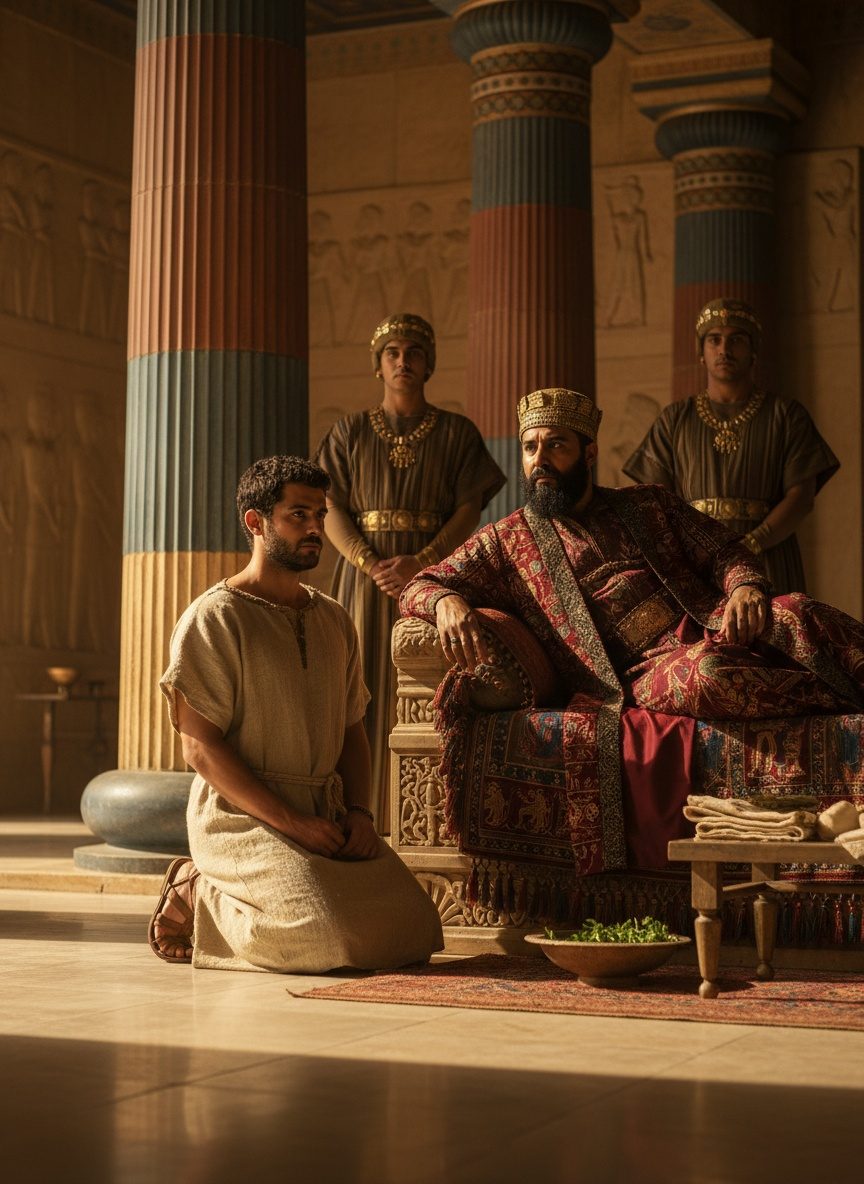
In this charged atmosphere, Democedes's name reached the ears of those closest to the king. Initially dismissed as a foreigner unworthy of courtly notice, the gravity of Darius's situation softened the pride of the royal physicians, compelling them to call upon this Greek slave. Reluctantly, Democedes was brought before the ruler, like a humble craftsman summoned by a disdainful master.
Standing before Darius, Democedes defied his own precarious situation. With the precision of a master artisan, he set to work using his Greek healing techniques, shunning the elaborate but ineffectual remedies of the Persian healers. Applying simple yet effective methods, he employed advanced manipulation and dietary adjustments uncommon in Persian medicine. The change was swift and miraculous. Darius regained his strength and regained faith in his body's ability to command his empire once again.
Grateful for his rejuvenation, Darius offered Democedes gold, jewels, and high stature within the court. Every advancement lay within his reach. But for Democedes, splendor meant little against the longing for freedom and the skies of his homeland. As the lavish offerings were laid before him, Democedes, with a wisdom that countered greed, requested only permission to return home.
An Unprecedented Request
The court was stunned by Democedes's decision. Witnesses within the walls of the palace were bewildered by his choice. For many, it appeared inconceivable that a man would refuse riches and power for the sake of an emotion as intangible as freedom. Yet to Democedes, these treasures were poor prized against the world outside his shackles.
Democedes's request traveled through political machinations and traveled the breadth of Persian protocol until it reached King Darius himself. Though the initial response was dismissive, favor towards Democedes had grown among those who witnessed his healing touch. Darius's eventual agreement was therefore not without conditions. He granted Democedes leave, but only under the guise of a reconnaissance mission to scout Greek territories under the empire's keen interest.
Thus, mounted on his journey not as a runaway slave but as an emissary, Democedes traversed back toward the lands of Greece. To his captors, he represented extended influence; to himself, he symbolized the undying spirit of liberation against all odds. As he stepped back onto the familiar shores, the freedom that he had long coveted felt as complete as the air filling his lungs. Yet, his gratitude to Darius balanced precariously alongside his distrust of Persian intentions.
This episode in Democedes's life does more than chart the path of an enslaved healer and a king’s failing health. It sparks contemplation on the dynamics of power and the enduring human spirit. Choices can forge more impactful consequences than conquests. Through Democedes's story, we glimpse a mirror that reflects desires far outweighing material wealth—one where an unwavering quest for freedom challenged the definition of value in a king’s court, leaving a legacy marked not by possessions but by integrity and identity.