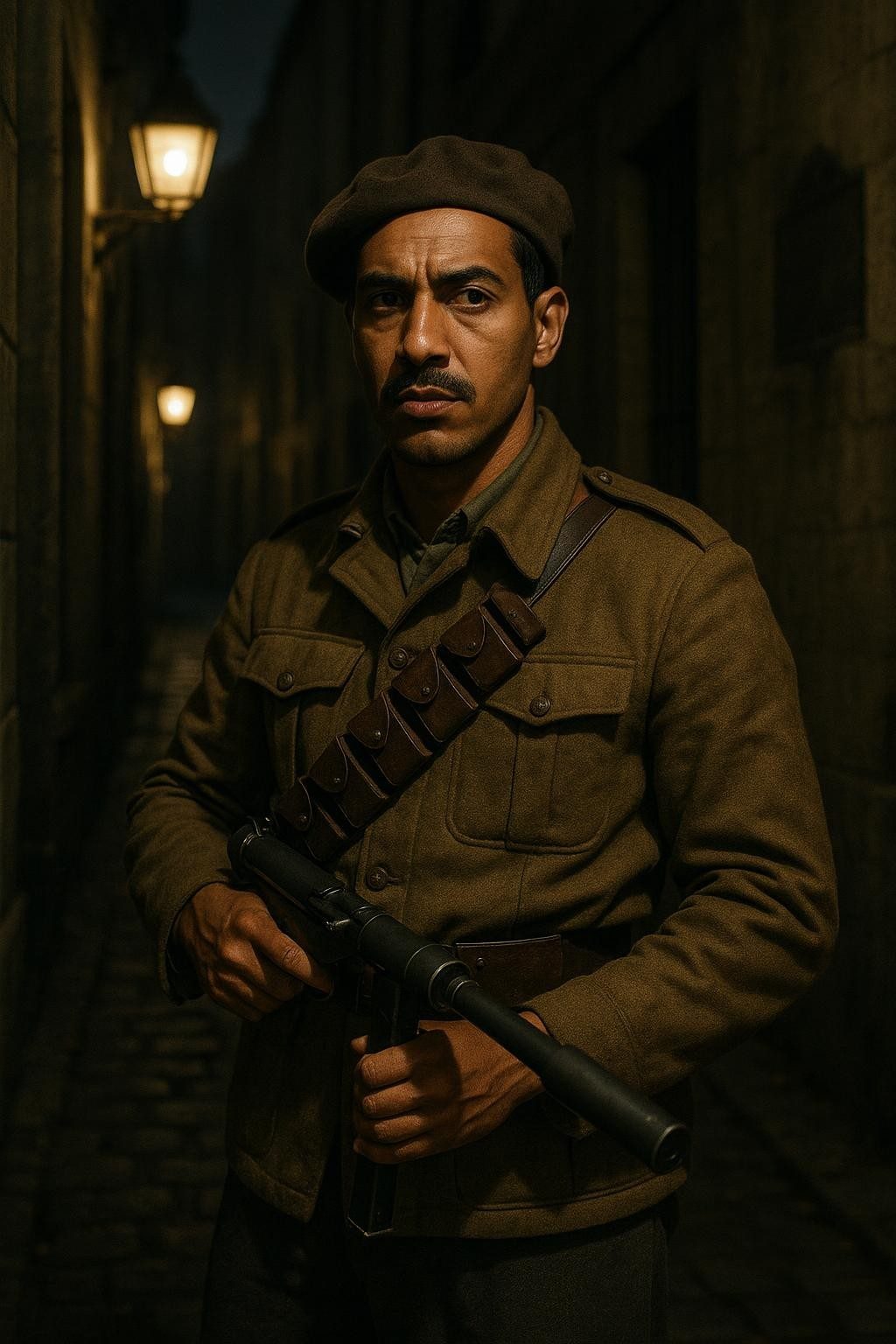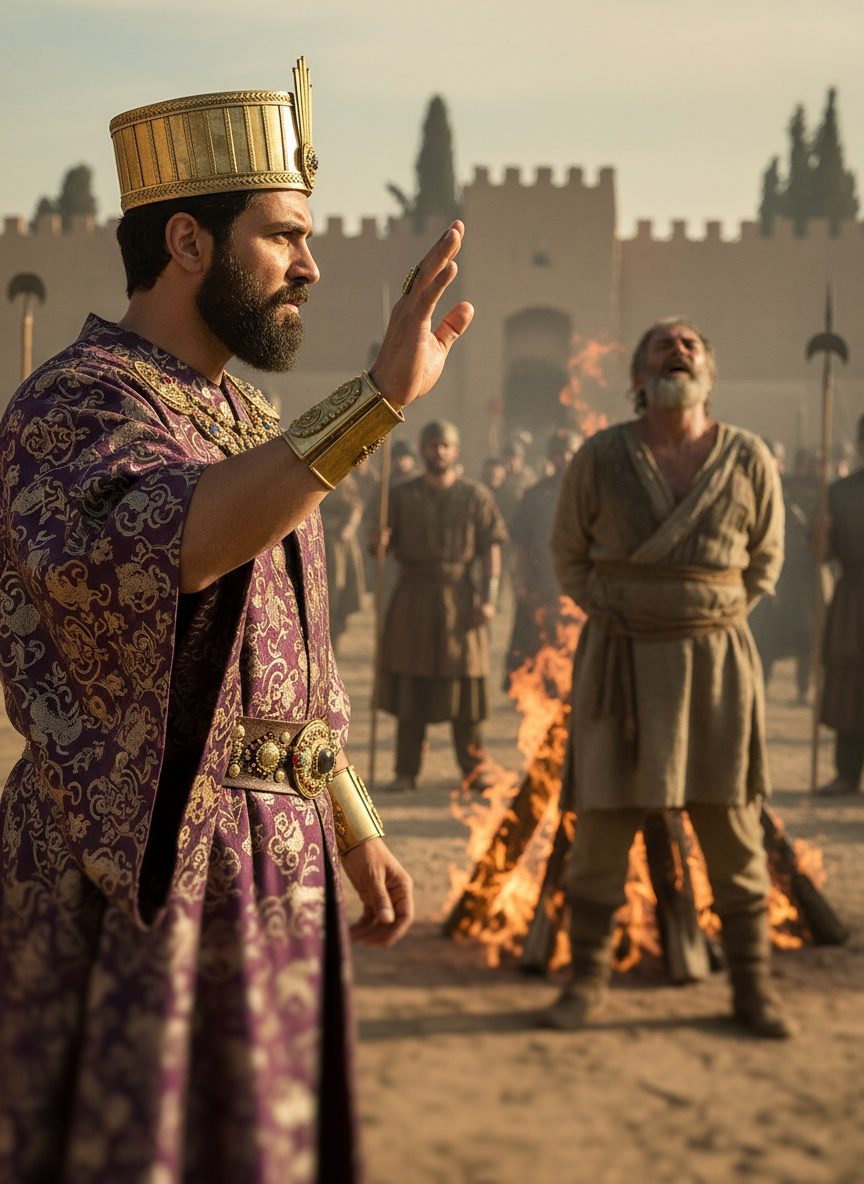
The British empire was unparalleled in its reach. Yet it would soon be challenged by a 60-year-old woman with a rifle.
The Demand for the Golden Stool
In March 1900, deep in the heart of the Gold Coast, a confrontation was brewing that would test the resolve of the mighty British Empire. At the center of this standoff was the sacred Golden Stool of the Asante people. This wasn't just a beautifully crafted object but the very embodiment of the Asante nation, signifying its soul, unity, and royal authority. In a move that can only be described as a gross underestimation of Asante culture, the British governor, Sir Frederick Hodgson, demanded that the Asante lay this revered symbol at the feet of the British crown.
The audacity of the request was staggering. The stool was not meant to be sat upon or handed over. It was beyond any earthly power or authority, meant solely for the Asante king. This single demand wasn't a mere insult; it was a bold desecration. The Asante chiefs, guardians of their community's traditions, gathered to respond. But faced with the might of British imperialism, their resolve wavered. It seemed the backbone of an entire people might finally break.
The Emergence of a Warrior Queen
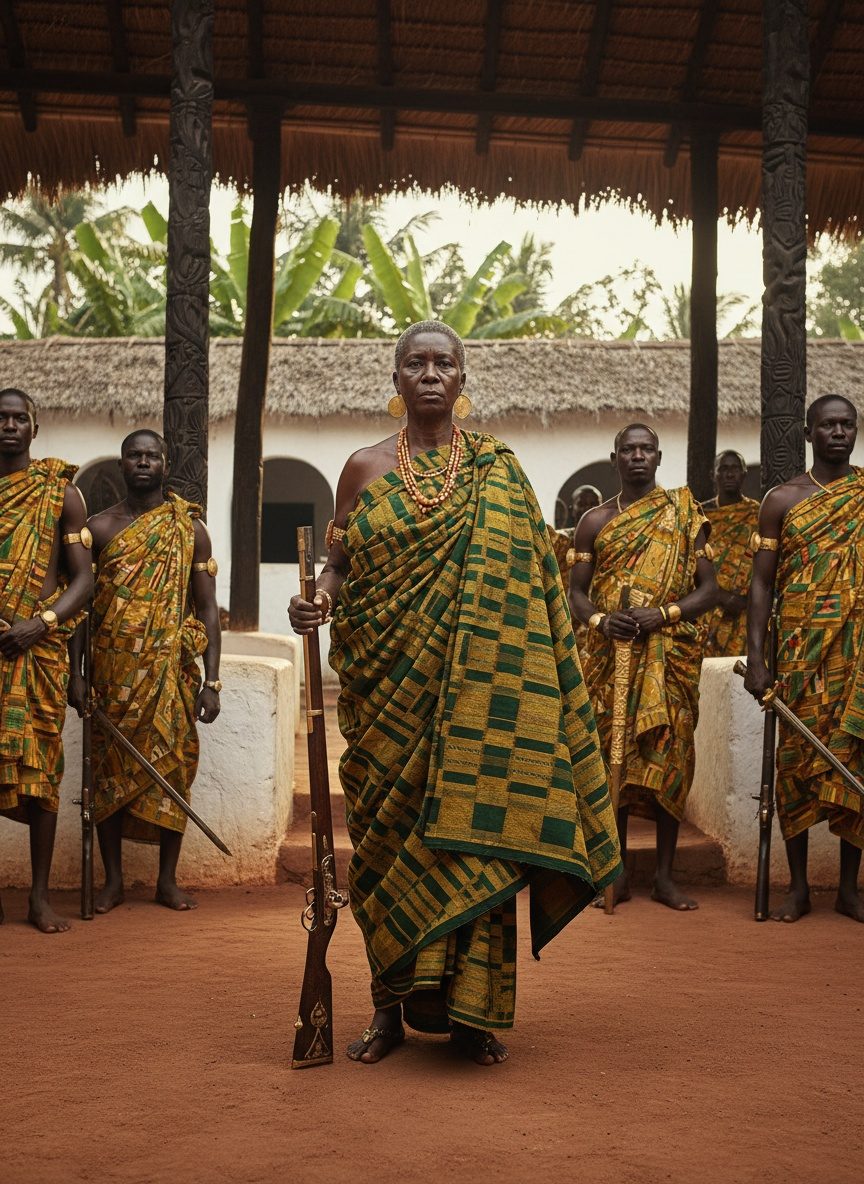
In this moment of hesitancy, when the air was thick with uncertainty and fear, a figure rose to change the course of history. Yaa Asantewaa, the Queen Mother of Ejisu. In her sixties, with a life full of wisdom and experience behind her, Yaa Asantewaa knew this challenge was more than a struggle for leadership—it was a battle for survival. As the chiefs pondered, she rose and seized the moment by picking up the rifle herself, inspiring a call to arms that resonated through every corner of the Asante Empire.
Her words pierced the stagnant air like a clarion call to action. She challenged the men of the Asante, demanding to know why they hesitated to fight for what was inherently theirs. "If you, the male leaders of this nation, cannot rise to defend us, then we shall fight for our country. We, the women, will. I shall call upon my fellow women. We will fight till the last of us falls on the battlefield."
Under her leadership, the Asante warriors, numbering around ten thousand, rallied with new vigor and determination. Her defiance and courage became the spark that reignited the flames of resistance, and her voice a beacon in the face of overwhelming odds.
The Asante-British Conflict
The clash that ensued was known as the War of the Golden Stool, one of many resistance efforts against British colonial rule in Africa. But this war was unique—it was orchestrated by the abundant spirit and unwavering courage of one woman who refused to bow down to foreign demands.
The war was characterized by guerrilla tactics — the Asante used their knowledge of the dense forests to their advantage. Their strategy was not just to fight land battles but to wage psychological warfare, ambushing British forces and making the terrain itself an ally. Yaa Asantewaa's leadership was emblematic of traditional Asante tactics infused with a new energy that spoke to the essence of preserving identity and dignity.
Though the British forces were better equipped with modern weapons, the Asante warriors, inspired by Yaa Asantewaa, fought with unmatched tenacity and courage. Their resistance stretched the British military capabilities, causing delays and heavy losses—far more than the British had anticipated or were willing to acknowledge.
The Unyielding Spirit
The conflict continued with relentless determination from both sides, yet it highlighted a greater truth—the Asante would not be easily subdued. Yaa Asantewaa's involvement was not just symbolic but deeply strategic. She had infused the Asante people with a renewed spirit, demonstrating once again that the fight for their cultural identity and sovereignty would not dissipate under external pressure.
Ultimately, the sheer might of the British Empire brought an end to this phase of resistance. Nevertheless, the legacy of Yaa Asantewaa transcended the immediate outcomes. Her fearless stand against colonial oppression and her rallying cry for independence imbued the Asante and future generations with a profound sense of pride and purpose.
The story of Yaa Asantewaa and the War of the Golden Stool serves as a powerful reminder that even in the face of insurmountable odds, the human spirit and cultural identity remain unbroken. Her unwavering determination to lead where no man dared reaffirms the indomitable forces that shape history—where the power of a single voice can echo through time with an eternal resonance. The questions arise not from her inevitable arrest or the strategic outcomes of the war but from her legacy that resonates with the broader quest for freedom and self-determination.