Every conqueror before Cyrus had taken riches, power, or land. He gave freedom.
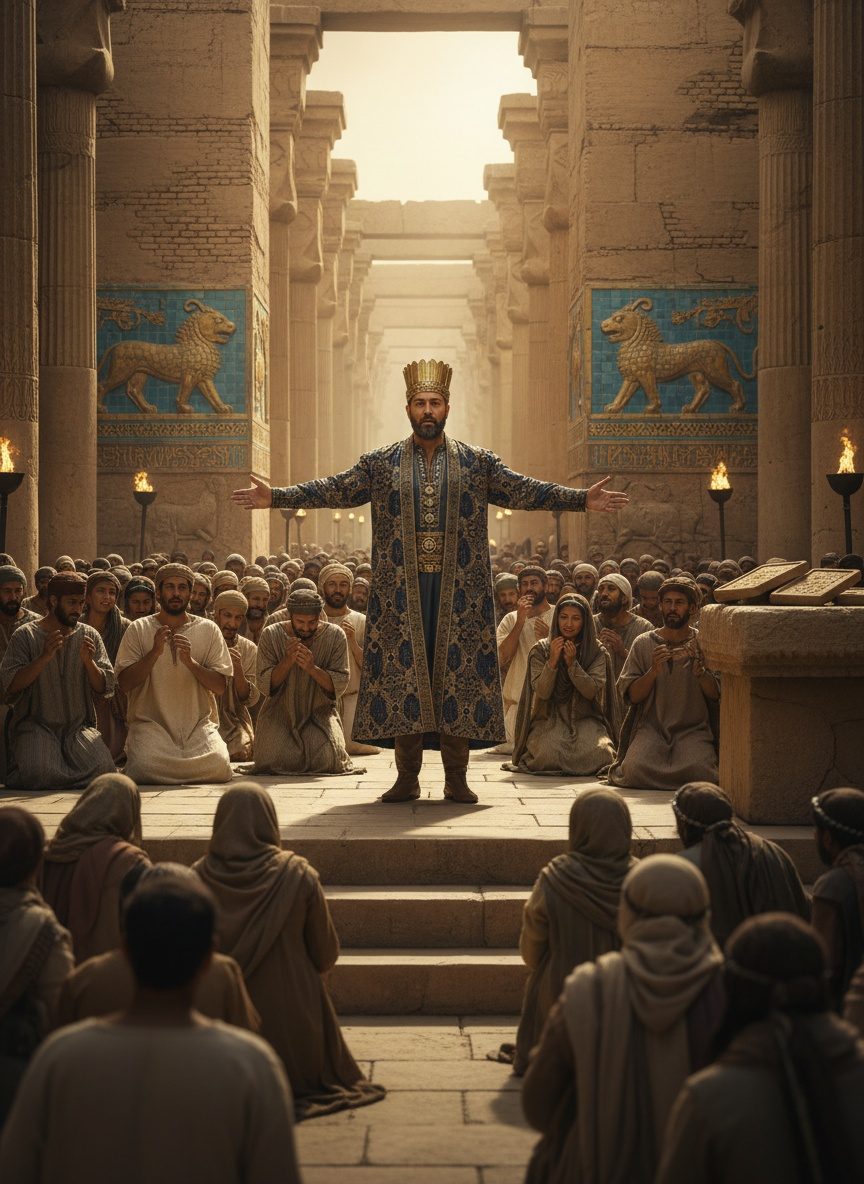
The year was 539 BC, and the mighty Babylon, resplendent with its towering ziggurats and bustling trade routes, had just been swallowed by the relentless tide of the Achaemenid Persian Empire. When Cyrus the Great entered the city, he did not parade through the streets as a typical conqueror, seeking to impose terror and domination. Instead, he chose a path rarely traveled by victors in ancient times. He released the captives. This momentous act underscored a pivotal gesture that rippled through time, etching his name into the annals of history not just as an invader, but as a liberator.
To understand the weight of Cyrus's decree, it's essential to grasp Babylon's significance. Known for its hanging gardens, one of the Seven Wonders of the Ancient World, Babylon was more than just an impressive architectural feat. It was a cultural and administrative hub that had gathered people from distant lands. Within its walls lived those taken into exile, including the Jews who had been forcibly removed from their homeland by the Babylonians around 586 BC. The psychological and spiritual plight of these captives was immense. They lived in a world where foreign deities were worshipped, longing for the day they could return to Jerusalem, a city intimately tied to their identity and faith.
When Cyrus took Babylon, he did not just topple a city. He dismantled an era of captivity for many. In his decree, which has come down to us through the lens of the Hebrew Bible as well as from the Cyrus Cylinder, a clay artifact presenting a declaration of his policies, Cyrus proclaimed that he would allow all exiled peoples to return to their homelands. For the Jewish exiles, who had spent nearly two generations in Babylon, Cyrus's decree was immeasurably transformative. This act of liberation resonated deeply with them, so much so that some Jewish texts refer to him as the "Anointed One," a title traditionally associated with divine favor and kingship.
But why did Cyrus make such a groundbreaking decision? Although the details of his motives remain elusive, historians suggest that his policy of returning exiled peoples might have been born from a pragmatic understanding of governance. By allowing displaced peoples to return to their homelands and restore their temples, Cyrus was likely promoting stability and loyalty within his sprawling empire. Instead of suppressing diverse cultures, he chose to integrate them under the Persian banner, fostering unity and collaboration rather than resentment and revolt. His approach was strategic, yet undeniably humane by the standards of the time.
For the Jews, this offer to return to Jerusalem was nothing short of a miracle. Mourning beside Babylon's rivers, yearning for Zion, had become a way of life, passed down from parents to children. Now, the unthinkable was happening: they could go home, rebuild their city, and restore the Temple central to their worship and national identity. With him, they were to carry their sacred vessels, the tangible links to their past and their faith, stolen during their capture. Each step taken towards Jerusalem was not just a physical return but a spiritual and cultural renaissance.
Yet, Cyrus's largesse was not universally accepted without reservation. For some captives, Babylon had become a place of opportunity. Over generations, people had built lives, establishing businesses, families, and communities. The decision to leave Babylon was, for many, fraught with personal and economic dilemmas. Bound by faith and freed by decree, these choices were deeply personal. While many Jews chose to return to Jerusalem, others stayed behind, laying the foundations for what would become a significant Jewish community in Babylon for centuries to come.
The liberative policies of Cyrus did not merely bend the arc of history for the Jewish people. By allowing the peoples to return and continue their religious practices, he set a precedent that resonated across his vast empire, influencing administrative policies for decades. This became a keystone of Persian rule, one that sharply contrasted with the harsher tactics of empires that had preceded and followed his reign.
In exploring why this extraordinary tale continues to matter, it stands as a striking example of leadership characterized by tolerance and foresight in a world where might so often equaled right. Cyrus's release of the captives echoes through history as a testament to the power of empathy, an attribute relegated to the sidelines in many historical accounts of conquest and empire-building. His actions challenge the traditional narrative of empire, reminding us that true greatness is not just in the lands one conquers but in hearts one liberates.