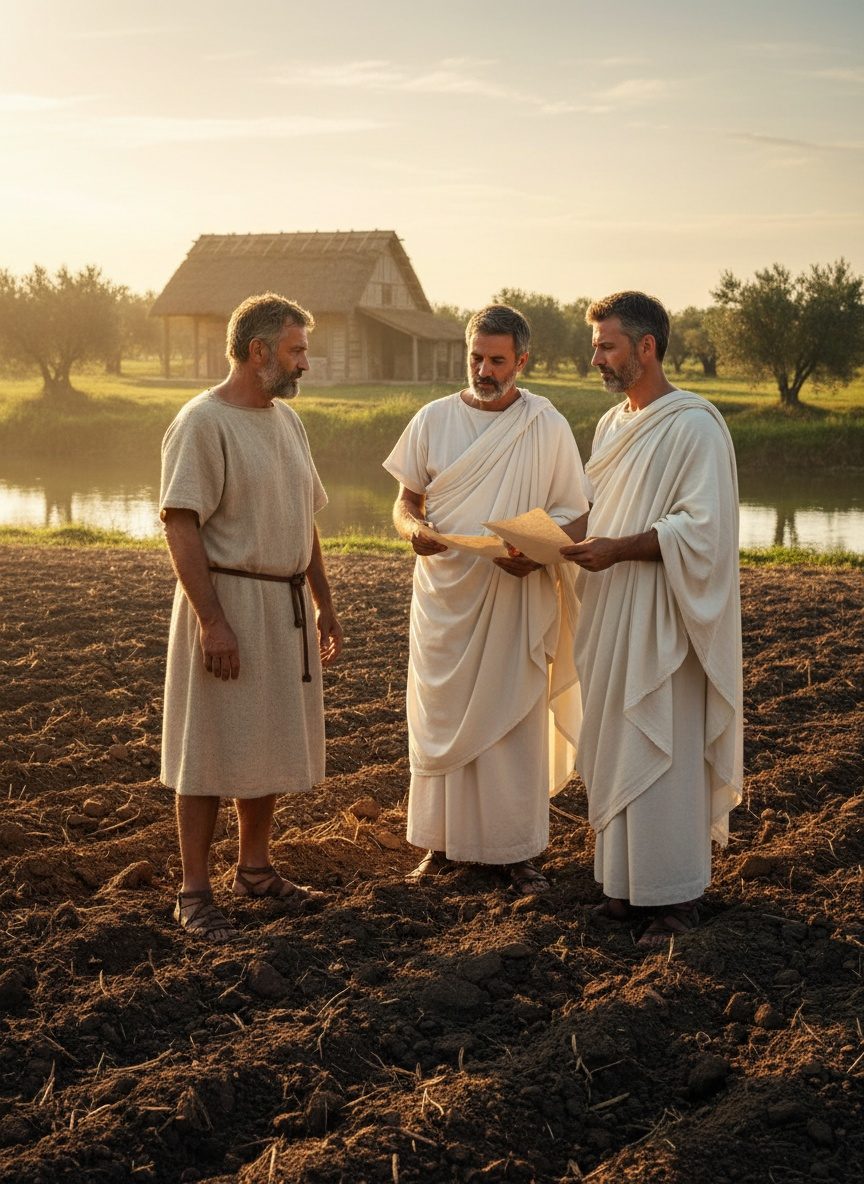
458 BCE. The sun was already high over the distant hills, its rays warming the fields where a solitary figure toiled under the open sky. Lucius Quinctius Cincinnatus, a man not more remarkable in appearance than any other farmer working the land near the Tiber, paused to wipe the sweat from his brow. This day would alter the course of his life—and the history of Rome—forever.
The Summons from Rome
The Roman Republic faced its darkest hour. Its very survival was at stake, the army trapped and besieged by the Aequians, a fierce tribe that knew the rugged Italian terrain like the back of their hand. The Senate, in desperation, turned its hopes to an unlikely savior, a man who had retreated into agricultural life, embodying the very essence of the Roman virtue of virtus—moral excellence and valor.
Far from the chaos of the battlefield, Cincinnatus had embraced a life of simplicity after devoting time to public service. Yet, the Roman Senate remembered him for his integrity, prudence, and unwavering dedication to the Republic's ideals. On that critical day, a deputation arrived at his farm, muddy boots carrying urgent word from across the Tiber. Here was a man once consular, offered unrestricted command of Rome—a dictator’s power none sought lightly because of its absolute nature.
Among the olive groves and rolling fields, Cincinnatus listened. He stood lightly dusted with earth, tool still in hand. His response echoed the stoic virtues of a man aware of duty beyond self, a sense of obligation transcending the pastoral serenity of his current life. He left his plow, crossing the threshold from farmer to general in an instant, a transition punctuating the Roman ideal of sacrifice for the greater good. As he donned the toga of office, this image of intent might have spurred in generations a keenness for duty synonymous with the very spirit of Rome.
The Crushing Tide of Victory
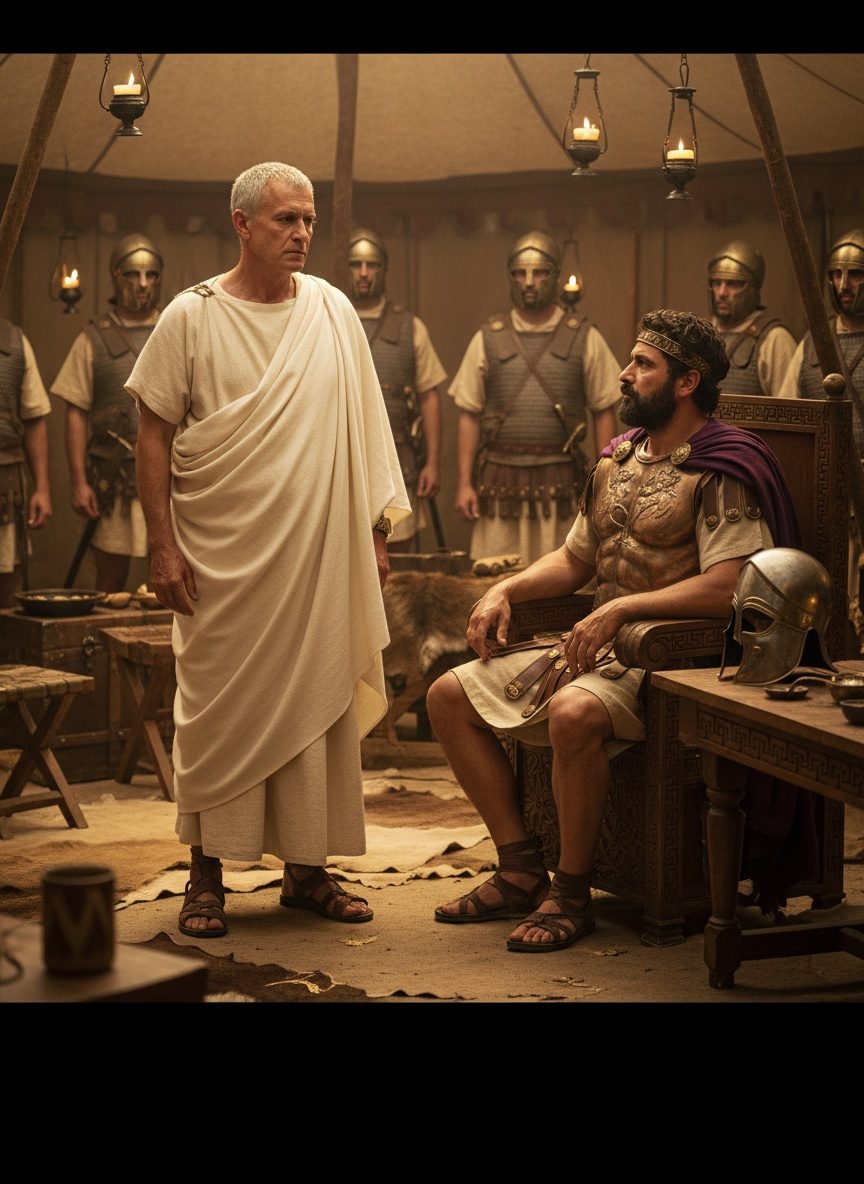
Upon assuming his newfound power, Cincinnatus acted with swift resolution. He raised a new army with seasoned decisiveness and marched against the Aequians with the urgency Rome's predicament demanded. As night settled over the valley, torches flickered like stars over the encampment, a testament to the resolve that would soon crystallize into action.
In the ensuing clash, Cincinnatus deployed a tactic that would ensure a rapid and decisive victory. His knowledge of the people's craft and terrain wielded like a weapon sharper than any sword. With discipline forged through experience and strategic genius, he encircled the enemy. The following dawn revealed the full weight of Roman military prowess, staged upon a battleground as Cicinnatus’s forces squeezed the breath from the trap like constrictive tendrils of fate.
The Aequians, once the aggressor, now found themselves imploring for mercy—a reversal made inevitable by the deft genius of a man as comfortable in command as he was with plow in hand. Terms were dictated at his feet, and glory once lost to despair returned to Rome under the banner of victory hoisted high in testament to their salvation by a farmer who became a general. The Senate offered weeks of celebration, but Cincinnatus saw beyond triumph to responsibilities yet cast aside.
The Decisive Resignation
In an act that would resonate through the ages, Cincinnatus relinquished power as willingly as he had assumed it. Rome would not see his like again, a leader untainted by the lure of dominion and control. With the city still reverberating the echo of acclamation, he did the unthinkable—he went home.
Those fifteen days of dictatorship, marked by triumph and strategic acumen, had not dimmed his dedication to a life of agrarian simplicity. Stepping down not from duty but from power, Cincinnatus strode away from Rome's storied halls—a political odyssey completed as quietly as it had commenced. Retirement rejoined him to his fields, where the earth and seasons would mark time far from the clamor of conflicts wrested from horizon.
Such a gesture left a legacy so profound it became almost mythic. In Cincinnatus, Rome found not just a hero, but a model of leadership that would echo down corridors of time, a testament to the belief that service and virtue outweighed personal gain or permanency in power. This tale from history taught no less of the delicate balance between authority and liberty, shaping political thought across epochs, weaving the story of a man bound to both city and soul. In that choice lay Rome's greatest lesson—true leadership serves the commonwealth, not personal ambition, favoring the plow above the trappings of temporary power.