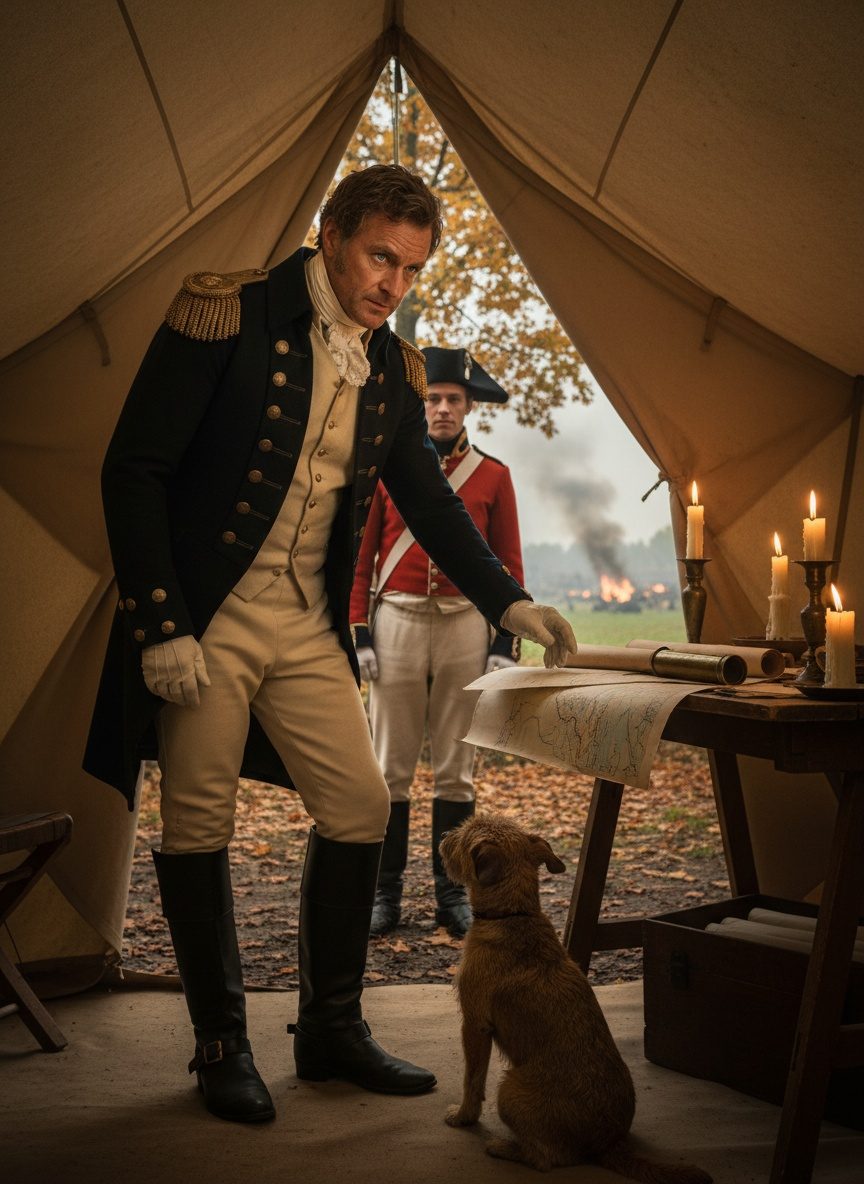
The damp October air hung heavy with the acrid scent of gunpowder as soldiers shuffled listlessly across the battlefield where their dreams of victory had crumbled into a bloody retreat. Amidst the chaos, musket smoke, and cries of the wounded, a solitary figure wandered — a small terrier whose presence seemed out of place on the grim landscape of Germantown. It wasn’t until this intrepid dog of war was captured that the peculiar truth was revealed: emblazoned on its collar was the name of none other than British General William Howe.
The Aftermath of Germantown
The Battle of Germantown, fought just outside of Philadelphia in 1777, was an audacious strike by the Continental Army. General George Washington, ever the strategist, had devised a complex plan intended to reclaim the city from the British and bolster the beleaguered spirits of the revolutionaries. However, what began as a promising assault quickly unraveled. A thick fog blanketed the battlefield, lending confusion to the American maneuvers, while disciplined British troops exploited the disarray. In the end, the embattled Americans were forced to retreat, leaving behind a landscape marred by the scars of war.
It was against this somber backdrop that the terrier was found, a shred of normalcy amid disorder. While many were focused on counting losses and regrouping forces, a small contingent of troops took note of the dog. The discovery of Howe’s name on its collar stirred the soldiers, a reminder of their enemy’s proximity and personalizing the British commander they were fighting against.
Honor Among Adversaries
News of the captured dog quickly reached the ears of General Washington. Here was an unusual prize of war — the very pet of the British commander. The options seemed clear: the dog could be kept as a mascot for the troops or possibly as a bargaining chip. Yet, Washington saw another path. In a gesture that would surprise many and define his leadership beyond the battlefield, he issued an order for the dog's immediate care and return.
Tended by soldiers who brushed and fed him well, the terrier was prepared for his journey back to British lines. Under a flag of truce, a small party of Americans escorted the dog, crossing the lines to return the pet to General Howe. This simple act was anything but ordinary; it transcended typical war conventions and showcased the deep roots of Washington's integrity. For Washington, honor was not negotiable, even in war. By returning the dog, he demonstrated a level of respect and humanity that would resonate through the ages.
A Message Beyond the Moment
The gesture did not go unnoticed on either side. For the British, receiving the small dog was a strange sort of diplomatic salute. Howe and his officers, familiar with the cruelties of war, must have paused to consider the kind of leader they faced. Washington’s decision to return the dog wasn’t merely about protocol; it was a deliberate communication of his values. Both Allied and enemy troops received a subtle message about the caliber of Washington’s character, enhancing his reputation across the globe.
The Americans, too, took something from this act. In an era when propaganda and morale shaped the course of war, Washington’s firm adherence to honor provided an inspiring narrative. His soldiers witnessed firsthand the embodiment of the ideals they fought for — dignity, respect, and humanity, even when confronted by fierce opposition. In a struggle defined by fights for principles as much as for territory, Washington’s decision became an emblem of the higher purpose they pursued.
The Legacy of a Simple Gesture
The story of Washington finding and returning the enemy’s dog might seem trivial in the grand tapestry of history's sweeping battles and shifting tides, but it holds profound significance. While history records the deeds of commanders in grand campaigns and lofty orations, it is often these smaller acts that reveal the true essence of leadership. Washington’s decision on that battlefield painted a portrait of valor not just in combat but in conduct.
This small narrative invites reflection on the values that guide leaders and nations. It is a reminder that sometimes, moral victories are the ones that endure longest. Washington’s act of returning a terrier returned far more than a dog to its owner; it solidified a statement to timelessly echo through history — that compassion and honor are not just tactics of war, but indomitable victories of the human spirit.