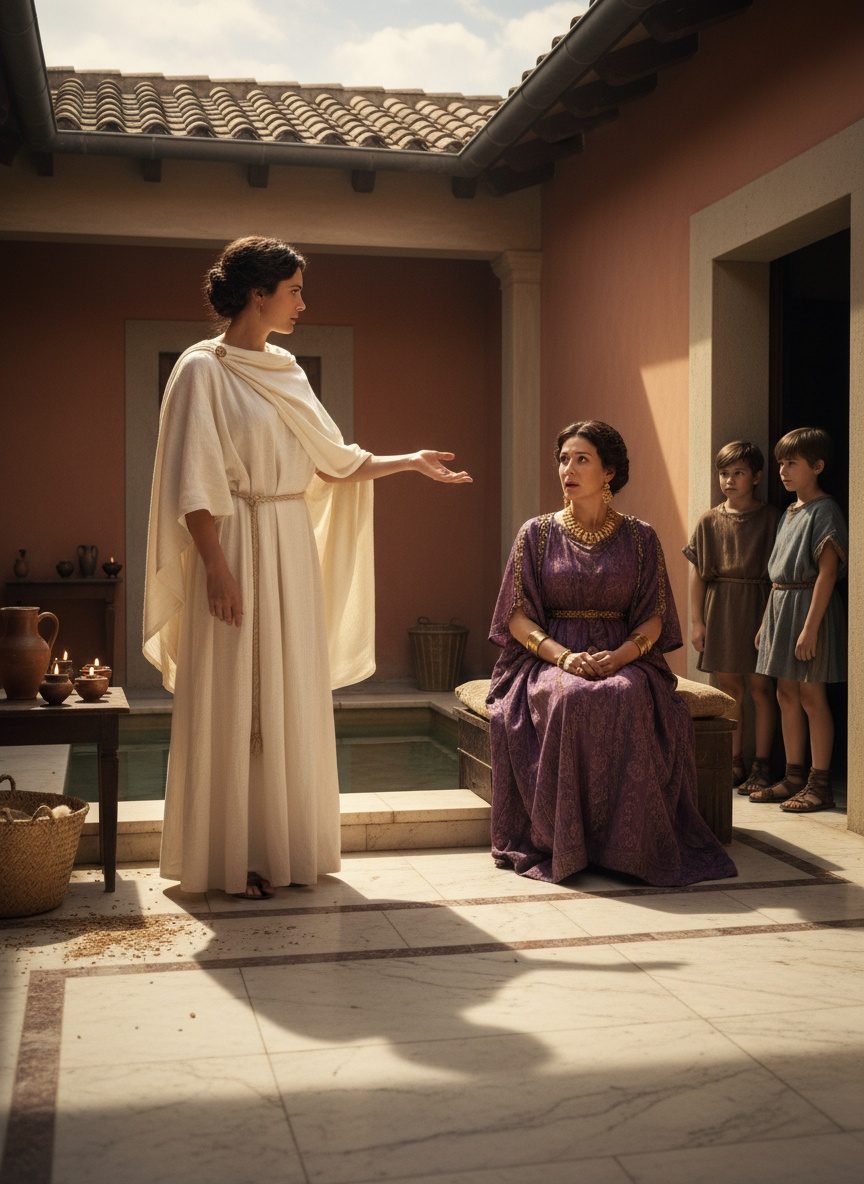
He never sought power. He plucked it from the ground like a ripe fruit, only to give it away. When Cincinnatus left his plow, he did what many rulers couldn't: he beat the odds and then walked away.
The Senate's Desperate Call
In a time when Rome was not yet the sprawling empire of legend but a fledgling Republic struggling for survival, the city faced a threat that seemed insurmountable. The Aequi, a neighboring Italic tribe, had trapped a Roman army in the Alban Hills, and a sense of impending doom hung heavy over the Roman Senate. There remained only one hope, a reluctant hero living across the River Tiber in humble circumstances.
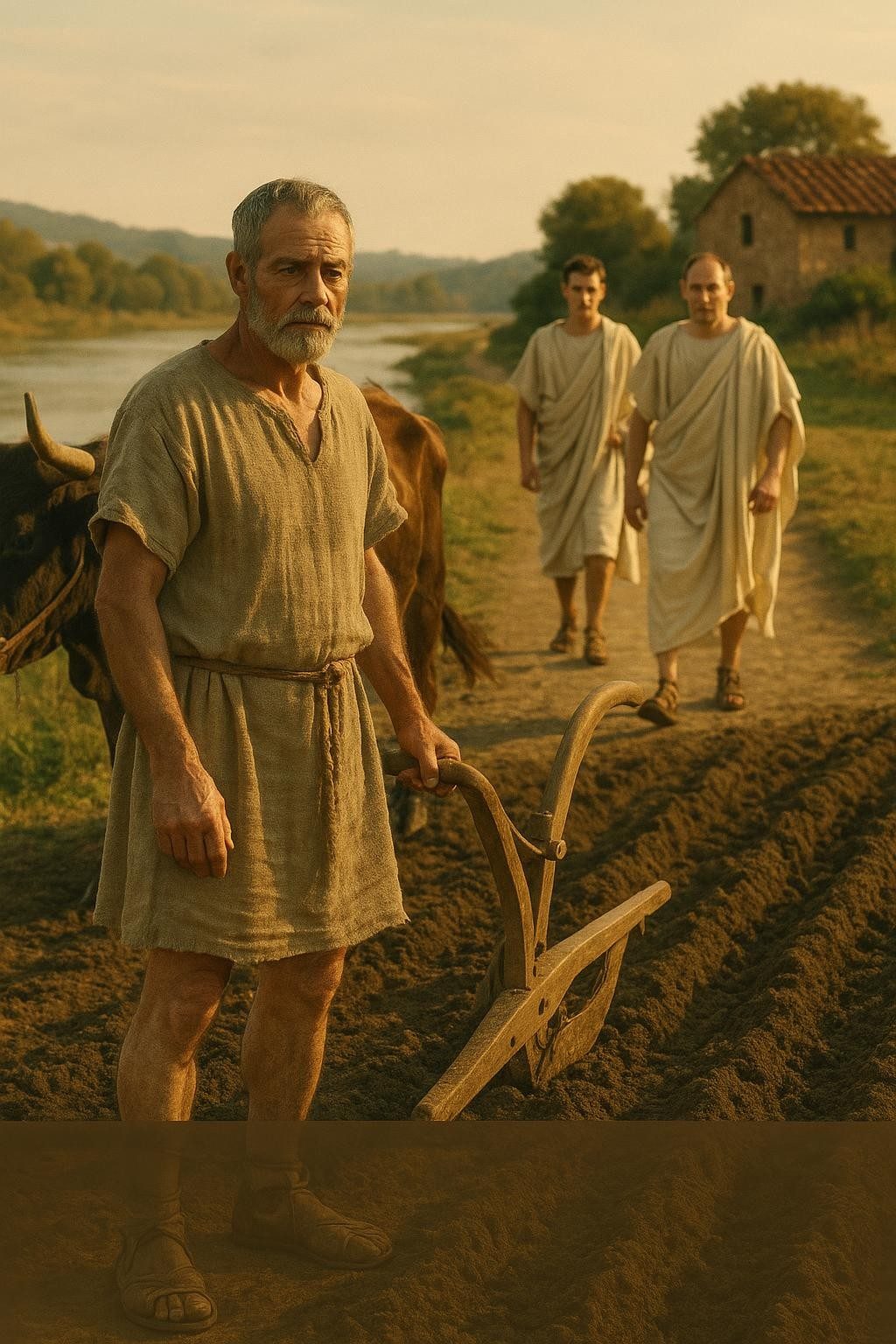
Lucius Quinctius Cincinnatus was renowned not for his wealth or titles but for his commitment to the Republic's ideal. Known to be farming his modest four-acre plot, Cincinnatus had turned his back on the political intrigue of Rome. Yet on that urgent day in 458 BCE, the Senate's emissaries made their way to the fields, where they found Cincinnatus with his hands on the plow. Without hesitation, he set aside his tools to heed the Senate's call, leaving behind his agrarian life to assume the role of dictatorship, a position imbued with supreme authority over Rome.
An Unlikely Savior
Cincinnatus accepted the dictator's mandate with no ceremonial grandeur, just a steadfast resolve reflecting his Roman spirit. As dictator, his powers were absolute, a mighty temporary position granted only in the face of imminent peril. Where others might have been tempted by the allure of unbridled command, he saw duty. He gathered the rapidly summoned Roman citizens and, with the kind of strategic foresight fueled by urgency, launched his campaign against the encroaching Aequi.
His tenure as dictator was marked by precision and brevity. Within a mere 15 days, Cincinnatus transformed panic into triumph. He promptly mobilized his men to counter the encirclement, persuading them not through the opulence of rhetoric but with plain-spoken determination. The swift clash at Mount Algidus lifted the siege and scattered the Aequi forces, resulting in an unanticipated Roman victory.
A Triumph on His Terms
It was customary for a victor to claim the spoils of war, the richest prize being latency to cling to power. However, Cincinnatus' triumph was followed not by consolidation but renunciation. The story goes that he celebrated his victory not with thunderous parades or self-aggrandizement but with a mere 16 days at the helm, a record in Roman governance.
With the enemy subdued and the Republic secured, Cincinnatus did what today would seem almost unfathomable: he relinquished his position. He laid down his supreme authority as easily as he had picked it up, declining any further acclaim or influence. In doing so, he established an indelible legacy as a paragon of virtue and selflessness. He returned to his farm, uninterested in extending his reach beyond the familiarity of furrows in the earth.
The Legacy of Quinctius Cincinnatus
The name Cincinnatus endured throughout history, solidifying into a symbol of civic virtue and the power of an unyielding principle. While the Romans lauded strength in combat and conquest, Cincinnatus embodied a different kind of heroism: the capacity to yield power when it was no longer necessary. His life serves as a powerful example that true leadership lies in the ability to prioritize the greater good over personal gain.
Centuries later, the remarkable modesty of his actions found echoes in diverse contexts—owing inspiration to generations of leaders, including America's founding fathers. The Society of the Cincinnati, an American fraternal organization established after the Revolutionary War, chose its name to honor him, linking his enduring legacy to the values they cherished: relinquishing power for the sake of republican virtue.
Why This Tale Endures
The story of Cincinnatus is one of stark choices, a reminder that sometimes the greatest demonstrations of strength come not from holding onto power but from letting it go. It compels us to consider not just the capacity to lead but the wisdom to know when leadership means stepping back. Cincinnatus stands out in history not only because he saved a fledgling Republic but because he did so with humility, refusing to let victory alter his life’s course. In today’s world, where ambitions often linger long after battles are won, Cincinnatus' story invites us to ask what we truly need to stand for, and whether we, too, could walk back to the plow.