He had been known as the richest king in the world. Yet, as flames began to lick the pyre at his feet, it was wisdom, not wealth, that Croesus of Lydia sought.
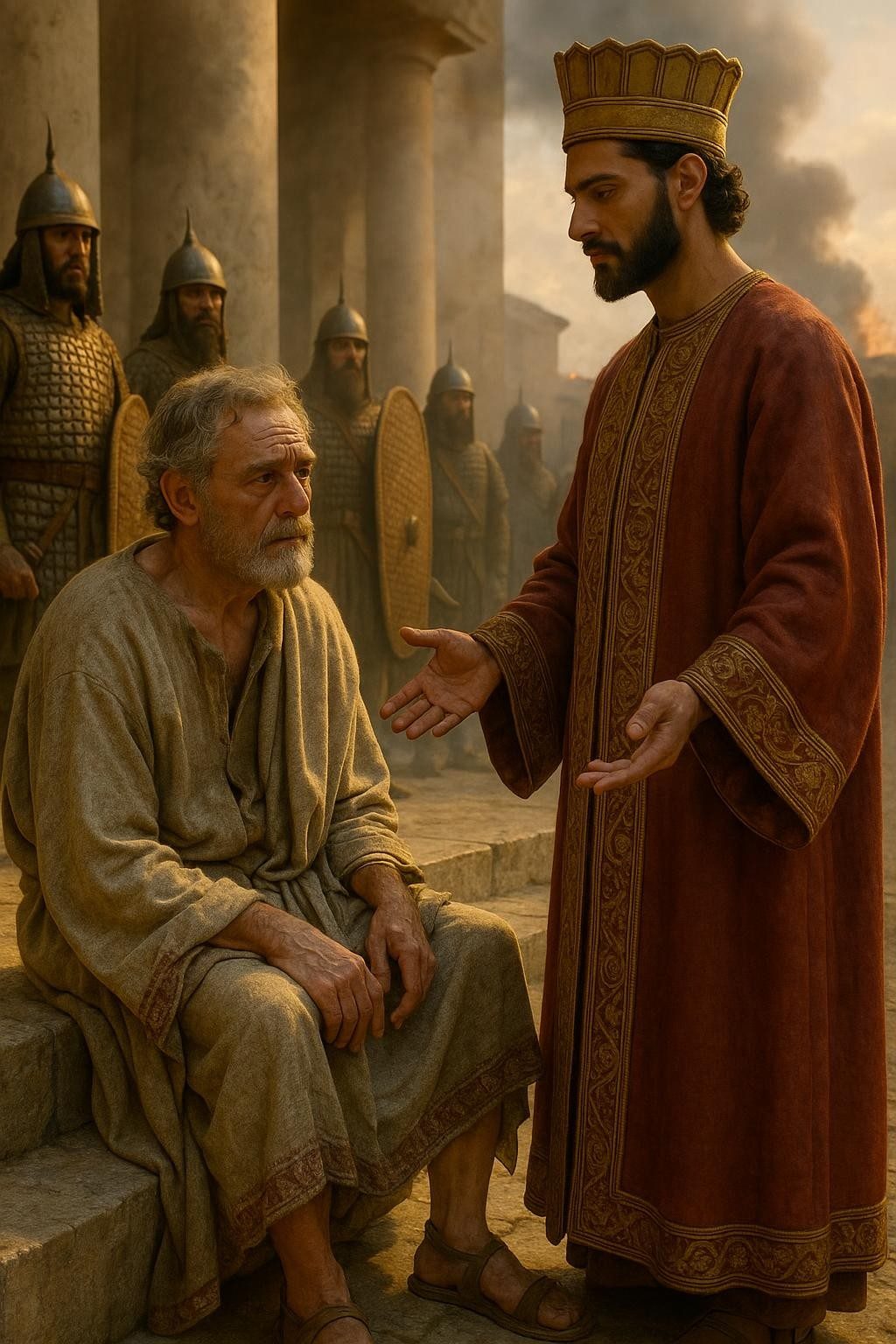
The story of Croesus kneeling before Cyrus the Great unfolds like a fable from ancient lore. The setting is the mighty city of Sardis, the pride of Lydia, now a smoldering ruin under the relentless march of the Persian Empire. At the heart of this tale is an encounter between two kings, each a towering figure in his own right, whose destinies converged on a chilling battlefield. Though it begins in defeat, it evolves into one of history's most poignant moments.
Croesus was no ordinary monarch. He ruled over a kingdom renowned for its opulence, a realm where the Pactolus River famously flowed with gold. His wealth was legendary, synonymous with the kind of riches that seemed to promise invulnerability. Yet even Croesus, with all his treasures, was not immune to the winds of war that blew fiercely from the East. He faced Cyrus, a leader whose ambition and military prowess had stretched the Persian Empire to new heights.
The pivotal clash came in 547 BC, a year marked by the siege that would see Sardis succumb. The clash of weapons, the cries of soldiers, and the smell of smoke filled the air as the fortress walls, once thought impregnable, crumbled before Cyrus's might. Annihilated on the battlefield, Croesus found himself a captive, his empire reduced to ashes. His capture epitomized the collapse of Lydia: a fall from grace as swift as it was absolute.
As the story goes, Croesus was bound and placed atop a great funeral pyre. The flames beneath him began to dance menacingly, their heat a ruthless herald of impending doom. It was a moment of reckoning, a grim testament to the fickle fortunes of kings. And yet, as Croesus awaited his fate, murmuring the name of Solon, the Athenian sage who had once warned him of the vagaries of fate, something extraordinary happened. Cyrus, witnessing his erstwhile enemy's moment of crisis, ordered the fires extinguished.
The detail that often surprises is the humanity of Cyrus in this victory. This conqueror of kingdoms possessed not just military brilliance but also a profound capacity for empathy. In the midst of annihilating a rival power, he saw something in Croesus that made him hesitate. "What would you do if you could live again?" Cyrus reportedly asked the once-mighty king. It was not a question of mockery but one that released Croesus from the chains of despair, offering a sliver of hope.
Croesus's response remains an enigma wrapped in the dust of ages. Accounts suggest he spoke of the impermanence of life and the folly of wealth. His defeat had stripped away the ostentatious armor of invincibility, offering clarity in its place. The lesson he learned the hard way was one universal in its truth: that wisdom carries more weight than gold, and understanding life's brevity is the truest wealth.
This extraordinary encounter did not conclude with the execution of a vanquished foe; rather, it marked the beginning of an unlikely association. Famed for his wisdom, Cyrus naturally found value in the counsel of a leader capable of self-reflection amidst destruction. Croesus, spared from the flames, reputedly became an advisor to Cyrus, using his insights to influence the administration and decisions of the Persian court. In a world where the spoils of war were often brutally final, the clemency shown by Cyrus became a narrative of mercy and shared wisdom.
Through the centuries, this episode echoes as a tale laden with lessons. Croesus's journey from sovereign to supplicant so starkly visualizes human vulnerability in the face of overwhelming change. His interaction with Cyrus stands outside the typical narrative of conqueror and conquered—here, victor and vanquished shared thoughts on life, mortality, and the essence of true fortune. The exchange informed both their legacies, casting shadows long and contemplative across the canvas of ancient history.
For readers today, amidst a world constantly jostling with change, Croesus's tale is a reminiscent bell ringing through the corridors of time, reminding us that understanding, empathy, and lessons learned in times of loss may forge paths more enduring than any display of wealth or power. In a conquest that could have been defined by flames and ashes, it is the compassion and foresight of one man that endures as a reminder of the human spirit's capacity for transformation, even at a time when all else seems lost.