Picture this: a destitute Icelandic farmer stands on the windswept docks of Trondheim in 1054 AD, clutching a rope that leads to the most valuable creature in all of medieval Europe—a massive, cream-colored polar bear. King Magnus of Norway, one of the most powerful rulers in the known world, has just offered him enough gold to buy half of Iceland for this magnificent beast. The farmer's response? A polite but firm "no."
This isn't the beginning of a fairy tale. This is the true story of Audun Þorgilsson, a man so poor he owned nothing but the clothes on his back and one extraordinary animal that would make him a legend across two kingdoms.
The Rarest Treasure in Medieval Europe
In the harsh landscape of 11th century Iceland, polar bears were hluti—literally "things of wonder." These massive predators occasionally drifted south on ice floes from Greenland, but capturing one alive was nearly impossible, and keeping one alive even more so. To medieval Europeans, who had never seen such creatures, a living polar bear was more valuable than a chest full of Byzantine gold or a Viking longship heavy with silver.
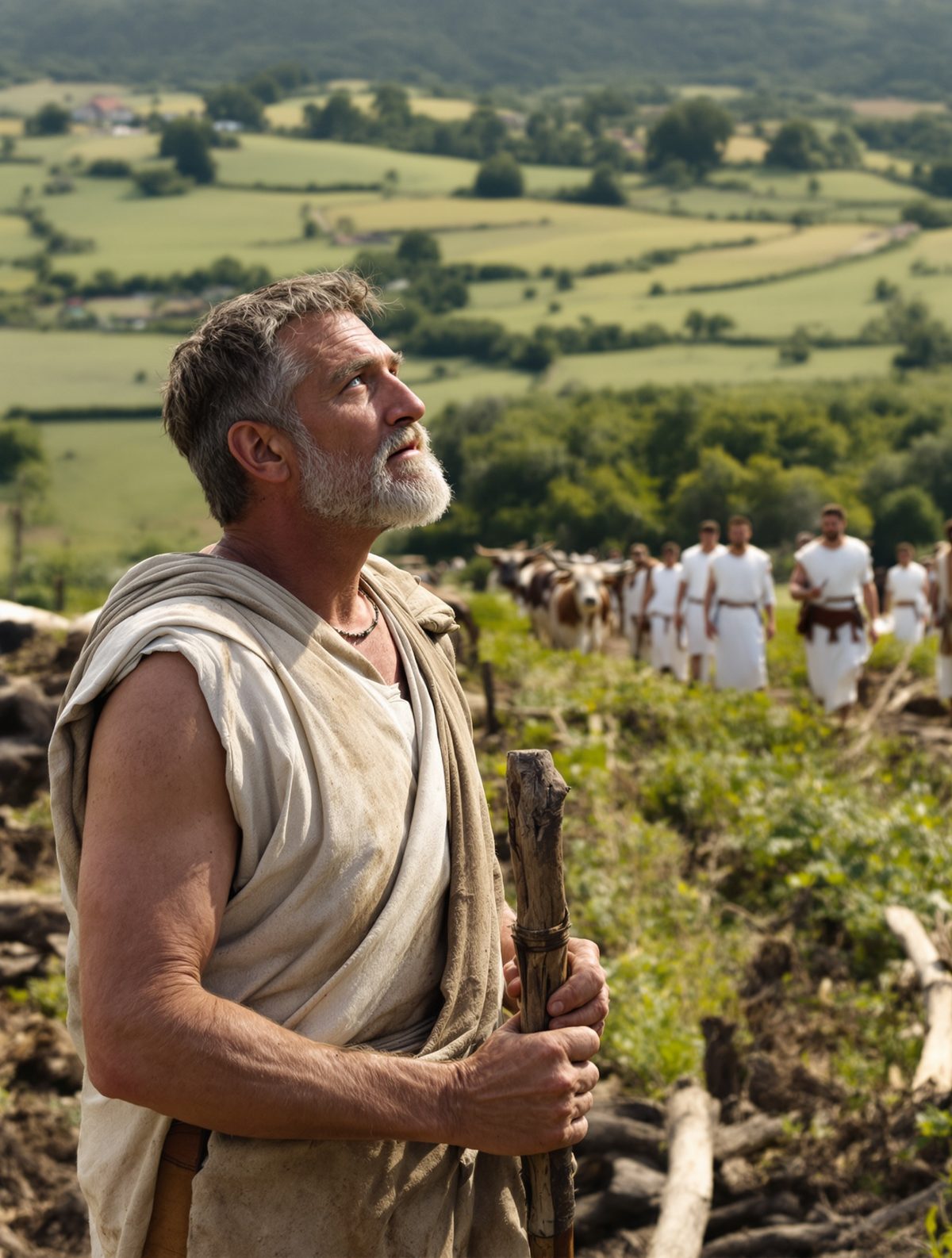
Audun Þorgilsson was a húsmaður—essentially a landless laborer who worked other men's farms for shelter and scraps. By all accounts, he was nobody special. No saga tells us he was particularly brave or clever. He had no noble blood, no wealthy family connections, no military prowess. What he did have, through some stroke of extraordinary luck, was a polar bear.
The sagas don't tell us exactly how Audun came to possess this creature—whether he captured it himself, traded for it, or inherited it from a deceased relative. What we do know is that by 1054 AD, this dirt-poor farmer had made a decision that would have seemed insane to anyone with common sense: he was going to sail across the treacherous North Sea to Denmark and present his bear as a gift to King Sweyn II Estridsson.
A Journey Across the Whale Road
The voyage from Iceland to Denmark in the 11th century was no pleasure cruise. Viking ships, even the sturdiest cargo vessels, were open to the elements. Imagine the logistical nightmare of transporting a several-hundred-pound carnivore across roughly 1,000 miles of some of the world's most dangerous waters. The bear needed fresh water daily, massive quantities of fish or meat, and enough space to move without capsizing the ship.
But Audun had calculated something that modern historians have only recently begun to appreciate: King Sweyn II of Denmark was locked in a bitter territorial dispute with King Magnus of Norway. Political gifts—especially ones as spectacular as a living polar bear—could forge alliances, secure trade agreements, or even prevent wars. In an age before banks or formal credit systems, a poor man's most valuable currency was often his reputation for loyalty and honor.
The journey likely took several weeks, island-hopping through the Faroe Islands and possibly stopping in the Orkney Islands for supplies. Every day at sea meant more fish to catch or buy, more fresh water to source, and more risk that his precious cargo might die, taking his dreams of prosperity with it.
The Test of Kings
Here's where Audun's story takes a dramatic turn. Instead of sailing directly to Denmark, his ship made port in Trondheim, Norway—right in the court of King Magnus Olafsson. Word of the Icelandic farmer and his extraordinary bear spread through the royal hall faster than news of a Viking raid.
King Magnus was no minor ruler. He controlled vast territories across Norway and had designs on Denmark itself. When he learned that a polar bear—a creature so rare that Norwegian kings had been trying to acquire one for generations—was sitting in his very own harbor, bound as a gift for his political rival, he acted swiftly.
The king summoned Audun to his hall and made an offer that would have set the farmer up for life: enough gold and silver to buy land, livestock, and security for his entire family line. All Audun had to do was hand over the bear and forget about this foolish mission to Denmark.
What happened next reveals something profound about medieval concepts of honor and word-keeping. Audun refused. Not because he was greedy or hoping for a better offer, but because he had given his word. In Old Norse culture, a man's drengskap—his integrity and reliability—was literally more valuable than gold. A man without honor was níðingr, a social outcast worse than a slave.
The Gamble of a Lifetime
King Magnus, rather than being offended by this peasant's refusal, was reportedly impressed. Here was a man so committed to his word that he would turn down a king's fortune. Magnus not only allowed Audun to continue his journey but provided him with supplies and safe passage through Norwegian waters—a gesture that speaks volumes about the respect that unwavering loyalty commanded in Viking society.
When Audun finally reached the court of King Sweyn II in Denmark, his arrival caused a sensation. The Danish court had never seen anything like this massive Arctic predator. King Sweyn, delighted with his gift and undoubtedly impressed by the story of Audun's refusal of King Magnus's offer, rewarded the farmer with a purse of silver so heavy it took two men to carry it.
But the story doesn't end there. Sweyn went further, offering Audun a permanent position in his court and the chance to become a Danish nobleman. Once again, Audun surprised everyone by declining. He wanted to return to Iceland, to his homeland and his simple life—but now as a wealthy man who had kept his word to two kings.
The Return of a Living Legend
King Sweyn provided Audun with a magnificent ship, armed guards for protection, and letters of introduction that would guarantee him safe passage and generous treatment at any royal court in Europe. But perhaps the most valuable gift was a gold arm-ring that Sweyn placed on Audun's wrist—a symbol that the bearer was under the personal protection of the Danish crown.
On his return journey, Audun again stopped in Norway, where King Magnus invited him back to court. The Norwegian king, hearing the full story of Audun's success, was so impressed that he too rewarded the farmer with gold and declared him welcome in Norway for the rest of his life. Two kings—political enemies—had both honored the same humble peasant.
The Auðunar þáttr vestfirzka (The Tale of Audun from the West Fjords), preserved in several medieval Icelandic manuscripts, tells us that Audun returned to Iceland as one of the wealthiest men on the island. He bought land, built a grand farm, and lived comfortably for the rest of his days. More importantly, his story became a legend that was told around Viking hearths for generations.
Why a Medieval Farmer's Honor Still Matters
Audun's story resonates across nearly a thousand years because it challenges our assumptions about power, wealth, and success. In an age when we're constantly told that compromise and deal-making are the keys to advancement, here's a man who succeeded spectacularly by doing the opposite—by absolutely refusing to compromise his word, even when offered everything he could have dreamed of.
The tale also reveals something fascinating about medieval Scandinavian culture: honor wasn't just a luxury for nobles and warriors. A poor farmer's integrity was recognized and rewarded by the most powerful men in the known world. In societies where written contracts were rare and political alliances could shift overnight, a person's reputation for keeping their word was literally priceless.
Perhaps most remarkably, Audun's story shows us that sometimes the biggest risks pay the biggest rewards—not because of cunning or manipulation, but because of simple, unwavering honesty. In a world of Viking raids, political intrigue, and medieval power games, one poor farmer with a polar bear and an unshakeable moral compass managed to impress two kings and secure his place in history forever.