Picture this: you're lying on your deathbed, fever burning through your veins, when suddenly the gods themselves appear with an offer. You can live—but only if someone you love dies in your place. Your parents shake their heads. Your closest friends mysteriously find urgent business elsewhere. The silence stretches until one voice breaks through: "I'll do it." And it's your wife.
This isn't the plot of a modern thriller—it's the true story of Alcestis, a queen in 5th century BC Thessaly whose sacrifice became one of the most powerful tales of love and devotion in ancient Greek history. While most people know the myths of Helen of Troy or Penelope's faithful waiting, Alcestis's story reveals something far more shocking about ancient Greek society: in a world where women had virtually no rights, one woman's choice to die exposed the cowardice of every man around her.
The King Who Cheated Death (But Broke Divine Law)
Our story begins with Admetus, King of Pherae in ancient Thessaly, around 450 BC. Unlike many rulers of his time who gained their thrones through conquest or inheritance alone, Admetus had earned divine favor through an extraordinary act of kindness. When Apollo was banished from Mount Olympus for killing the Cyclopes (yes, the gods had anger management issues too), he was forced to serve as a mortal shepherd for nine years. Most kings would have treated a divine exile as a curiosity or slave, but Admetus welcomed Apollo as an honored guest.
This kindness paid dividends in the most unexpected way. When the Fates decreed that Admetus must die young—probably from one of the many plagues that swept through ancient Greece—Apollo intervened. Using his divine influence, he convinced the three sisters who controlled human destiny to modify their decree. Admetus could live, but only if someone else willingly took his place in death.
What Apollo offered was essentially a supernatural life insurance policy, but with a twist that would make any modern ethicist's head spin. The substitute couldn't be a random volunteer or enemy—it had to be someone who genuinely loved Admetus enough to die for him. The gods, it seems, wanted to test not just the king's worthiness to live, but the quality of love that surrounded him.
When Love Comes with Conditions
You might think that finding someone willing to die for a beloved king would be easy. After all, Admetus was reportedly handsome, just, and generous—the kind of ruler that ancient Greek poets loved to celebrate. He had conquered neighboring territories, brought prosperity to his people, and maintained the favor of multiple gods. His court was filled with friends, advisors, and family members who had benefited from his reign.
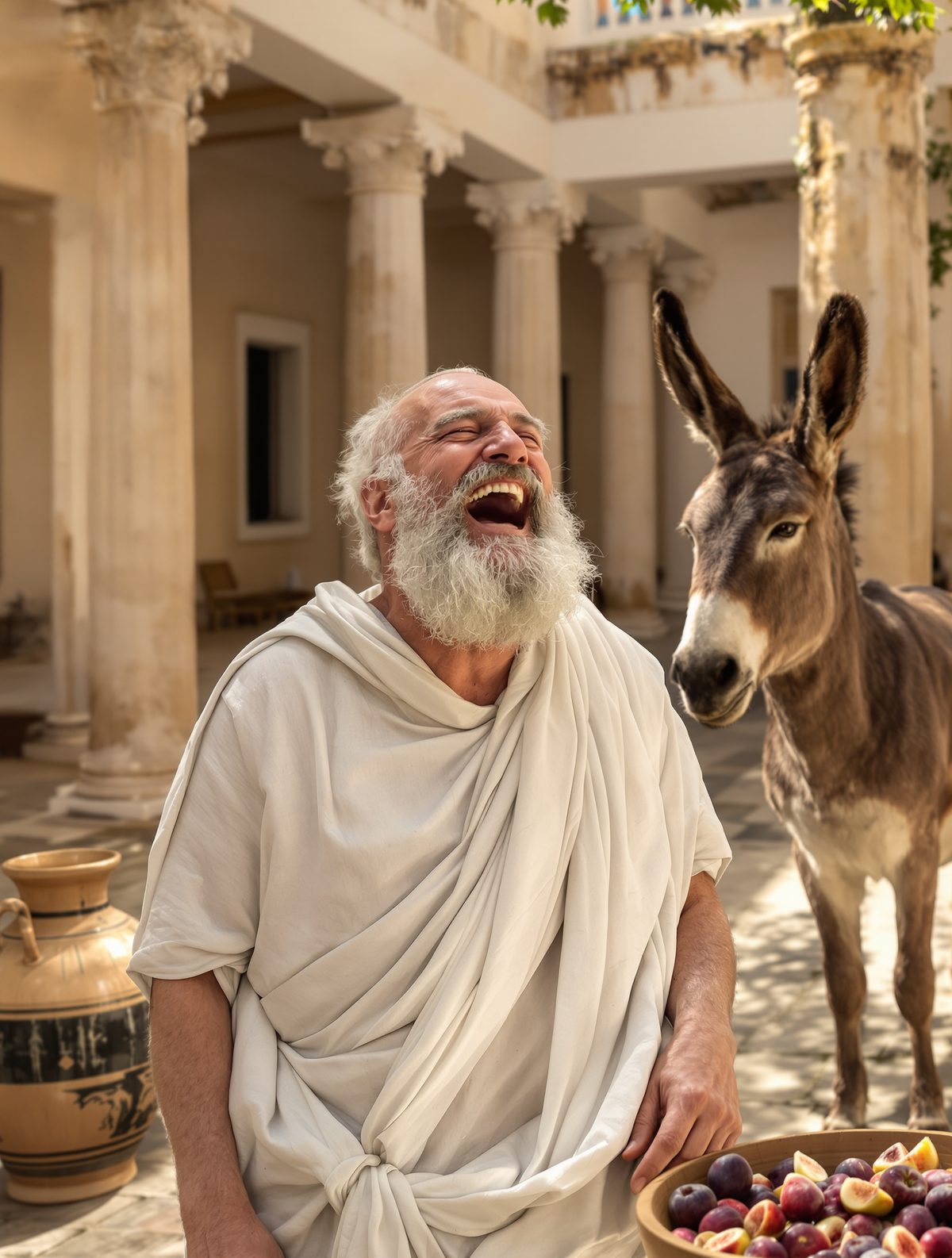
But when Apollo's offer became known, something remarkable happened: everyone suddenly discovered they had reasons to live. Admetus first approached his elderly parents, reasoning that they had already lived full lives and might be willing to sacrifice their remaining years for their son's long future. The response was swift and brutal in its honesty. His father essentially told him, "We may be old, but we're not dead yet. Every day of life is sweet, even in old age."
His closest friends—the same men who had fought beside him in battle and shared his victories—found urgent reasons to be elsewhere when the topic arose. Some ancient sources suggest that a few of his warriors actually fled the city rather than face the moral pressure of the situation. The scene must have been devastating: a dying king watching his support network evaporate as each person chose their own survival over his life.
This mass abandonment reveals something fascinating about ancient Greek society. Despite their cultural emphasis on honor, loyalty, and heroic sacrifice in battle, when faced with actual death for someone else's benefit, even the bravest warriors found their courage lacking. It's a reminder that the gap between idealized virtue and human reality was just as wide 2,500 years ago as it is today.
The Queen's Impossible Choice
Enter Alcestis, whose decision would echo through centuries of literature and philosophy. She wasn't just any wife—she was the daughter of King Pelias of Iolcos, a princess who had married Admetus after he completed the seemingly impossible task of yoking a lion and a boar to a chariot (ancient Greek courtship was intense). She had everything to live for: young children who needed their mother, a kingdom that required her guidance, and her own royal lineage to maintain.
Yet when every man in Admetus's life had refused to die for him, Alcestis quietly announced her intention to take his place. Ancient sources don't record her exact words, but they do capture the shocked silence that followed. Here was a woman in a society where females couldn't own property, vote, or even speak in most public forums, making the most consequential decision of anyone's life.
What makes her choice even more remarkable is that she had time to think about it. This wasn't a split-second decision made in the heat of battle or a moment of crisis. The gods had given the family time to find a volunteer, which meant Alcestis spent days or perhaps weeks contemplating her own death while watching her husband waste away. She arranged for the care of their children, settled her affairs, and prepared mentally and spiritually for a voluntary death.
The psychological weight of this decision is staggering. Modern research on terminal illness shows how difficult it is for people to accept even inevitable death, yet Alcestis chose to embrace it willingly for someone else's benefit. In a culture that viewed women as essentially the property of their male relatives, she exercised the ultimate form of agency: control over her own life and death.
The Day Death Came Calling
The ancient sources describe Alcestis's final day with remarkable detail, suggesting that the story was so significant it was carefully preserved through oral tradition before being recorded by later writers. On the appointed morning, she dressed in her finest robes—not as a victim going to slaughter, but as a queen maintaining her dignity even in death.
She spent her final hours saying goodbye to each room of the palace, touching the familiar objects of her daily life one last time. The scene that ancient audiences found most heartbreaking was her farewell to the marriage bed she had shared with Admetus, where she knelt and prayed that whatever woman succeeded her would be kind to their children.
When Death himself arrived—personified in Greek mythology as Thanatos, a winged figure with a sword—Alcestis met him calmly. There was no begging, no last-minute attempts to escape her fate. According to the earliest versions of the story, she simply took his hand and walked out of the palace, leaving behind a husband who was already recovering his strength and children who didn't yet understand that their mother was never coming home.
The immediate aftermath was apparently devastating. Admetus, now healthy but faced with the reality of what his life had cost, fell into a grief so profound that some sources suggest he regretted his recovery. The palace that had been celebrating the king's miraculous recovery became a house of mourning, and the courtiers who had refused to sacrifice themselves now had to live with the knowledge that a woman had shown greater courage than all of them combined.
The Return: When Myths Become Hope
Here's where the story takes a turn that reveals why it remained so powerful throughout antiquity. Just as the court was preparing for Alcestis's funeral, an unexpected guest arrived: Heracles (known to Romans as Hercules), fresh from completing one of his famous labors. Ancient Greek hospitality customs required that guests be welcomed regardless of circumstances, but Admetus was so lost in grief he could barely function as a host.
When Heracles learned what had happened, he made a decision that transformed the entire narrative. Rather than simply offering condolences, he descended into the underworld itself to wrestle Death for Alcestis's soul. The image of the greatest hero in Greek mythology literally fighting Death hand-to-hand over one woman's life must have been electrifying to ancient audiences.
Heracles won, of course, and returned Alcestis to the world of the living. But here's what makes this more than just a happy ending: most ancient sources suggest that Alcestis came back changed. Some say she was forbidden to speak for a year, representing the difficulty of returning from death. Others suggest she retained memories of the underworld that gave her wisdom beyond mortal understanding.
This resurrection wasn't just divine intervention—it was a cosmic recognition that Alcestis's sacrifice was so extraordinary that the natural order itself bent to reward it. In a mythology filled with gods punishing humans for their hubris, here was a story where human virtue was so pure that it compelled divine action to preserve it.
The Legacy of Ultimate Love
The story of Alcestis became one of the most retold tales in ancient literature, inspiring works by Euripides, Plato, and countless other writers. But its power goes beyond entertainment—it fundamentally challenged Greek society's assumptions about gender, courage, and the nature of love itself.
In a culture where women were expected to be silent, submissive, and decorative, Alcestis demonstrated that the greatest act of courage in the entire story came from the one person society valued least. Her willingness to die exposed the conditional nature of everyone else's love and loyalty. The men who claimed to honor Admetus proved that their honor had limits, while the woman who was supposed to be weak and dependent showed that true strength means acting on your values even when it costs everything.
Today, when we struggle with questions about unconditional love, personal sacrifice, and the courage to act on our deepest values, Alcestis's choice remains as challenging as it was 2,500 years ago. Her story asks uncomfortable questions: What would we actually sacrifice for the people we claim to love? When tested, how many of us would choose our own survival over someone else's life, no matter how much we care about them?
Perhaps most importantly, Alcestis reminds us that the most extraordinary acts of courage often come from the most unexpected sources. In a world that celebrated masculine heroism in battle, the greatest hero turned out to be a woman who never touched a weapon but changed the cosmic order through the simple act of meaning what she said when she promised to love someone else more than herself.