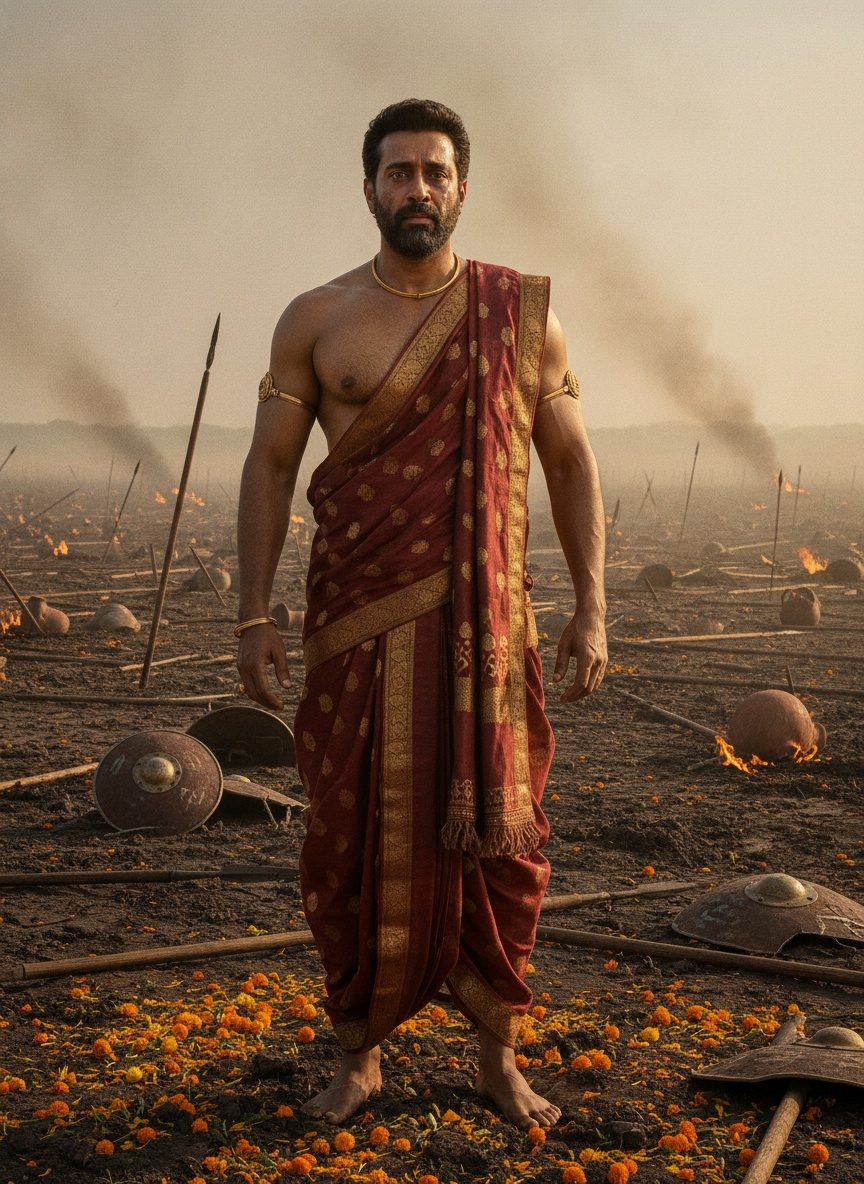
261 BCE. The air still carried the acrid smell of burning wood and putrefying flesh, lingering as a reminder of the devastation that had swept through the land.
Aftermath of Conquest
The battlefield of Kalinga, a swath of land that lay along what is now the eastern coast of India, was not just any conquered territory. To Ashoka, the mighty emperor of the Maurya Empire, it was supposed to be the glittering jewel in his already resplendent crown — the final affirming mark of his power in an era defined by conquest and expansion. But as the ruler stepped onto the blood-soaked earth, the once-strategic jewel revealed itself as a heart-wrenching abyss of human suffering.
Ashoka, like other rulers of his time, pursued war as both a necessity and an art form. Conquering Kalinga was a political imperative; it was strategically positioned in a way that controlling it promised strong maritime trade opportunities and undisputed dominance over the Indian subcontinent. However, the people of Kalinga, fiercely independent and unaligned with Ashoka's empire, resisted with formidable courage.
The battle was ruthless, characterized by the cacophony of clashing weapons and the cries of warriors. When the dust settled, one hundred thousand souls were counted among the dead. An equivalent number of survivors were left scarred by the loss of loved ones, a haunting specter of a war that had poisoned their land and spirit. Ashoka walked through the charred remains of what had once been homes, the remnants of a once-thriving society reduced to ashes and ghosts, leading to deep introspection.
Yet the brutality of Kalinga was neither unique nor unseen in the annals of history. What set this moment apart was the transformation it ignited within Ashoka himself. Witnessing the ruin he had wrought, the emperor found himself confronting an unfathomable emptiness that victory could not fill. It was a stark contrast to the calculated and often impersonal nature of war he knew, revealing the raw truth that lay beneath the veneer of glory and conquest.
The Emperor's Transformation
The legend of Ashoka recounts a pivotal moment of unprecedented self-reflection on that ravaged battlefield. Walking among the dead and dying, he was overcome by an overwhelming sense of remorse and sorrow. This profound emotional awakening became a catalyst for a radical shift in his approach to rulership, forever altering the course of his empire and his place in history.
Turning away from the conventional path of emperors, Ashoka adopted the principles of Buddhism, which became not only his personal refuge but also a cornerstone of his state's ideology. He embraced the teachings of Siddhartha Gautama, the Buddha, whose philosophy emphasized compassion, peace, and the renunciation of violence. This transformation was not a mere surface-level change; rather, it permeated the very core of Ashoka's governance.
Ashoka's inscriptions, etched on pillars and rocks scattered across the heart of his vast empire, offer an intimate glimpse into his new paradigm of power. These edicts reveal his dedication to dharma — a complex amalgam of duty, righteousness, and moral law. They chronicle his efforts to replace the sword with moral conquest, advocating for the welfare of his subjects through public health, education, and justice.
His evangelism of Buddhism was not enforced by zealotry, but rather shared through dialogue and respect for existing traditions. This novel approach allowed Buddhism to flourish, not only within his empire but beyond its borders, influencing cultures across Asia. Ashoka's personal evolution made him an icon of change, transcending his role from conqueror to the keeper of peace and wisdom.
The Enduring Lesson
The story of Ashoka and the Battle of Kalinga offers more than just historical intrigue. It presents a complex narrative of power, transformation, and redemption. Its essence lies in depicting how an individual's realization of the profound impact of their actions can lead to monumental shifts in values and society.
Ashoka's journey compels us to reflect on the nature of power and the often-overlooked human cost of its pursuit. His ability to recognize the enormity of his mistakes and seek redemption holds a mirror to the limitless potential for personal growth, even among the mightiest of leaders. In a world still torn by conflict and ambition, Ashoka's experience serves as a compelling reminder of the power of empathy and the possibility of transformation through introspection.
In contemplating Ashoka's legacy, we find a powerful illustration of a leader who dared to turn against the tide of imperial conquest, choosing instead to embrace peace. The tale of his transformation resonates across millennia, challenging us to consider how our actions ripple through the annals of history, shaping the collective destiny of humanity.