The sun climbed languidly over the Aegean horizon, spilling a golden hue across the Bay of Salamis in 480 BC. The scattered islands seemed to float on the shimmering waters, their rocky outcrops casting long shadows in the morning light. A gentle breeze carried the salty scent of the sea mingled with the acrid smoke of distant fires, a reminder of the looming conflict. On this tranquil backdrop, a momentous struggle was about to unfold—a clash that would etch its mark on history and elevate one woman's audacious courage to the realm of legend.
A Woman Among Warriors
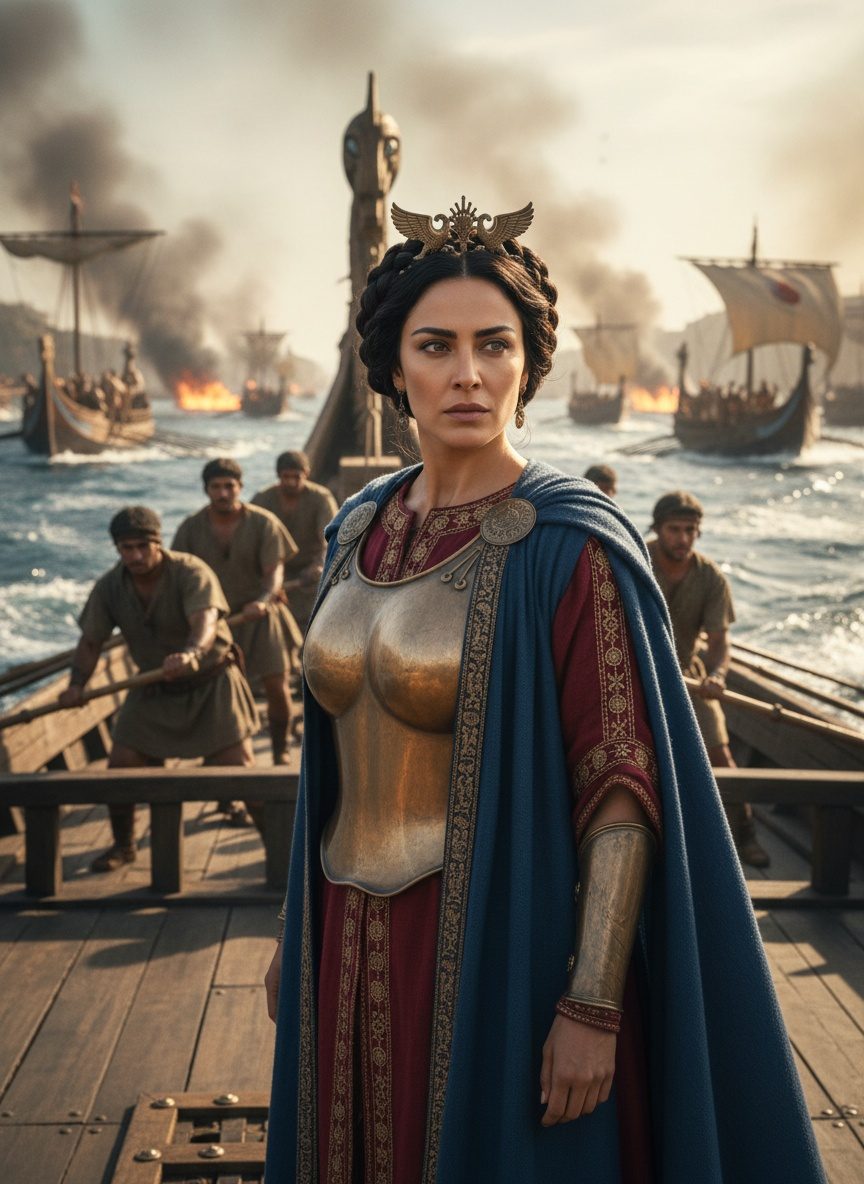
As battle preparations commenced, a singular figure stood resolute on the deck of her ship, cutting a striking figure amidst a sea of warriors. This was Artemisia of Halicarnassus, the lone woman commanding a warship among the might of the Persian fleet. Her presence was nothing short of extraordinary; here was a woman who had defied not only societal norms but the perils of warfare itself. Born to a Carian father and Cretan mother, Artemisia ascended to power as the ruler of Halicarnassus upon her husband’s death, leading with a mix of statesmanship and cunning that earned her the admiration—and sometimes the ire—of her peers.
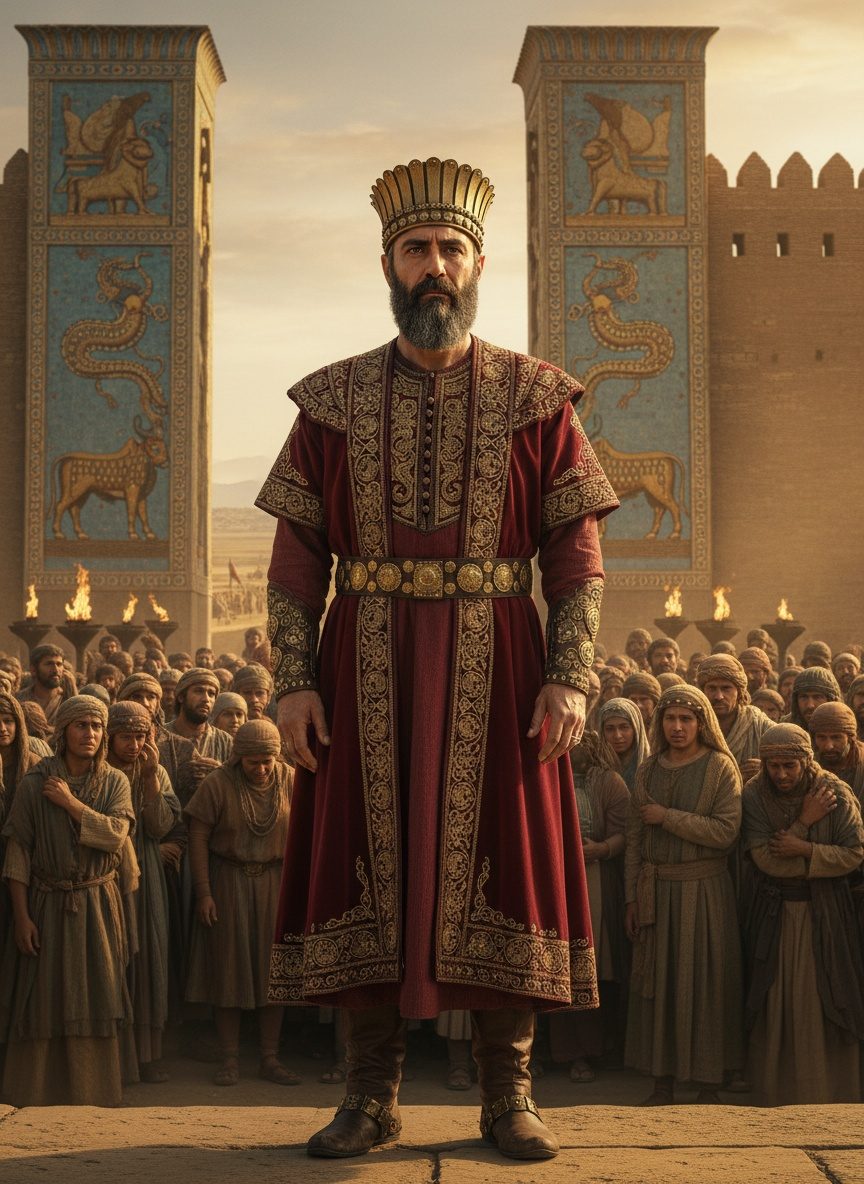
Despite the male dominance of the ancient world, Artemisia's command was neither disputed nor diminished. Her strategic acumen led her to counsel King Xerxes against engaging in the upcoming naval battle. She warned him of the Greeks' superior skills in naval engagement and the dangerous narrowing of the straits which favored Greek ships over the cumbersome Persian vessels. Her advice, based on astute observation and keen insight, was dismissed by the overconfident Persian king, a decision that would soon spiral into chaos.
The Clash at Salamis
As Xerxes' fleet advanced, the tension in the narrow straits was almost palpable. The clamor of clashing metal and the shouts of men echoed across the waters as the Persians sought dominance over the Greek defenders. From her vantage point, Artemisia watched as her premonitions materialized—the larger Persian ships fumbled in the constricted space, while the nimble Greek triremes danced circles around them, launching volleys that decimated Persian ranks.
Amidst the mounting confusion, Artemisia made a decision as bold as it was reckless. As her ship came under attack, she turned her vessel and—a calculated move designed to deceive—rammed into another Persian ship. The audacious act sent the enemy cohorts scrambling, under the illusion she had defected. From the cliffs, Xerxes watched, astounded. While he marveled at what seemed like an act of defection but was actually a desperate but brilliant masquerade to ensure her escape, the Persian king could not help but admire her guile and resourcefulness.
The Greatest Escape
The aftermath of Salamis was a debacle for the Persians. The crushing defeat stung, and a retreat became inevitable. Yet, in the annals of victory and loss, Artemisia emerged not as a traitor, but a keen strategist. Her calculated risk turned the tide of her personal survival and preserved her fleet from annihilation. Xerxes, fascinated by her cunning and unwilling to see her punished for what others might view as betrayal, instead praised her shrewdness. In the court of a humiliated emperor, it was Artemisia’s insight and intelligence that shone through the darkness of defeat.
Indeed, Xerxes reportedly praised her valor, confiding that his male warriors had fought like women and she, the only female commander, had fought like men. Such recognition in an empire vast and passionate for conquest was an unprecedented accolade for a woman of her time. Artemisia returned to Halicarnassus, her name etched into the taciturn sea winds of the Aegean, a testament to her indomitable spirit.
The Legacy of Artemisia
Artemisia remains a figure of enduring intrigue—a beacon of unexpected valor in a dominion dominated by men. Her story whispers to us across the millennia, a narrative as delicate as it is defiant, reminding us of the nuanced complexities women navigated in ancient societies. At Salamis, Artemisia not only exhibited exceptional bravery; she challenged the paradigms of her day, demonstrating that leadership and courage were not constrained by gender or societal expectations.
The ripples of her journey do more than recount a singular act of maritime gallantry; they beckon us to consider the unheralded roles women have played throughout history—those queens and strategists, warriors and leaders whose narratives, layered with the dust of time, remind us of a rich and complex past. Artemisia's tale is one such story, a vivid illustration of resistance and resilience. As the waves lap quietly against the shores of Salamis, the memory of that day—and the woman who defied its fate—endures.