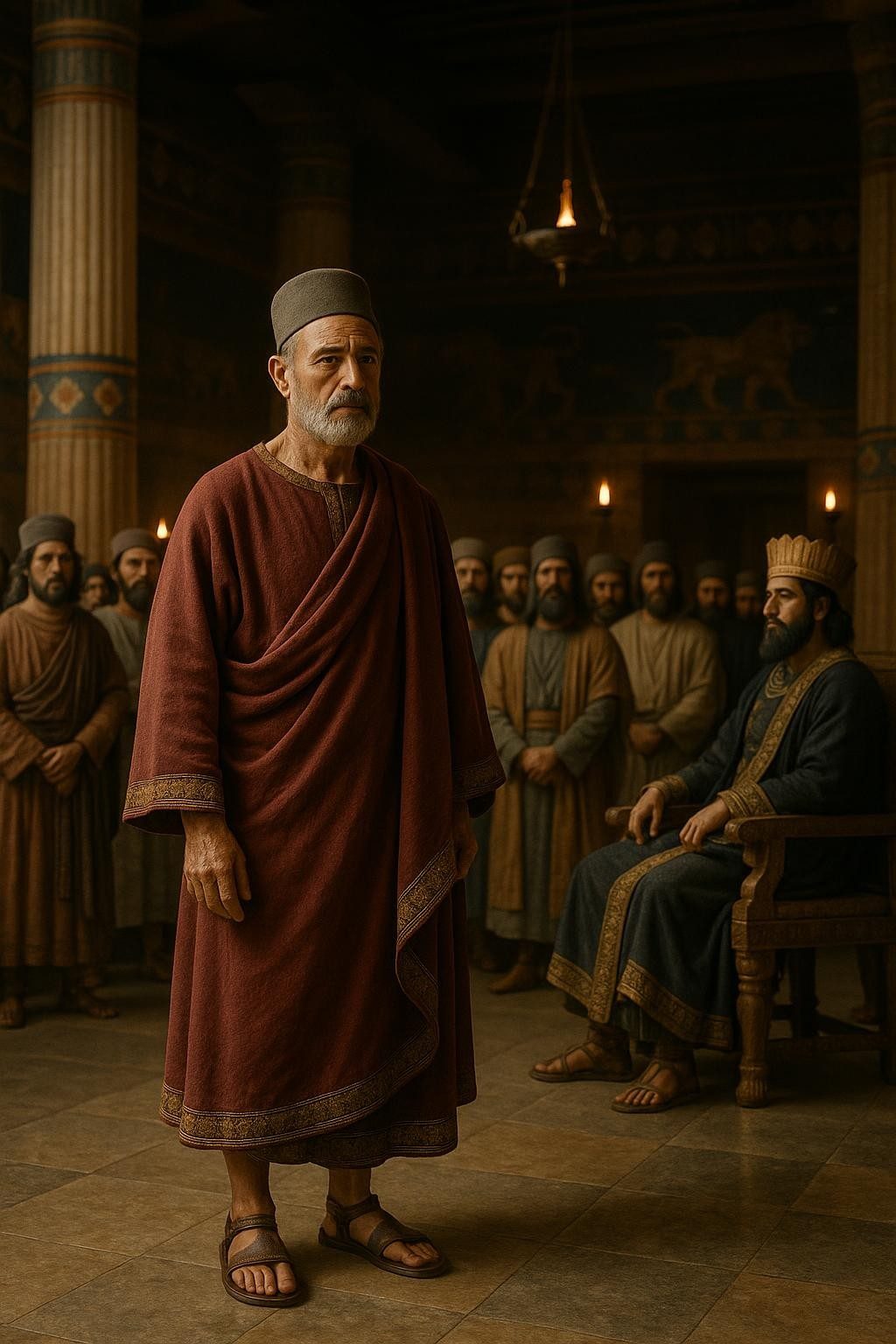
The air inside the Persian court was thick with the murmurs of anticipation. Flickering torches cast long shadows as richly ornamented generals and courtiers awaited the king’s decree. In the midst of the opulence, Artabanus stepped forward, defying the grandeur of his surroundings with a singular purpose. He leaned closer to his nephew, the towering figure of Xerxes, not with a whisper of flattery but with a bold warning that pierced the charged air.
The Quiet Voice Among Roaring Cheers
Artabanus, a seasoned adviser and respected family elder, stood amidst the clashing expectations. While others around him painted an irresistible vision of glory and conquest, he alone ventured to break the spell with words of caution. His eyes held the weight of past battles, the silent wisdom gleaned from years observing the ebb and flow of power across the empire’s vast territories. He wasn’t just speaking to Xerxes the king; he addressed Xerxes the young human, compelled by familial love and a duty to truth.
“Consider, great king, the treacherous lands stretched between here and your dreams of conquest,” Artabanus implored, his voice steady. “Consider the storms and the soil, the homes across the mountains beyond the sea.” His words resonated with an unease that his peers dared not express, a foreboding rooted in experience rather than blind ambition. To imagine a future defiled by hubris was his curse, and this moment in court, his solemn canvas.
The Immensity of an Ambitious Vision
Xerxes’ plans were monumental. The assembled forces represented more than just the pinnacle of Persian might—they embodied the ambition to fold the Greek states into the empire’s embrace, an endeavor unprecedented in scope. This was an army that spanned cultures and languages, a rolling storm of men and steel poised to bridge two vastly different worlds.
Encouragement flanked him at every turn: the promise of glory sung like a siren’s call from the lips of those who sought favor through war. Not least was the prophecy that history remembers as foretelling the ascendancy of Persian dominion—the version that chose to gloss over the whispers of tragedy that Artabanus voiced. Yet, those murmurings of grand destiny, delivered in polished verses of Persian tradition, barely masked the rebellion that lingered across the Aegean Sea.
The deeper nuances of Artabanus’ argument painted a harsh landscape, emphasizing difficulties that would only grow as the campaign unfolded. Was it sheer courage or was it folly to stand firm when winds of change already unfurled the enormous sails of Persian vessels towards distant shores?
Whispers in a Tempest
Despite Artabanus’ concerns, the stage for invasion was set against the backdrop of world-changing stakes. The preparations churned forward like a giant tidal wave, disregarding any caution thrown against it. The scenes were almost biblical in scale; he watched as soldiers and ships amassed like ants on a march, the granaries emptying to fill a juggernaut that had no precedent.
No single advisor could halt the sheer momentum of this colossal gamble. Xerxes wasn’t merely placing a stake on the field of battle but on the annals of history, wagering that the chorus of his courtier’s tales would drown out the lone voice that bet otherwise. But in time, truths forgotten or scorned would resonate with the echoes of ancestral stories and adjusted fates.
Artabanus’ warning might have faded into the wind had the circumstances of defeat not underlined it later. When battles turned against the invaders, when the likes of Thermopylae and Salamis became names etched defiantly against the imperial dream, the reality Artabanus foresaw drew clear. His predictions became more than mere cautionary notes; they morphed into elements of irresistibility, as unavoidable as the dawn teasing the edge of a dark horizon.
The Timelessness of a Forgotten Truth
The lesson Artabanus offered Xerxes on that fateful day extends beyond the confines of time’s march. His daring to speak against the tide, the courage to voice foreseen calamities amidst harmonious praise, reminds us that truth can thrive even in the echo chambers of power. It poses an enduring question for any leader: When enveloped by grandeur, when blind optimism prevails, who among you speaks with reason’s voice?
As history tells us, the grandeur of ambition often paves its own downfall. Xerxes crossed into Greece, but Artabanus’ forewarnings proved prescient, a testament to wisdom, often overshadowed but never obsolete. To hear the softest voices among the loudest cheers is thus not just an act of humility, but a crucial practice in understanding and forethought that echoes quietly yet persistently through the vast chambers of time.