Most battles in history are remembered for their victors. The stand at Thermopylae is memorably marked by defeat, yet it echoes across the ages as a timeless testament to courage.
The year was 480 BC, and the land that is now Greece was besieged by an empire unlike any the world had ever known. The Persian Empire, vast and mighty, stretched across three continents. Its ruler, Xerxes I, demanded nothing less than complete submission. Against this backdrop of looming invasion, the Greek city-states, often fractious and at odds with one another, faced a dire choice: unite or be crushed under the juggernaut of Persian ambition.
Leonidas, the King of Sparta, knew well the daunting challenge they faced. Sparta, a city-state known for its military prowess and austerity, found itself in a precarious position. The oracle at Delphi had offered a grim outlook — either a Spartan king must perish or Sparta itself would be razed. With a scant force, he advanced to the gates of Thermopylae, a narrow pass where the mountains met the sea, turning nature itself into a bulwark.
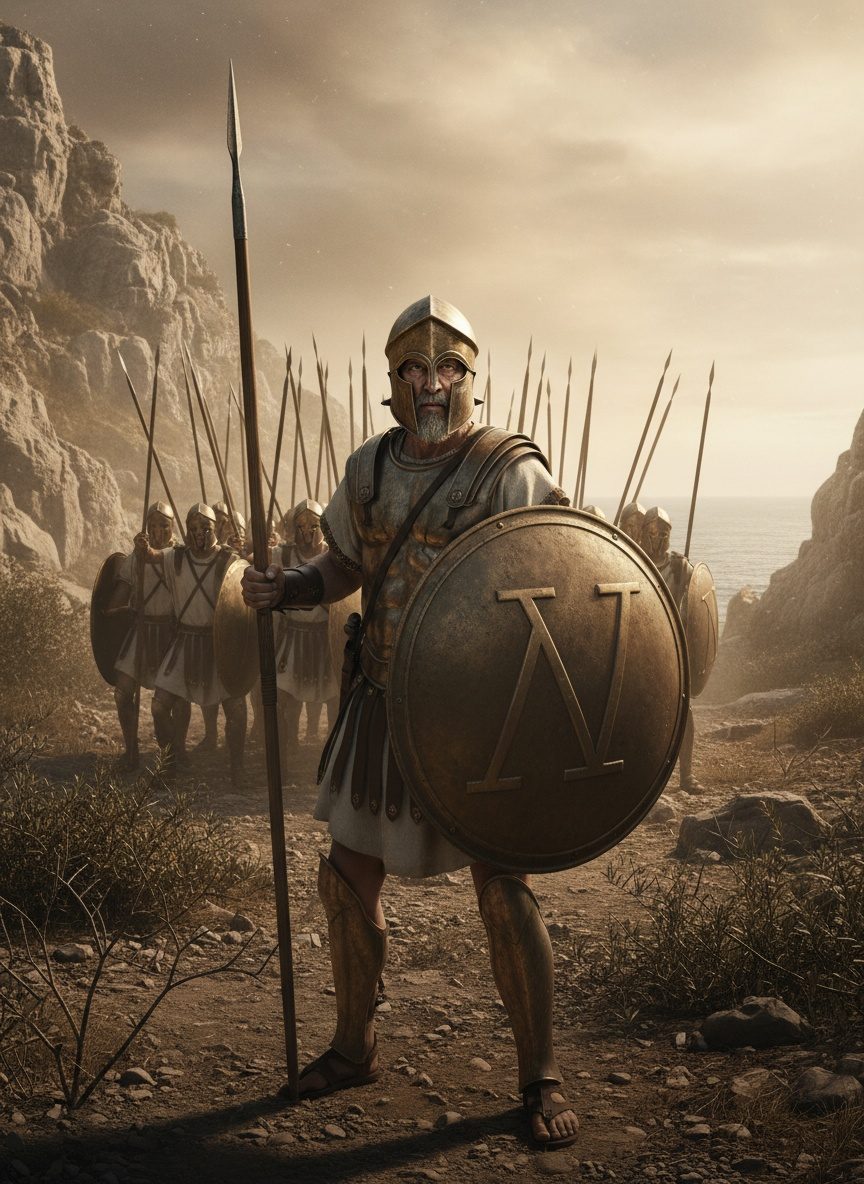
There in the bottleneck of Thermopylae, his decision to thin the ranks of his own troops was bold, if not seemingly reckless. Leonidas dismissed the bulk of his Greek allies, including Arcadians, Phocians, and others who had rallied to the cause. What remained at his side were 300 Spartiate warriors. Skilled and disciplined, they were more than soldiers; they were sons of Sparta, raised from birth in the rigorous Agoge training system, steeped in the culture that valued honor above life itself.
From the cliffs above, a legion of Persian soldiers surged into view, their numbers a sprawling sea of humanity stretching to the horizon. Accounts from antiquity estimate this host at hundreds of thousands, though exact figures remain debated. What is undeniable, however, is the overwhelming force that pressed onward against a determined few. Xerxes, confident and assured of triumph, sent emissary after emissary to demand the Greeks lay down their arms and surrender. Leonidas's response, terse and defiant, has echoed throughout time: “Come and take them.”
The Persians, with their ranks gleaming in the sun, advanced. Clad in their iconic crimson cloaks and polished bronze armor, the Spartans held firm in the tight phalanx formation. As the first ranks of the Persian infantry bugled forward, the true strategic brilliance of Leonidas's choice became apparent. The narrowness of the pass negated the Persian numerical advantage, forcing them into tightly packed engagements far different from the open battles they were accustomed to mastering.
For two days, Leonidas and his men held the pass against unrelenting waves of the enemy. Shield met sword in a symphony of war, as metal clashed and echoed off the rugged cliffs. The Spartans, rotating freshly to the fore of battle, created a whirling dervish of disciplined and deadly force. Each blow, each strike was executed with premeditated exactness, honed through years of relentless training.
Yet, the walls of Thermopylae were breached not by the strength of the Persian army but by betrayal. Ephialtes, a local shepherd, coveted the reward offered by Xerxes and revealed a hidden mountain path that bypassed the Greek defenses. Notified of the approaching danger, Leonidas faced the inevitable with unflinching resolve. Foreshadowed by the words of Delphi, his fate was sealed. Knowing what would come, he commanded the remaining Greeks to withdraw — to leave for safety while the Spartans stood, defiant against destiny, to make their final stand.
When dawn broke on the third day, the Persians circled like vultures. Surrounded and outnumbered, the Spartans fought with the ferocity and tenacity of those who had come to grips with their own mortality. It was a fight not for victory but for remembrance. They refused to yield, fighting until every arrow had flown and every spear had splintered. In those final hours, honed in the crucible of fire and desperation, they achieved an immortality of renown.
In death, the Spartans claimed their place in history. Thermopylae became synonymous with valiant resistance against overwhelming odds. The tale spurred their fellow Greeks, igniting a fire of resistance that saw future victories in battles at Salamis and Plataea, ultimately turning the tide against the Persian Empire. Though Greece itself was a patchwork of quarreling states, their stand — encapsulated in the sheer force of Spartan arms at Thermopylae — remained the sentinel of freedom and identity.
Why should the events on those stark rocky ridges of Thermopylae continue to hold sway in our collective consciousness after so many centuries? Perhaps it is because Leonidas's actions crystallize a universal truth: courage is not the absence of fear but the profound understanding and acceptance of that fear, faced with grit and grace. In a world so often obsessed with victory and success, the narrative of Leonidas and his 300 offers a poignant contemplation of purpose, compelling us to ponder not just how we might achieve, but also how we choose to stand in the face of insurmountable odds. The battle of Thermopylae serves as a timeless reminder that the worth of an action is often measured not by its outcome but by the ideals it stood for.