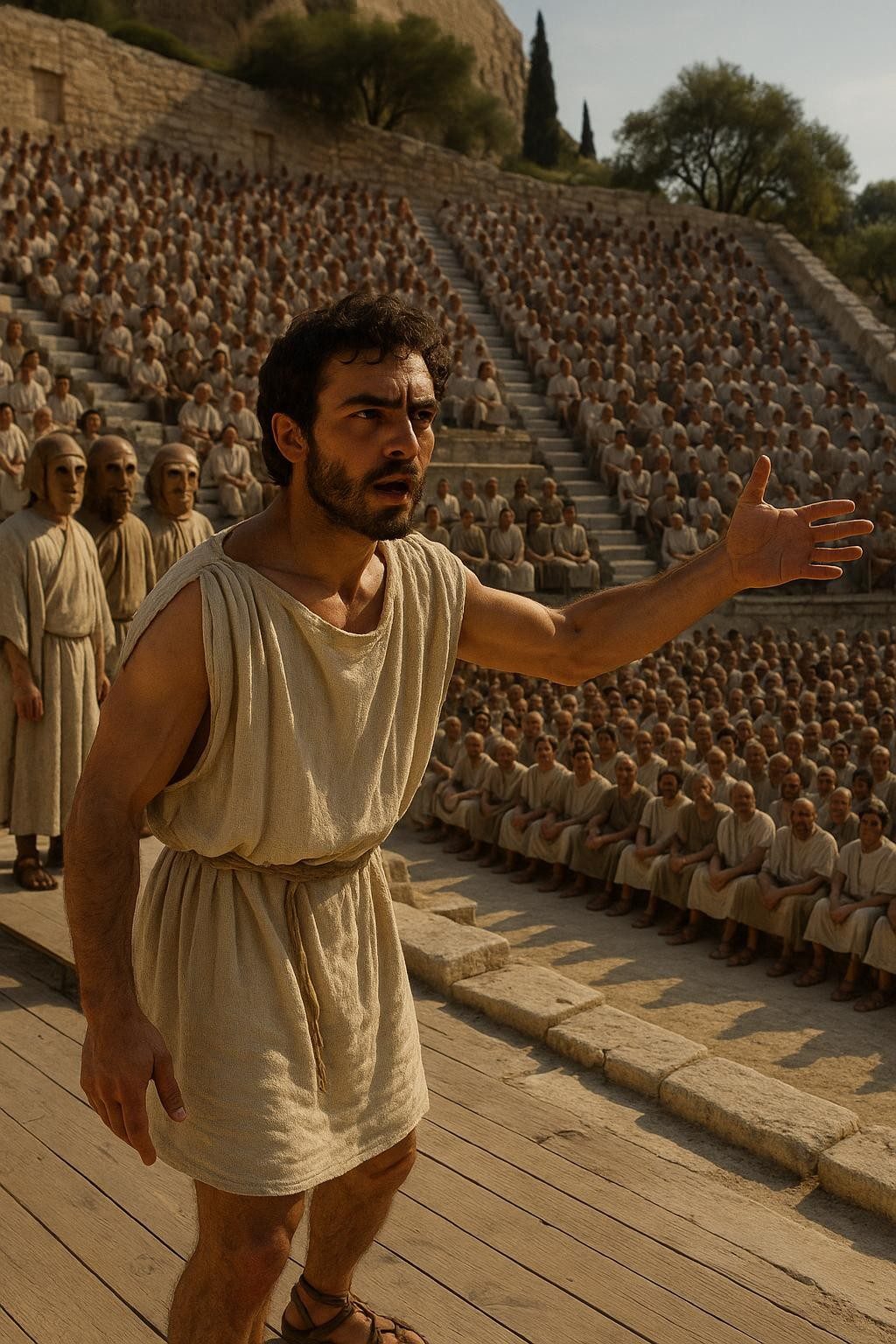
424 BCE. The theater of Dionysus hummed with anticipation.
The Stage Set for Comedy
In ancient Athens, the theater was not merely a place of entertainment; it was a forum for social commentary, a stage where the boundaries of what could be said were constantly tested. The air in the theater of Dionysus was thick with the expectation of laughter, ridicule, and perhaps, offense. At the center of this charged atmosphere stood Aristophanes, a comedian with a talent for satire and a penchant for controversy.
This was not just any performance; it was a bold act of defiance. Aristophanes was about to poke fun at Cleon, one of the most powerful men in Athens, a general known for his aggressive war policies and his influential role in the city’s politics. In a city revered for its democratic principles, Aristophanes wielded comedy as a weapon. The play showcased something remarkable about Athenian democracy—a society that allowed itself to be publicly criticized, even mocked, for the sake of comedy and introspection.
A Playwright Unafraid
Aristophanes was already a known figure in Athens, having previously targeted Cleon in his works. In fact, Cleon had attempted to prosecute Aristophanes once before for slander. However, this did not deter the playwright. His choice to once again openly mock Cleon in the theatre was not just an act of bravery; it was a testament to the power and reach of comedy in public discourse.
The play in question was “The Knights,” and here, Aristophanes did not merely suggest impropriety; he lampooned Cleon outright, portraying him as a deceitful demagogue. The character is a reflection of Cleon’s supposed real-life arrogance and thirst for power, an embodiment of corruption portrayed in front of keen Athenian eyes. The genius of Aristophanes lay not just in his audacity but in his ability to gauge the pulse of public sentiment, knowing full well that laughter was a powerful tool for reflection and change.
The Roar of Democratic Laughter
Imagine thousands of Athenians gathered, the stone tiers of the theater vibrating with their voices. The atmosphere shifted with every line delivered by the actors on stage, each jest ringing against the marble statues of the gods. There was an anarchic thrill in watching the mighty brought low by words alone.
This ability to mock authority was unique to Athens. While other cities punished dissent with exile or death, Athens celebrated it, recognising that humor could dismantle where weapons and debate might fail. Here was democracy in its rawest form—where the voice of one could challenge the might of the powerful, and that challenge could become part of the city’s political and cultural dialogue.
The audience responded with uproarious laughter, their voices echoing across the Acropolis. Aristophanes had understood something fundamental about human nature: people needed to see the foibles of their leaders laid bare, to laugh not just at them but at the absurdity of their own society. It was a release, an affirmation of their agency within a society that was constantly evolving.
The Power and Perils of Comedy
The story of Aristophanes and Cleon is not just about a comedian taking risks; it’s about the role of comedy in shaping public consciousness. In a society where gossip and secret machinations could lead to swift downfalls, public parody was an invaluable tool. It ensured that those in power were reminded of their responsibilities to the people, that they were not infallible nor infallible to ridicule.
More than two millennia later, this extraordinary moment in Athenian history remains a point of reflection. It challenges contemporary societies to consider the balance between respect for authority and the freedom to critique it. It underscores an enduring truth about democracy: the best systems of governance can withstand, and indeed, benefit from unflinching scrutiny and humor.
As the laughter died down and the audience spilled out into the Athenian streets, the play had left its mark—a mark that would endure through the ages. Though times have changed, the echoes of Aristophanes’ bold declarations remind us that even in the face of great power, there is strength in laughter, and wisdom in humor.