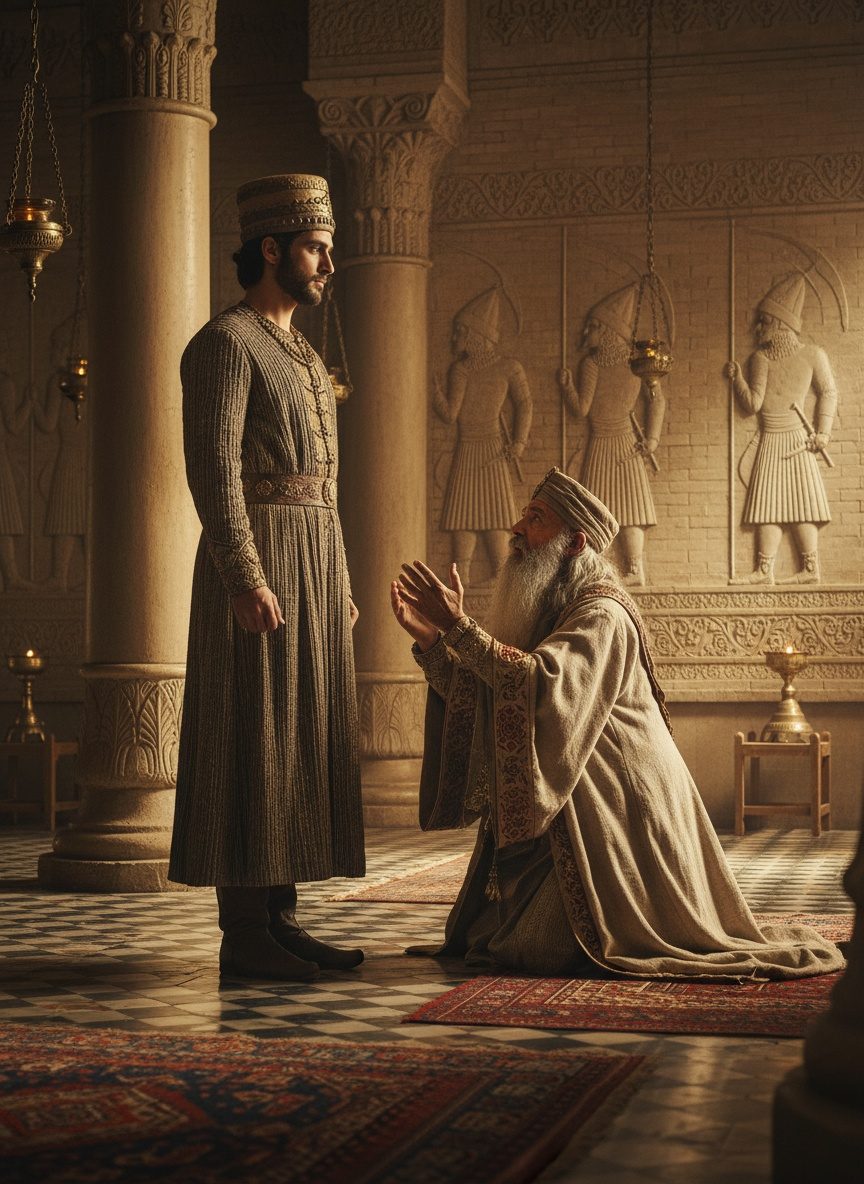
The British Museum in 1872 was a cavern of curiosity, a labyrinth teeming with echoing footsteps and the distant murmur of scholars' debates. Sunlight streamed through tall windows, casting shadows on dusty artifacts collected from ancient lands, each with its own durative silence. Amidst this medley of history, a largely unnoticed table creaked under the weight of fragmented clay tablets from the ancient city of Nineveh. On this particular day, a young scholar named George Smith, who had spent years hunched over these broken pieces of the past, found himself staring at a clay tablet splintered by time yet powerful enough to shatter contemporary understanding. He read the cuneiform script carefully, a story emerged—of a colossal flood, only this was not the account recounted in the Book of Genesis. It predated it by over a millennium, rewriting not only history but the lineage of myth itself.
The Unassuming Scriptorium
Nineveh's ruins had long captivated the imagination of the Western world. Its rediscovery in the mid-19th century filled the British Museum's corridors with treasures from the Assyrian Empire—magnificent bas-reliefs, monumental sculptures, and those seemingly inscrutable tablets, dense with cuneiform. On this autumn afternoon, London was cloaked in a damp chill, and the Museum's scriptorium smelt of drying ink and time-bleached paper. George Smith, a banknote engraver turned Assyriologist, was engrossed in deciphering the fragments of another time. The cracked tablet in his hands was one of many in the troves taken from Ashurbanipal's library at Nineveh, king of Assyria in the 7th century BC, who had amassed texts from across his realm.
Smith was not of the traditional academic mold. He was largely self-taught but possessed a dogged determination and an exceptional knack for understanding cuneiform. When his eyes caught the Akkadian symbols for a flood, he would have paused, the clamor of the outside world fading into nothingness. Line after line told of an epic voyage, a man instructed by the gods to build a boat—the world submerged beneath torrential waters. This narrative, surprisingly familiar yet disconcertingly ancient, was part of the Epic of Gilgamesh, an ancient Mesopotamian poem. Smith's blood quickened; he realized he held proof of a Great Flood narrative far older than that of the Bible's Noah.
The Reluctant Revelation
Anticipation weighed heavy in the dim gallery as Smith divulged his findings, sharing his discovery with fellow scholars and the public. Here was a tale of primal chaos and human endurance that predated biblical texts, emerging from a civilization whose cultural shadows extended over Western mythology. The implications sent ripples through the academic world and battered against the footings of prevailing theological doctrines. Many greeted Smith's interpretation with skepticism; it threatened to undo established historical timelines and posed unsettling questions about the origins of shared human stories.
Despite the contentious climate, Smith's discovery sparked a newfound appreciation for the interconnectedness of ancient narratives. It suggested that the flood story was not an isolated account, but part of a larger tapestry woven through disparate cultures and ages. The Epic of Gilgamesh, rediscovered in the dust of Nineveh, mirrored Moses' flood epic—not as a sequel but as a forebearer. This revelation stirred a fundamental debate about myth, memory, and history’s custody: was every culture’s deluge narrative a separate echo of a shared turmoil, a mythic response to human fear of water's power, or literal recountings of real, localized floods?
The Echoes of Antiquity
The story of the flood, newly embodied in cuneiform script, forced Victorian England and beyond to reassess narratives clung to for centuries. For George Smith, this was not just a victory for historical truth, but a personal triumph. As he further worked to piece together the Epic of Gilgamesh, he journeyed once more to the land of its origin, scanning the sands of Mesopotamia for more shards of a fractured past. The flood tablet was but one piece of a broader story, one that influenced countless generations clandestinely and overtly.
In today's world, Smith's discovery serves as a profound reminder of the shared roots of human culture and faith. At its core, this ancient tale encapsulates humanity's universal struggles and resilience against nature's unrelenting forces. It speaks to a time when oral histories and the written word began to fuse, seeding religions, shaping the divine fables of civilizations to come. Each time we look to the past, hoping to decode its mysteries, we find a mirror for our own existence. We’re reminded that while the circumstances of existence change, the foundational elements of the human story remain remarkably constant—a testament to our enduring quest for meaning amid the chaos.