She was a Roman noblewoman with the world at her feet. But she chose imprisonment over renunciation.
A Life of Privilege and Faith
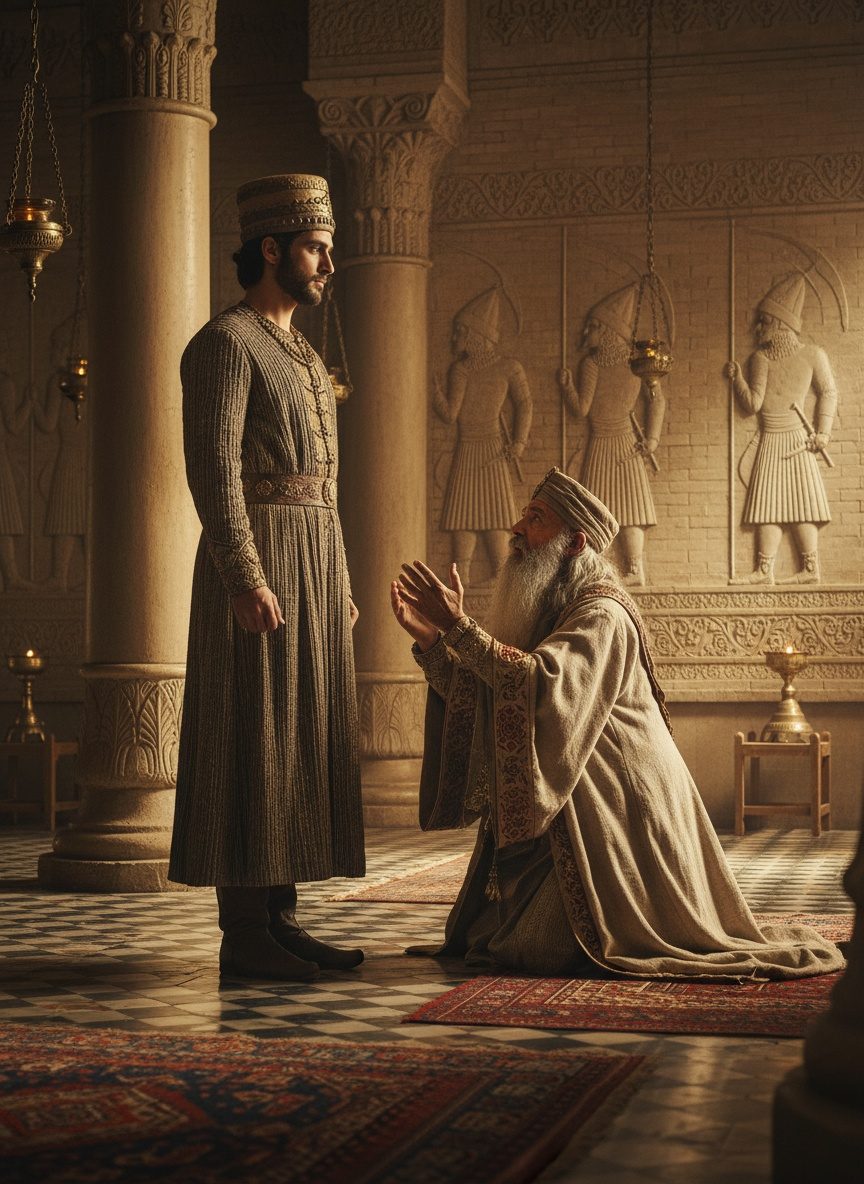
Vibia Perpetua's journey to martyrdom begins with a life steeped in privilege. Born into a patrician family in Carthage, a vibrant city on the coast of North Africa, she enjoyed the benefits of wealth and education reserved for the elite. It was a time when the Roman Empire sprawled luxuriously across territories, weaving a tapestry of cultures and identities under its vast rule. Yet, beneath the glimmering façade of empire, fault lines were emerging.
Carthage in 203 CE was a city of contrasts. Its streets hummed with the chatter of traders and scholars, legacies of the old Phoenician trading empire that had thrived there centuries before. Within this bustling environment, Perpetua was not merely a spectator; she was a well-educated woman, an uncommon status in a world where education for women was a rarity. But Perpetua was not only defined by her heritage and intellect; she was also passionately Christian, at a moment in history when Christianity was a fledgling faith at odds with Roman traditions.
The Romans, wary of any movement that threatened their pantheon and societal cohesion, required unyielding adherence to state-sanctioned religions. Local governors were tasked with maintaining this order, often by ruthless means. When Christians in Carthage held their secret gatherings, it was only a matter of time before the state's penetrating gaze fell upon them. Perpetua's arrest marked her transition from a life of comfort to one of existential challenge, thrusting her into the crosshairs of an unforgiving political machine.
Words from the Shadows
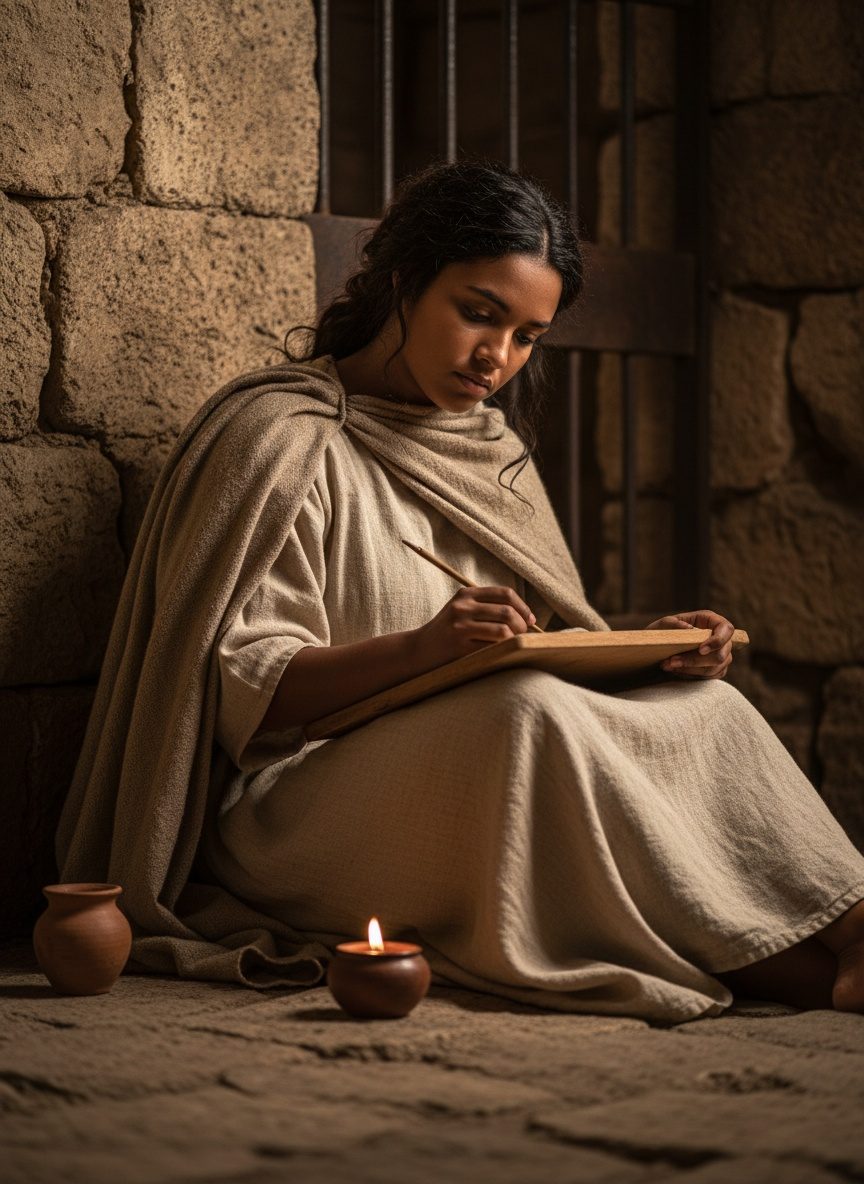
In the damp gloom of her cell, Perpetua must have been acutely aware of the stakes. Known for their punitive measures, the Roman authorities sought to unearth dissent and restore loyalty through coercion rather than comprehension. There she was, a young mother with an infant in her arms, confronted with an impossible choice: her faith or her freedom.
It was in this suffocating space, with the distant noise of the outside world barely a murmur, that Perpetua transformed her ordeal into a testament of words. She picked up a stylus and insribed her journey onto parchment, creating the oldest surviving document by a Christian woman. This wasn't just a narrative of faith; it was a defiant expression of autonomy in an era that typically silenced women.
The resulting texts offer a window into the early Christian world and illuminate Perpetua’s inner emotional landscape. Her writings capture the humanity and dignity not only of herself but of her fellow prisoners, whom she describes with empathy and understanding. This group of men and women, united by belief, soon became renowned as the 'Martyrs of Carthage.' Perpetua writes of visions and premonitions, of a ladder reaching to heaven, guarded fiercely by a dragon. These visions become metaphors for her spiritual ascent and trials, knitting the fabric of her resolve.
Perpetua's words traveled far beyond the walls of her cell, gaining momentum within hidden circles of Christian communities. Her father, a man of stature, pleaded with her to recant and return home. Yet, Perpetua stood firm, knowing that her greatest legacy would not be comfort, but courage in the face of imminent death.
The Arena's Grim Embrace
The Roman arena was a cold monument to the Empire's obsession with spectacle and power. To be taken there was to face public judgment, to be displayed as a warning to others who might harbor rebellious thoughts. For Perpetua, being sentenced to the arena was a heart-pounding final chapter written not just in the blood of defiance, but in ink that history could never wash away.
Marching towards her fate, Perpetua carried the weight of her choice with grace. Her body, once cradled in luxury, bore the marks of prison life, and yet her spirit seemed unbroken. As she entered the amphitheater, the spectators gathered, perhaps expecting to witness a quivering traitor, only to be confronted by her serene determination.
The events that unfolded in the arena remain a powerful narrative of faith and defiance. Alongside fellow Christians, Perpetua faced wild beasts. However, it was not just the physical ordeal that marked the momentousness of the event; it was the affirmation of conviction under the sun, under the gazes of those who both condemned and stood inspired.
Although ultimately she did not walk out of the arena, Perpetua's story endures—a beacon of resilience. Her writings live on as an extraordinary testament of personal faith transcending the oppressive systems of her time.
In an era dominated by power and control, Vibia Perpetua's choice to pick up a pen rather than the path to safety speaks across the centuries. Her voice resonates, a reminder that freedom rests not in the physical chains or walls that might encircle us but in the courage of conviction to stand by one's beliefs, regardless of the consequences. Her story is not just one of martyrdom, but a profound assertion of human dignity and spiritual resistance that beckons us to reflect on our own struggles and beliefs today.