The air in the arena was electric with anticipation, the sun casting long shadows as it began its descent in the Roman sky, its light flickering like dulled embers over the restless sea of spectators. Among the stone seats filled to the brim with the citizens of Rome, murmurs rose and fell like the gentle tide, only to be shattered by the thunderous roar of a beast hidden behind the iron gates. On the sandy floor of the Colosseum, a lone figure stood — a slave, sentenced to die, his fate sealed by the claws and fangs of a hungry lion. The atmosphere was taut, each breath held by the crowd in expectation of inevitable violence. Yet, amid this charged moment of life and death, a story unfolded that defied the brutal entertainment for which they had come.
The Slave and the Unlikely Friendship
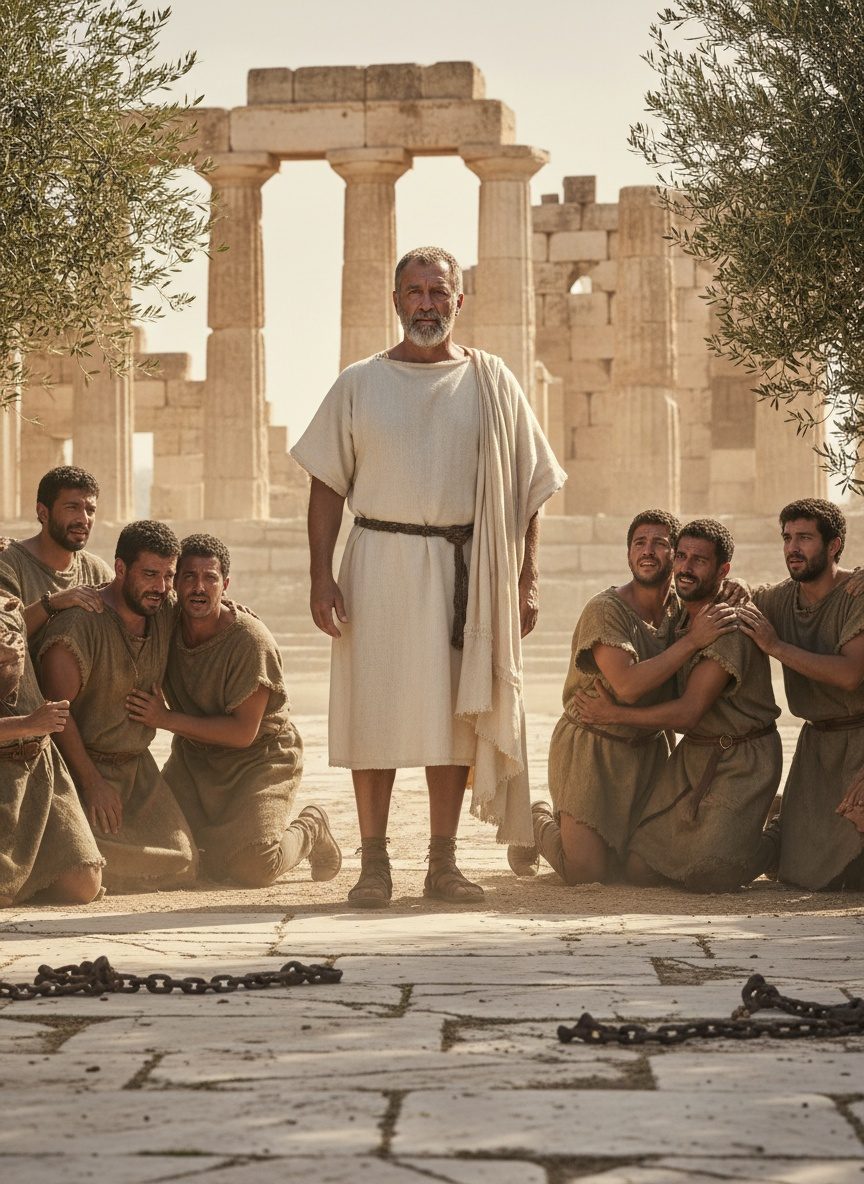
Years before the Roman citizens gathered to witness what they expected to be a brutal spectacle, the man named Androcles was living a very different life. He was a runaway slave, his status a reflection of the harsh realities faced by those in servitude in the vast Roman Empire. His journey to the arena began the moment he decided to flee the cruel grasp of his master, risking everything for a sliver of freedom with no guarantee of survival.
While navigating the perilous outskirts of civilization, his odyssey led him to the solitude of a cave nestled in the wilderness, a temporary refuge from the trappings of his past. It was here that Androcles encountered a lion, an encounter more fearful than any fate he had faced before. Yet, this particular lion did not roar or pounce. Instead, it limped heavily, a paw held aloft, as fierce eyes met those of the terrified man. Androcles, driven by an inexplicable courage and the heart of a healer, approached cautiously.
The lion’s paw was embedded with a thorn, the cause of its evident agony. Moving slowly and with great care, Androcles extracted the thorn, a gesture of kindness that warmed the cold barrenness of the cave and created an improbable bond between man and beast. For days that turned into weeks, Androcles and the lion shared space and time, a quiet existence devoid of masters and chains, each a companion to the other. This unlikely friendship was forged in the crucible of necessity — survival in its rawest form, untouched by the complexities of the wider world.
Their time together, however, was not to last. Androcles was captured and returned to the city to face justice as prescribed by Roman law. The arena loomed, its stone walls bearing witness to the grim fate that awaited those deemed deserving of punishment. Still, the bond formed in that cave was to become his lifeline in the unlikeliest of settings.
A Moment that Echoed Through Time
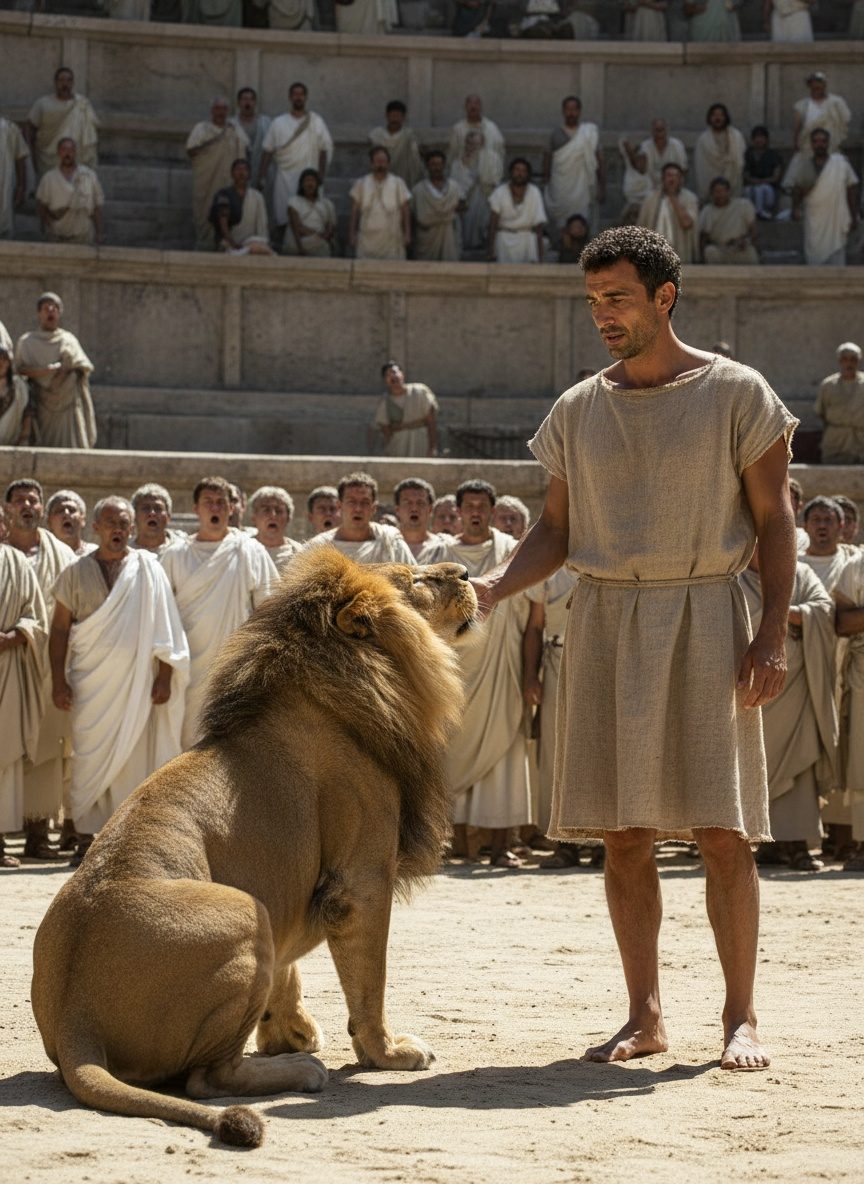
The audience that day had gathered in expectation of spectacle, their hearts hardened by countless such events. Yet as the gates swung open, and the lion emerged, something extraordinary transpired. Instead of launching into an inevitable attack, the lion paused, its recognition of Androcles instantly evident in its softened demeanor. As the slave stood stock-still, scarcely daring to breathe, the great beast approached with slow, deliberate steps.
It was a moment that silenced the arena. Sixty thousand spectators, voices hushed by astonishment, watched as the lion, instead of unleashing its fury, brushed its massive head against Androcles’ outstretched hand, a purring sound rumbled deep within its chest. Gasps of disbelief rippled through the crowd, eyes widening to take in the impossible — a creature of instinct responding instead with memory and gratitude.
Their bond, forged in that distant cave, had transcended the boundaries of their respective worlds. The atmosphere, once tense with expected violence, was now charged with awe and emotion. The Romans, known for their love of blood sports, found themselves bearers of an unwitnessed miracle: the power of kindness in a world very much still anchored in brutality. Word of this moment spread throughout the Empire, a tale as remarkable as it was rare.
The emperor himself, upon hearing the news, granted Androcles his freedom, a gesture celebrating the virtue that had triumphed in the heart of ferocity. The message, subtle yet profound, resonated through a society steeped in conquest and rule — that empathy could steer even the fiercest heart.
Why This Tale Endures
The story of Androcles and the lion became legend, passed down through generations, its impact rippling far beyond the walls of Roman society. In the years that followed, as Rome itself evolved and transformed, the tale came to symbolize the enduring capacity for empathy to bridge the chasm between fear and understanding. Schools of thought and philosophy found fertile ground in its simple yet profound narrative, the arena's brutal stage offering an unexpected moment of human and animal connection.
As we reflect on this ancient story, the lesson remains as relevant now as it was centuries ago: the acts of compassion, however small, can ripple outwards with transformative power. Androcles and the lion remind us that in the immense arena of life, where battles are fought and judgments made, grace can emerge in unexpected guises, leaving a lasting impression on the fabric of history. It is a narrative that celebrates the everyday heroes, those who, with quiet courage, make a significant impact on the tapestry of human experience.
In a world that still wrestles with division and strife, this timeless tale teaches that even amidst the fiercest of challenges, it is possible for kindness to turn fear into friendship, and rage into recognition. The legacy of Androcles and the lion, then, is these simple yet profound truths: that humanity, in its purest form, can be found in moments of compassion, and that such moments are worth cherishing, celebrating, and sharing. In the echoing silence of the Roman arena, a story was told that would echo through eternity, reminding us of the power within us all to change the world, one small act at a time.