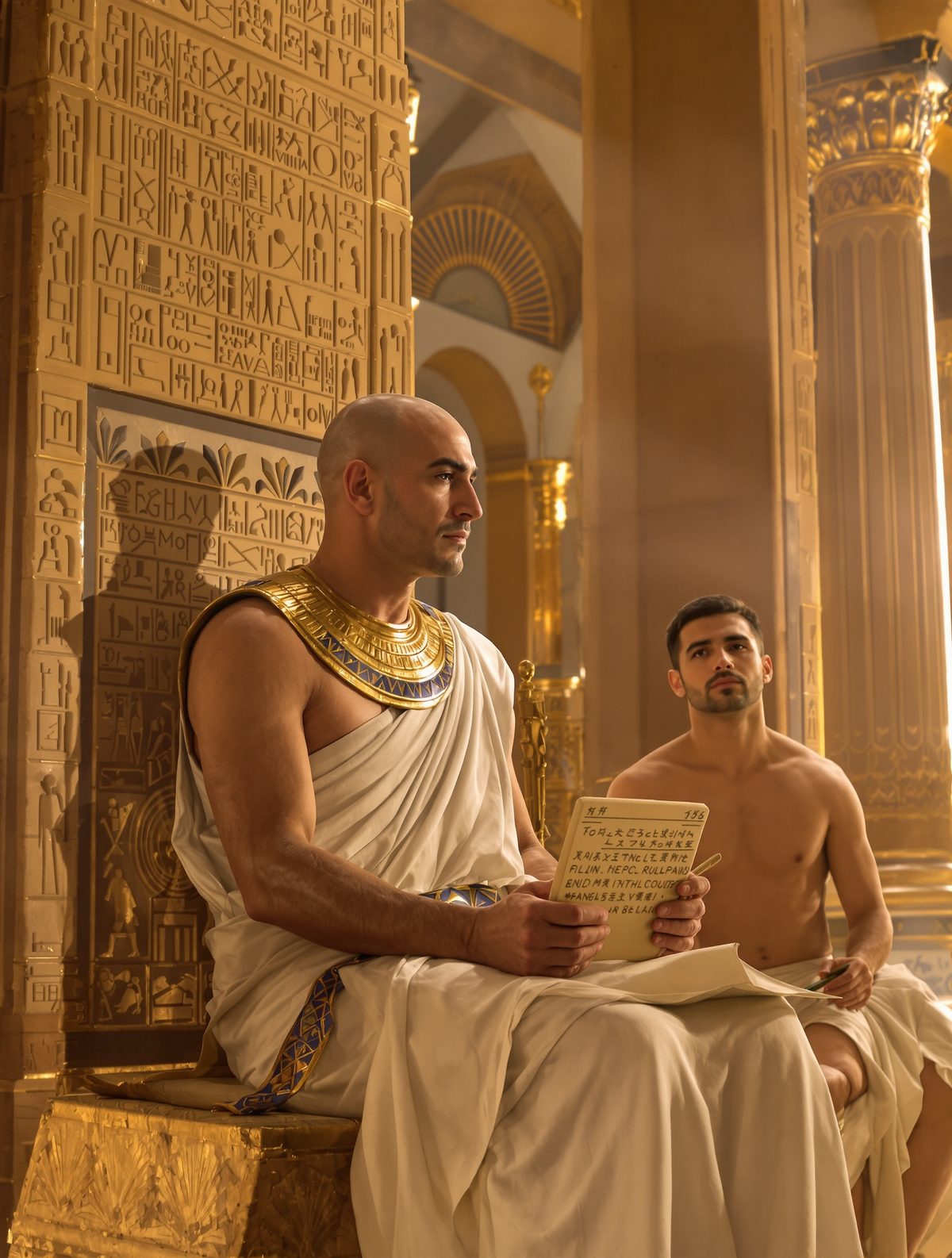
It was a time when the sunlit palaces along the Nile shimmered with a golden resolve, reflecting the opulence of an empire at its zenith. Pharaoh Amenhotep III, god-like and untouchable, ruled over a dominion that stretched from the familiar banks of Egypt to the distant lands of Canaan. Yet, within the corridors of power, whispers of a bizarre and perplexing reality rustled softly. The mighty sovereign was writing letters to a king who had been long dead, and for two years, Egypt's elaborate diplomatic dance choreographed itself around a silent, unyielding truth.
The Pharaoh and the Corpse: An Unfolding Mystery
In 1350 BC, Pharaoh Amenhotep III, often called the "Sun King" of Egypt's 18th Dynasty, was at the peak of his reign. Known for his grandiose building projects and diplomatic prowess, Amenhotep maintained relations with various vassal states through a well-crafted network of correspondences. These letters, painstakingly etched into clay tablets known as the Amarna Letters, provide a vivid snapshot of international politics. Yet, among these countless archived missives to allies and foes, a peculiar series stands out: letters addressing a Canaanite king who was no longer alive.
The target of these communications was the ruler of Amurru, a city-state nestled within the turbulent lands of Canaan. Despite the king's demise, Amenhotep's scribes continued to compose letters, requesting military aid and the mobilization of soldiers, sending precious gifts meant to curry favor, and raising inquiries that would never receive answers. Was it a clerical error, a diplomatic charade, or something more profound? For years, Egypt's most powerful figure engaged in an elaborate dialogue with silence.
The Power Play of the Amarna Letters
These clay tablets, discovered in 1887, have since intrigued historians with their tales of diplomacy, power, and unexpected peculiarities. The correspondence with the deceased ruler starkly contrasts with the otherwise strategic and vibrant journal of international relations depicted in the Amarna Letters.
The ongoing communication with a dead king reveals the lengths to which Amenhotep's court maintained the façade of political stability. Perhaps the Pharaoh sought to perpetuate the image of control over his distant vassals by ensuring that diplomatic protocols appeared uninterrupted. This secrecy was imperative during the Egyptian empire's golden age, as the fragile balance of power across their expansive territories could not afford even the slightest shift.
Kingdom Built on Illusions
What compelled Amenhotep III to extend this diplomatic masquerade? Scholars speculate that the Pharaoh's knowledge of the king's death was obscured deliberately by either his scribes or the surviving members of the Canaanite court. It is likely that in such a precarious political climate, the illusion of consistent leadership in Amurru was more favorable to chaos.
The masquerade was maintained by two intertwined desires: Egypt's wish to project unwavering authority and the local Canaanite court's interest in retaining continuity, no matter the personal cost. The latter was especially eager to avoid attracting the Pharaoh’s ire. The benefits of keeping up appearances outweighed letting news of the death disrupt the Egyptian hegemonic framework. This charade endured until new rulers inevitably seized their chance to restructure alliances—actions that forever altered the delicate power dynamics carefully curated over the years.
The Human Element: Echoes Through Time
In understanding this strange episode, it is crucial to consider the human actors behind the scenes who lived with secrets every day. For Amenhotep III, living as a god on earth, the moral ambiguity of communicating with a dead king may have been trivial compared to the risks of revealing uncertainty. Meanwhile, for those within Amurru, playing into this ghostly narrative was an act of survival.
It makes one wonder about the junior scribes whose responsibility it was to draft these messages, diligently translating the Pharaoh's demands onto clay as they wondered about their ultimate fate. What conversations swirled among the courtiers, who likely held suspicions of the deception they were perpetuating? Did fear weigh heavy on soldiers dispatched to aid a ruler who could never send greetings in return? For those still loyal to a narrative that had long expired, the frailty of power was ever-present in their day-to-day realities.
Lessons Beyond the Sands: Why the Tale Matters
Today, as we reflect on Amenhotep III's anomalous correspondences and the fleeting fictions on which ancient regimes often predicated, we realize these age-old events resonate in a modern context. In a world still defined by complex political interpretations, the necessity of maintaining appearances and the human capacity to live within constructs of denial are remarkably relatable.
Within a realm draped in gilded splendor, Amenhotep’s phantom diplomacy offers a perspective on the lengths to which societies—ancient or otherwise—will strive to maintain the equilibrium of power, proclaim unity, and uphold narratives that best serve their strategic interests. Despite advancements in communication technology and data accessibility, the lessons of maintaining truths, regardless of fact, persist in the arenas of politics and diplomacy. A past woven with illusions serves to remind us that history, much like diplomacy, often emerges as a tapestry of undeniable reality and necessary deception.