Picture this: the most powerful man in the world, commander of armies that had never tasted defeat, master of an empire stretching from the Mediterranean to the Indus River, sits alone in his tent and weeps like a child. This wasn't Alexander the Great mourning a fallen friend or lamenting a military setback. No—this was the moment when the ultimate conqueror realized he had run out of things to conquer.
It sounds almost absurd, doesn't it? A grown man crying because he'd won too much. But to understand Alexander's tears, you have to understand what drove him: an insatiable hunger that had devoured empires and reshaped the ancient world. By 323 BC, at just 32 years old, he had achieved something no human before or since has matched—he had conquered the known world. And that, paradoxically, became his greatest tragedy.
The Boy Who Dreamed of Godhood
Alexander III of Macedon wasn't born to be ordinary. His mother, Olympias of Epirus, claimed descent from Achilles and allegedly told him he was the son of Zeus. His father, Philip II, had already transformed Macedonia from a backwater kingdom into the dominant power in Greece. But Philip's ambitions paled beside the cosmic hunger burning in his son's chest.
Tutored by Aristotle—yes, that Aristotle—Alexander absorbed not just military strategy and statecraft, but philosophy, medicine, and geography. The great philosopher filled the boy's mind with tales of distant lands: Persia with its fabulous wealth, India with its exotic mysteries, and the edges of the world where the ocean supposedly began. But perhaps more importantly, Aristotle gave him a copy of Homer's Iliad, which became Alexander's obsession. He slept with it under his pillow and saw himself as a new Achilles, destined for glory that would echo through eternity.
When Philip was assassinated in 336 BC—possibly with Olympias's involvement—20-year-old Alexander inherited not just a throne, but a divine sense of destiny. Within two years, he had brutally suppressed rebellions in Greece, leveling the ancient city of Thebes so completely that only temples and the house of the poet Pindar remained standing. The message was clear: this young king was not his father.
The Machine of Conquest Begins to Roll
In 334 BC, Alexander crossed the Hellespont into Asia with 35,000 men. What happened next defied every expectation. This wasn't just military conquest—this was systematic obliteration of the old world order.
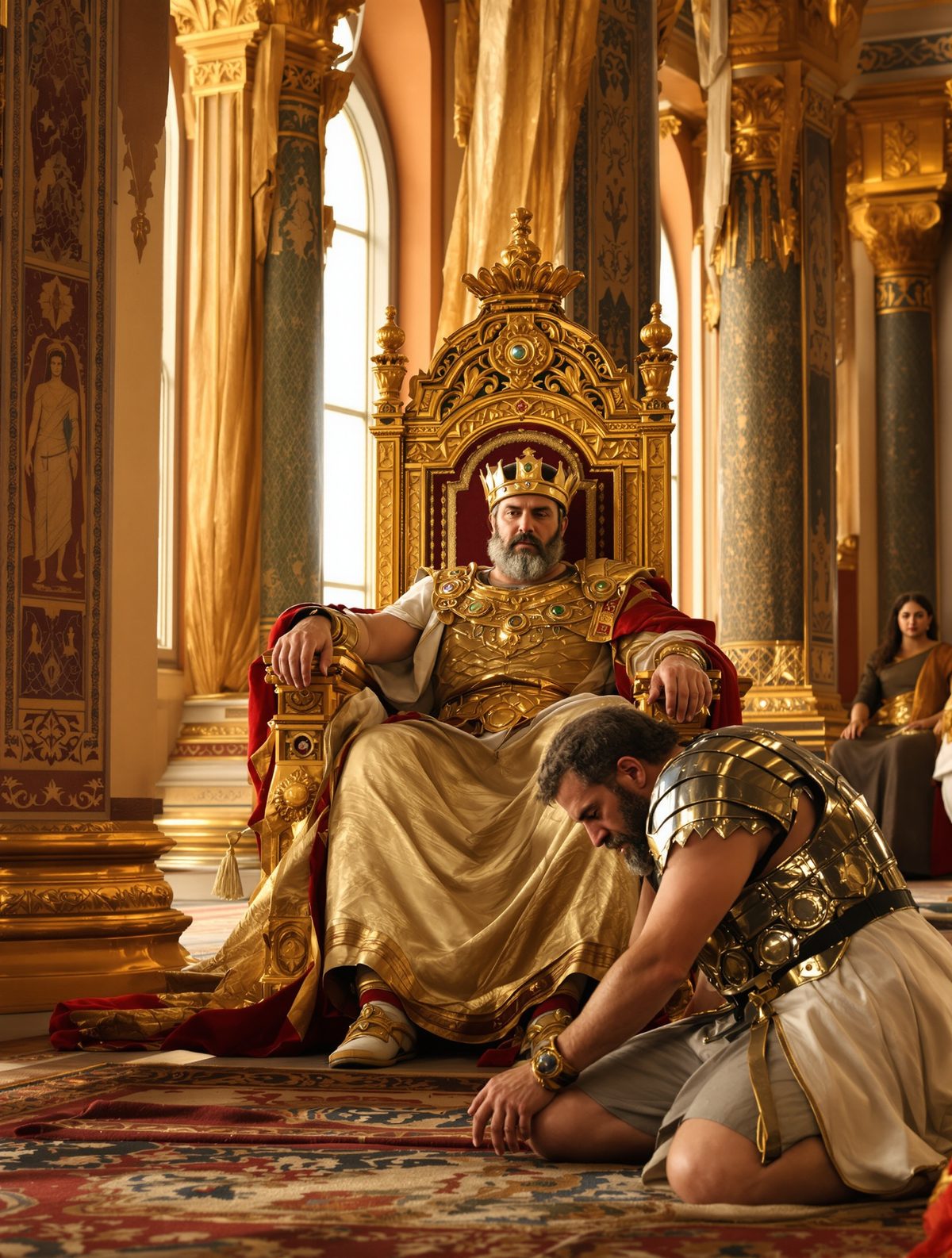
At the Granicus River, he personally led the cavalry charge, taking an axe blow to the head that split his helmet. At Issus in 333 BC, he routed Persian Emperor Darius III so thoroughly that Darius abandoned his family and fled the battlefield. Alexander captured the Persian royal family, but here's what your history teacher probably never told you: he treated Darius's wife and daughters with such respect that when the Persian queen mother first met him, she mistook the taller Hephaestion for the king. When she realized her error and prostrated herself, Alexander simply said, "You were not mistaken, mother. He too is Alexander."
The siege of Tyre in 332 BC showcased Alexander's terrifying determination. When the island city refused to surrender, he built a causeway across the sea—literally connecting the island to the mainland forever. After seven months, Tyre fell. Alexander crucified 2,000 survivors and sold 30,000 into slavery. The causeway still exists today, a permanent testament to what happens when you defy Alexander the Great.
In Egypt, something extraordinary happened. The Egyptians, who had chafed under Persian rule, welcomed Alexander as a liberator. The priests at the Oracle of Ammon declared him the son of the god Ammon-Ra. Alexander founded Alexandria, which would become the intellectual capital of the ancient world, complete with its legendary library. But even being declared a living god wasn't enough. The horizon kept calling.
The Heart of Darkness: Conquering Persia
The decisive moment came at Gaugamela in 331 BC. Darius had assembled the largest army in ancient history—possibly 250,000 men, including scythed chariots and war elephants. Alexander had 47,000. Any rational military mind would have sought terms. Alexander charged.
Using tactics so brilliant they're still studied today, he created a gap in the Persian line and drove straight for Darius. For the third time, the Persian emperor fled, and with him died the 200-year-old Achaemenid Empire. Alexander was now king of Asia, ruler of territories stretching from Greece to Afghanistan.
But something darker began to emerge in Alexander's character. In Persepolis, he burned the magnificent palace complex—possibly in a drunken rage, possibly as calculated propaganda. When his mentor and bodyguard Cleitus the Black criticized his growing adoption of Persian customs, Alexander ran him through with a spear during a drinking party. He immediately collapsed in grief, but the damage was done. The line between king and tyrant was blurring.
Here's a detail that might surprise you: Alexander didn't just conquer—he integrated. He married Persian nobles, encouraged his soldiers to take Persian wives, and adopted Persian court ceremonies. His goal wasn't just political control but cultural fusion. He envisioned a world where Greek and Persian civilizations would merge into something unprecedented. Many of his Macedonian veterans saw this as betrayal. Alexander saw it as destiny.
To the Edge of Everything: The India Campaign
By 326 BC, Alexander had pushed into India, deeper than any Western conqueror would venture until the British Empire. At the Hydaspes River, he faced King Porus and his war elephants—creatures his men had never encountered in battle. The psychological impact was devastating, but Alexander's tactical genius prevailed. He defeated Porus but was so impressed by the Indian king's dignity that he not only spared him but expanded his kingdom.
But then came the moment that would define Alexander's legacy. His army, exhausted after eight years of continuous campaigning, finally said no. At the Hyphasis River, they refused to march further east toward the Ganges and the edge of the world. For three days, Alexander sulked in his tent like Achilles, hoping his men would change their minds. They didn't.
This was when Alexander supposedly wept—not at the Hyphasis, as popular culture often depicts, but later, when the full implications hit him. According to the Roman historian Plutarch, when Alexander heard from Anaxarchus about the existence of infinite worlds, he cried because he had not yet conquered even one completely. The tears weren't just frustration; they were the anguish of a man whose ambitions had literally outgrown reality.
The Price of Infinite Ambition
The return journey became a nightmare. Alexander forced his army through the Gedrosian Desert—modern-day southern Iran and Pakistan—where more men died than in all his battles combined. Supplies ran out, temperatures soared above 120°F, and sandstorms buried entire units. Some historians argue Alexander chose this route deliberately, trying to outdo the legendary Persian queen Semiramis and Cyrus the Great, both of whom had failed to cross the desert. His need to surpass every predecessor had become pathological.
Back in Babylon in 323 BC, Alexander planned new campaigns: Arabia, maybe even the western Mediterranean. But his body, ravaged by wounds, alcohol, and the psychological pressure of godhood, finally gave out. On June 10, 323 BC, Alexander the Great died at 32, possibly from malaria, possibly from poisoning, possibly from the simple fact that even gods can't sustain infinite expansion forever.
His last words, when asked who should inherit his empire, were reportedly: "To the strongest." Within decades, his generals had carved up his conquests, and the unified world he'd dreamed of fragmented into competing kingdoms.
The Modern Echo of Ancient Tears
Alexander's tears resonate today because they capture something uniquely human about ambition in an age of seemingly infinite possibility. We live in a world where tech billionaires race to colonize Mars, where individuals can accumulate wealth exceeding the GDP of nations, where the phrase "disrupting everything" has become a mantra. Like Alexander, we've created a culture that worships boundless growth and expansion.
But Alexander's story warns us about the psychological cost of infinite ambition. What happens when you've climbed every mountain, conquered every market, disrupted every industry? What happens when you realize that no amount of achievement can fill the void that drives relentless expansion?
The king who wept for worlds yet unconquered reminds us that the most dangerous prison isn't built by others—it's constructed by our own insatiable appetites. Alexander died not because he failed, but because he succeeded too completely, creating a legend so vast that even he couldn't live up to it.
Perhaps the real tragedy isn't that Alexander ran out of worlds to conquer, but that he never learned when to stop conquering and start living. In our own age of unlimited ambition, his tears across the centuries ask us a question we'd rather not answer: What do you do when you get everything you ever wanted, and it's still not enough?