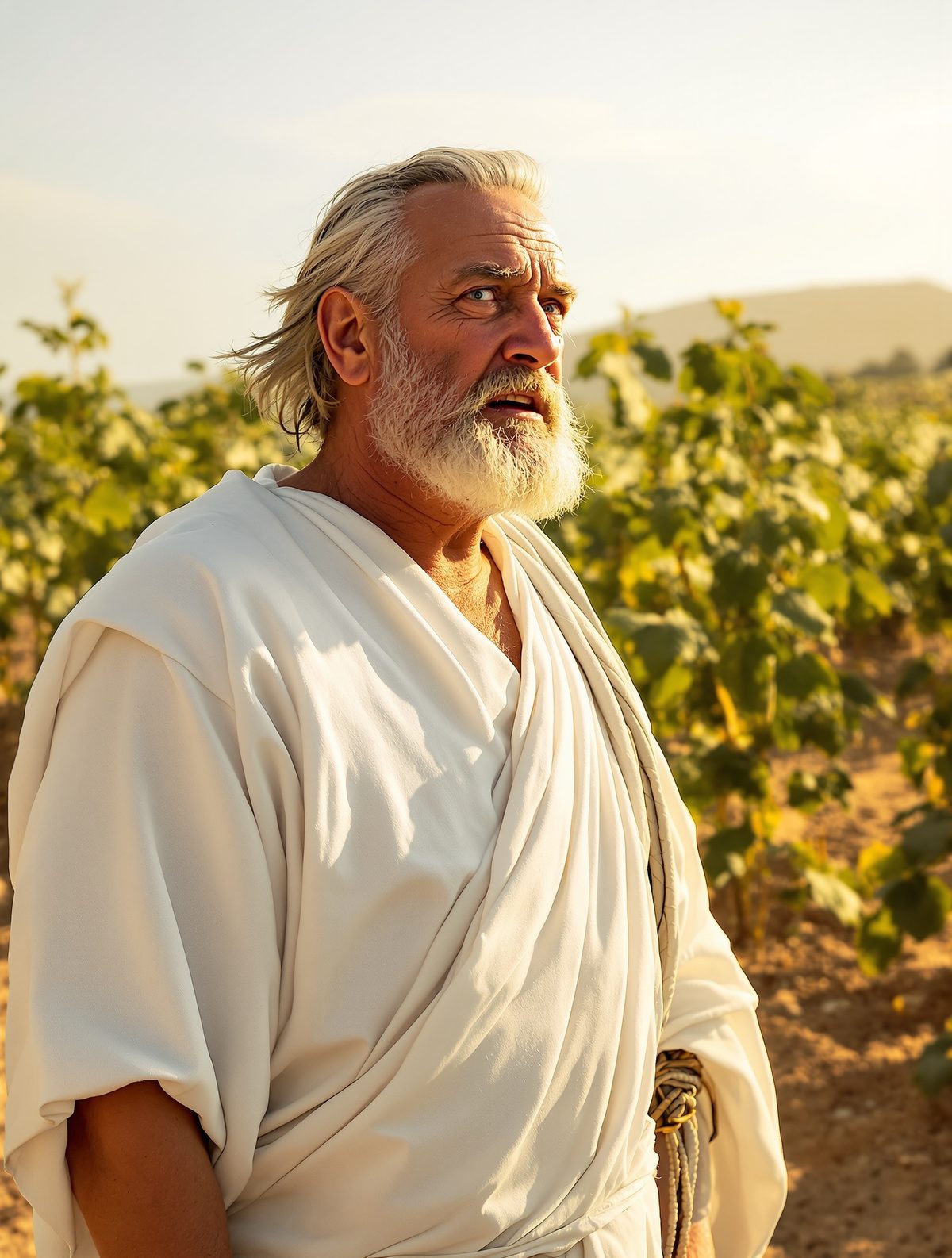
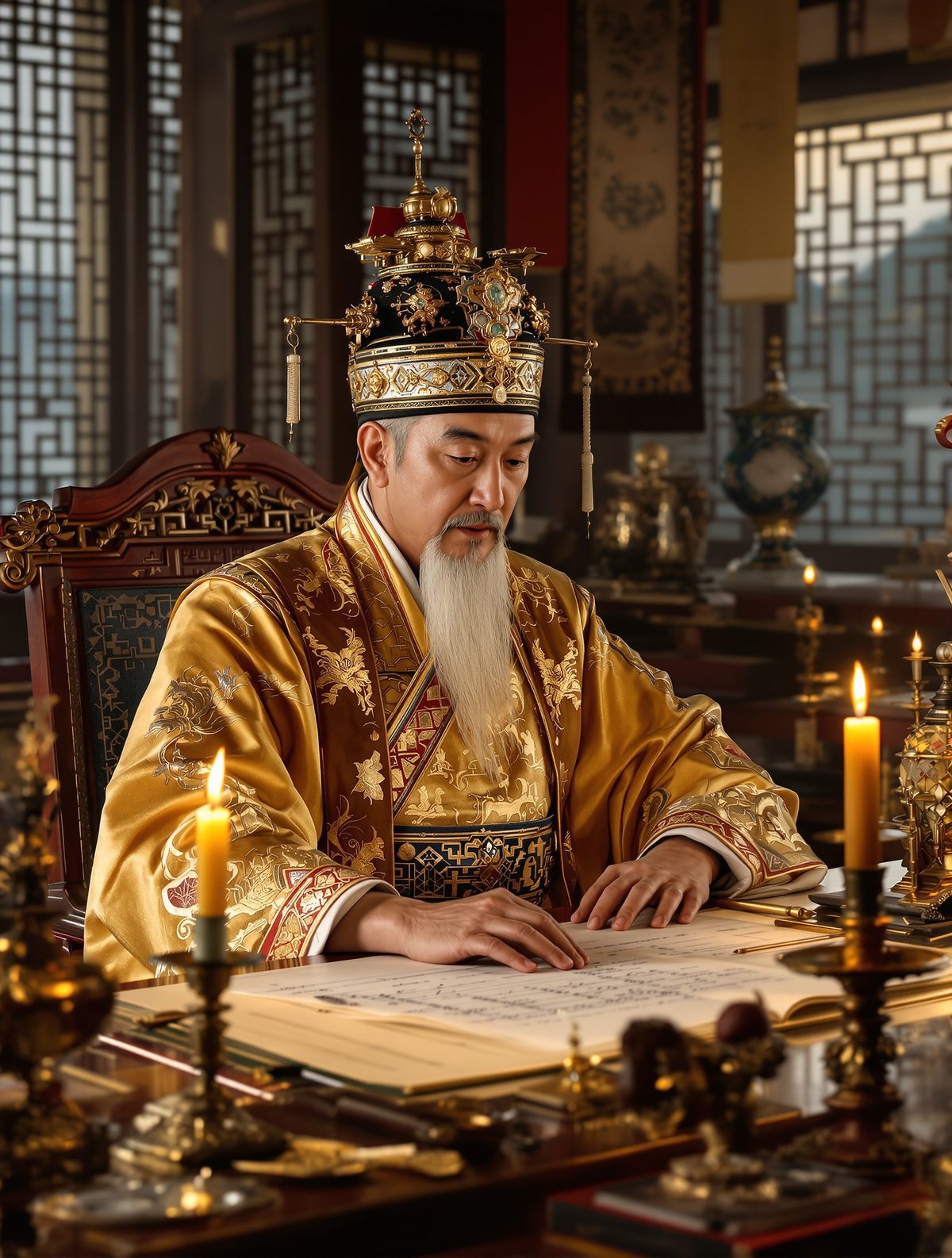
The wine arrived as it always did—crimson liquid swirling in a golden chalice, presented by trembling hands to the King of Kings. Artaxerxes III, ruler of the mightiest empire on Earth, lifted the cup to his lips without hesitation. After all, it came from Bagoas, his most trusted advisor. Within hours, the Persian emperor would be dead, and the slave who served him would be selecting his replacement.
In the blood-soaked final chapter of the Persian Empire, no figure loomed larger—or more dangerously—than Bagoas the Younger. A eunuch slave who rose to become the power behind two thrones, Bagoas would orchestrate the murder of two Persian kings, crown a third, and ultimately seduce Alexander the Great himself. His story reads like something from a Byzantine thriller, yet it played out on the stage of world history in the pivotal year of 336 BC.
The Making of a Royal Poisoner
Bagoas entered the Persian court not through noble birth or military valor, but through the most brutal path imaginable. Castrated as a young boy and sold into slavery, he possessed the tragic qualification that made him valuable in the Persian royal household: he could never father children to threaten the dynasty. What made him truly dangerous, however, was his brilliant mind trapped in a body deemed "safe" by his masters.
The Persian Empire of the 4th century BC operated on a system of elaborate court intrigue that would make Machiavelli blush. Eunuch administrators held tremendous power precisely because they were considered politically neutered—unable to establish rival dynasties. Bagoas exploited this assumption ruthlessly, accumulating influence while his enemies underestimated the threat posed by a "mere" castrated slave.
By 343 BC, Bagoas had maneuvered himself into the position of hazarapatis—effectively the empire's chief minister. He controlled access to King Artaxerxes III, managed the royal correspondence, and held the keys to the imperial treasury. But Bagoas understood a fundamental truth about power: those who serve kings can just as easily unmake them.
Death in a Golden Cup
The murder of Artaxerxes III in 338 BC was a masterpiece of calculated patience. Contemporary accounts, particularly those of the historian Diodorus Siculus, describe how Bagoas had grown increasingly concerned about the king's plans for succession. Artaxerxes III was considering elevating his youngest son Arses to the throne, potentially bypassing Bagoas's preferred candidates who might prove more... manageable.
The poison itself remains a mystery—Persian court records, understandably, don't preserve recipes for regicide. But the method was Bagoas's signature: intimate, personal, delivered through the sacred ritual of sharing wine. In Persian culture, refusing a cup offered by a trusted advisor would have been unthinkably rude. Artaxerxes III never saw it coming.
What happened next reveals Bagoas's true genius for political manipulation. Rather than allowing the natural succession to proceed, he systematically eliminated Artaxerxes III's older sons—all potential rivals to his chosen puppet. Ancient sources suggest he murdered all the king's sons except young Arses, whom he then placed on the throne as Artaxerxes IV. The teenager found himself king of the world's largest empire, completely dependent on the eunuch who had orchestrated his family's destruction.
The Student Becomes the Teacher
For two years, Bagoas ruled Persia through his teenage puppet. But by 336 BC, even the malleable Arses began showing disturbing signs of independence. The young king started making decisions without consulting his "advisor" and worse still, began listening to other court officials who whispered about the convenient deaths that had brought him to power.
Bagoas's solution was as elegant as it was ruthless: another poisoned cup, another dead king. Arses joined his father and brothers in the royal tombs, and Bagoas elevated a more distant relative, Darius III, to the throne. The eunuch had now personally selected two Persian emperors and murdered two others—an unprecedented achievement in the annals of palace intrigue.
But this time, Bagoas had made a fatal miscalculation. Unlike the pliable Arses, Darius III possessed both intelligence and ruthless survival instincts. The new king quickly grasped that his benefactor was also his greatest threat. While Bagoas had been perfecting the art of poison, Darius III was quietly building a network of allies who owed nothing to the kingmaking eunuch.
The exact details remain murky, but by 335 BC, Bagoas found himself stripped of power and facing execution. In one of history's great ironies, the royal poisoner was forced to drink from his own cup—literally. Darius III compelled Bagoas to consume poison, ending the eunuch's reign of terror with poetic justice.
When Alexander Met Bagoas
Here's where the story takes an extraordinary turn that most history books politely omit. The Bagoas who died in 335 BC was "Bagoas the Elder." But there was another Bagoas—a young, strikingly beautiful eunuch who had served in the Persian court and shared more than just a name with the infamous kingmaker. When Alexander conquered the Persian Empire in 331 BC, this younger Bagoas caught the Macedonian conqueror's eye in ways that would scandalize ancient chroniclers and modern historians alike.
Ancient sources, particularly the works of Plutarch and Curtius Rufus, describe a passionate relationship between the young world-conqueror and the Persian eunuch. At a festival in Gedrosia, when the army called for Alexander to kiss Bagoas, the king complied so enthusiastically that his soldiers cheered. This wasn't merely political theater—multiple sources confirm that Bagoas became Alexander's beloved companion, wielding influence through love rather than poison.
The relationship scandalized traditional Greeks, who viewed relations between men and eunuchs as particularly degrading. But Alexander, increasingly influenced by Persian customs, saw nothing shameful in his affection for the beautiful ex-slave. Bagoas had achieved something his murderous predecessor never managed: genuine emotional power over a king.
The Eunuch's Revenge
Bagoas the Younger's influence over Alexander created one of ancient history's most dramatic moments of poetic justice. When the Persian noble Nabarzanes—who had betrayed and murdered Darius III—sought forgiveness from Alexander, it was Bagoas who intervened. The eunuch, still loyal to the memory of his former master, convinced Alexander to spare Nabarzanes but strip him of all honors.
More significantly, Bagoas allegedly influenced Alexander's increasingly Persian behavior—his adoption of Persian court dress, his demand that subjects prostrate themselves before him, and his integration of Persian nobles into Macedonian ranks. Whether through love, manipulation, or genuine cultural exchange, the eunuch helped transform Alexander from a Macedonian king into something approaching a Persian shah.
When Alexander died mysteriously in Babylon in 323 BC, some whispered that Bagoas had finally returned to his predecessor's methods. While most historians blame fever or excessive drinking, the convenience of Alexander's death—just as his generals were growing increasingly rebellious about his Persian policies—raises uncomfortable questions about the eunuch's ultimate loyalties.
The Slave Who Shaped Empires
Bagoas represents something profound about the nature of power in the ancient world—and perhaps our own. In societies that claimed to value martial prowess and noble blood above all else, a castrated slave managed to control the fate of empires through intelligence, patience, and an understanding of human psychology that his "betters" never possessed.
His story reveals how the most marginalized people in society can sometimes accumulate the most dangerous forms of influence. Dismissed as politically neutered, the eunuchs of the Persian court operated in plain sight while wielding power that would have terrified their masters had they truly understood its scope.
Today, as we watch political outsiders reshape established orders and witness how personal relationships can trump institutional power, Bagoas feels remarkably contemporary. He reminds us that in any system, the most dangerous person is often not the one with the official title, but the one everyone underestimates—the one who controls access, manages information, and understands that loyalty can be as deadly as any poison when it's withdrawn at the right moment.
The Persian Empire that had dominated the ancient world for over two centuries ultimately fell not to foreign invasion alone, but to internal decay orchestrated by a slave who understood power better than his masters. Bagoas didn't just poison kings—he poisoned the very idea that birth and blood guaranteed political survival. In the end, perhaps that was his most toxic legacy of all.