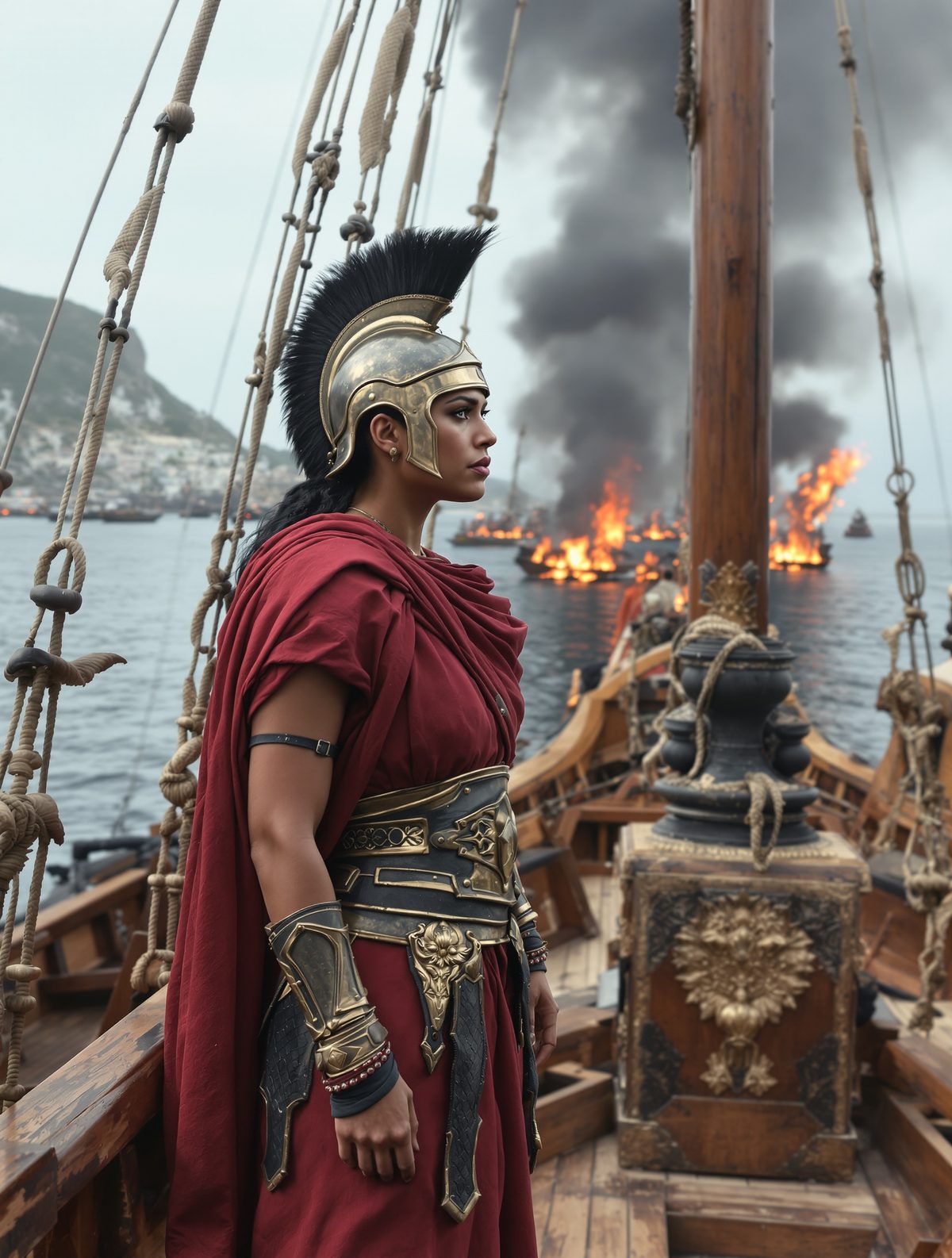
Imagine a man so gifted in charm and strategy that he could sway the tides of war and wax favour with the most powerful empires of his time. Now, imagine that same man ultimately betraying each of those empires in pursuit of his own ambitions. This is the story of Alcibiades, an Athenian noble who rose to dizzying heights of influence in 5th century BC only to fall from grace time and again. Alcibiades’ tale is one of relentless ambition, betrayal, and the fleeting nature of loyalty — lessons that resonate to this day in our understanding of power and politics.
The Prodigal Son of Athens
From his very birth, Alcibiades was destined for greatness. Born into one of Athens' elite families in 450 BC, he enjoyed the rarest of educations under the tutelage of Socrates himself. With his dashing looks, intelligence, and wealth, Alcibiades was a figure who hungered not just for success, but for the conquest of hearts and minds. By 420 BC, he had been entrusted as a general, leading Athens during the Peloponnesian War against its perennial rival: Sparta. Here was a man, still in his thirties, balancing on the edge of destiny with the potential to steer Athens to victory.
Yet, Alcibiades had what some might call a chameleon spirit. As much as he craved glory, he was equally susceptible to the allure of personal vendetta. The seeds of discord were sown when his political opponents in Athens trumped him in the infamous Sicilian Expedition, accusing him of sacrilegious vandalism and exiling him mid-campaign. The audaciousness of Athens, who had just entrusted him with their ambitious endeavor, now demanding his return in shackles, set the stage for Alcibiades' first great betrayal.
Running with the Wolf Pack: Sparta's Golden Boy
Alcibiades fled to none other than Athens' arch-enemy, Sparta. Here he found refuge, offering them not only his allegiance but his brilliant military acumen. It was under his guidance that Sparta adopted the devastating tactics he once wielded against them. He breathed life into their guerrilla maneuvers and fortified their lines by establishing alliances, notably swaying the Persian Empire to Spartan advantage. Alcibiades, in his element, seemed as if he were exacting his revenge on Athens with every strategical masterstroke he made.
Yet, this honeymoon with Sparta was never meant to last. Alcibiades, notorious for his hedonism, allegedly seduced Timaea, the wife of the Spartan King Agis II, creating a firestorm of scandal within the conservative Spartan court. The Spartans, once endeared by his brilliance, began to see him as the very embodiment of the chaos he had brought upon Athens. Fleeing yet another wrathful tide, Alcibiades set his sights eastward, toward the Persian Empire.
The Exile at the Persian Court
Alcibiades arrived at the Persian court around 412 BC, a man whose reputation preceded him. To an empire renowned for duplicity and ambition, Alcibiades was as much an asset as a threat. Here, he applied his mastery in diplomacy, swaying Persian satrap Tissaphernes with promises to play the Greeks against one another, enriching Persian interests. In a stunning twist of fate, Alcibiades, an Athenian by birth and Spartan by allegiance, now shifted his focus to ensuring neither could gain complete supremacy, a balance that satisfied Persian strategies.
During this period, Alcibiades showcased an astonishing ability to shape political landscapes. He allegedly devised a plan involving Persian aid to Athens, which he managed by playing both sides against each other. His days were filled with banquets of excess and a constant dance of deceit, but in Alcibiades’ mind, all extended gestures seemed justified if they served his ends. His presence in Persia was like a splash of vibrant colour in the monochrome traditions of the empire.
The Return to Athens — and the Fatal Fall
By 407 BC, the political landscape had shifted yet again, and Alcibiades found himself courted by an Athens desperate for capable leadership. Showered with adulation and restored as the Athenian strategos, he returned to his homeland which had once thirsted for his blood. As improbable as his return was, it was marked by a sense of optimism, as if Athens itself believed Alcibiades to be their prodigal savior.
However, this newfound allyship with Athens was short-lived. A crushing naval defeat at Notium in 406 BC, albeit one he did not directly command, unravelled his tenuous hold on power. It was the last straw. The ever-fickle Athenians, fearing conspiracies of old, once again banished him. This time, Alcibiades, weary and perhaps humbled, retreated to private life in Thrace. There, in 404 BC, he met his final end, assassinated under murky circumstances often attributed to either Spartan or Persian machinations.
The Legacy of Alcibiades: A Mirror to Ambition
Alcibiades' story is one of intrigue and ambition, a reminder of the seductive power and fatal pitfalls of charisma untethered by loyalty. His life was a relentless chess game where the board spanned empires, and every move was a combination of audacity and a profound understanding of human nature. His very existence posed questions that remain relevant today: can true loyalty exist when ambition is unrestrained, and can the pursuit of personal power destroy even the brightest of minds?
Though his tactical genius did shift the course of ancient history, Alcibiades left a legacy far more personal — the idea that the brightest luminaries can chart both glorious trails and become cautionary tales in equal measure. A quintessential story of ambition unmoored from ethics, Alcibiades reminds us that power is a double-edged sword, both capable of saving an empire or sending it hurtling into chaos. His life is an enduring testament to the fact that genius, without loyalty or moral compass, can lead to nothing but ruin.