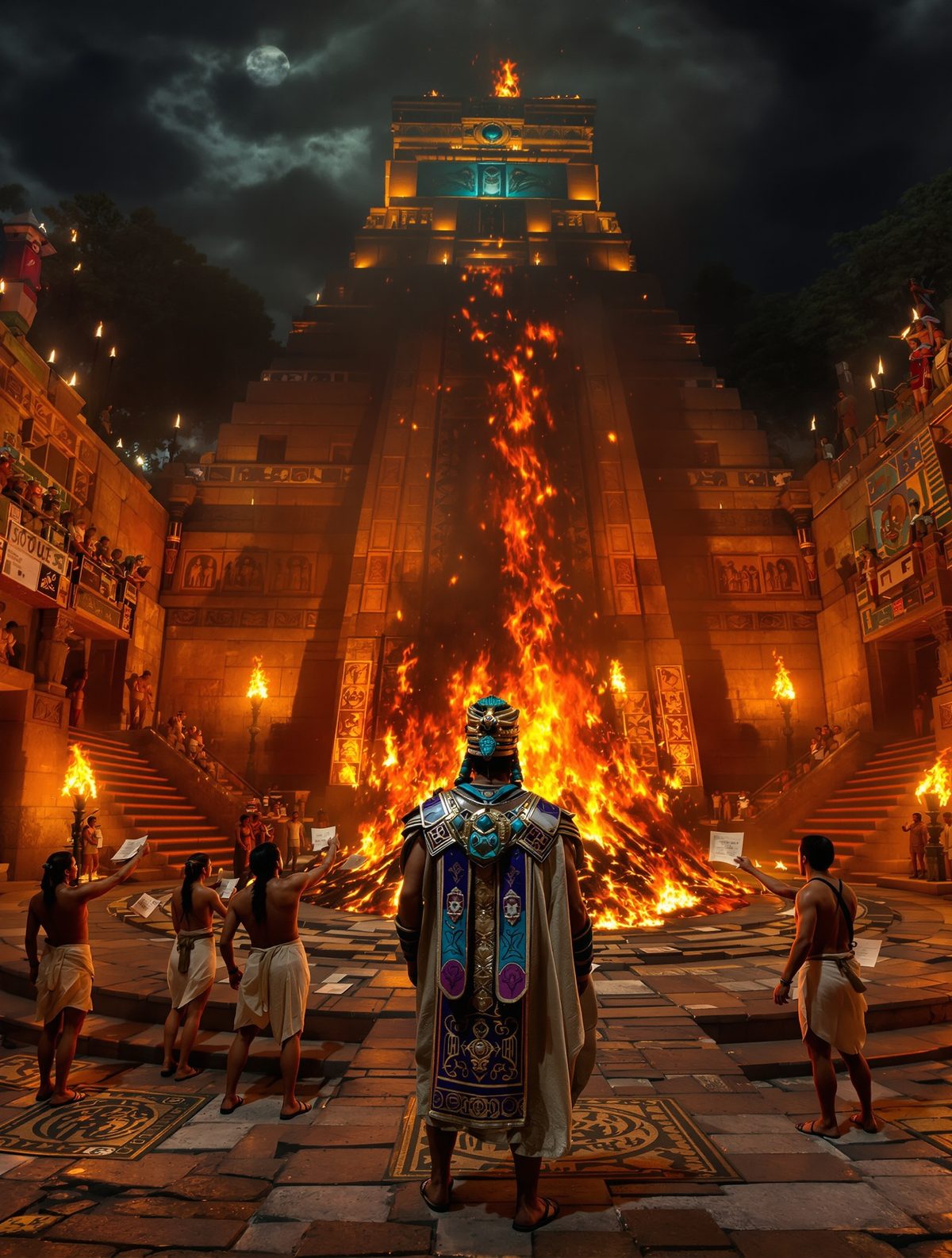
Imagine a ruler so wealthy that his generosity could tilt the balance of an entire economy. This isn’t a mere legend but a page from history, featuring none other than Mansa Musa, the 14th-century emperor of the Mali Empire. In 1324, his monumental pilgrimage to Mecca left Cairo—and indeed the entire world—reeling from a veritable economic avalanche. But how did his benevolence hold such power, and why does this incredible journey still echo in the economic corridors of memory today?
The Golden Parade: A Caravan of Wealth
In the year 1324, Mansa Musa embarked on a pilgrimage that would become the stuff of legends. As the sun rose over the savannas of West Africa, a procession of unprecedented lavishness began its journey eastward. Mansa Musa traveled with an entourage of 60,000 men, including 12,000 slaves, each clad in Persian silk, carrying gold staffs. Moreover, his caravan included 100 camels, each bearing up to 300 pounds of gold. For many who laid eyes upon it, this scene was akin to a river of gold meandering through the desert sands.
To understand the magnitude, picture a modern-day billionaire tossing cash in public squares but on a scale where gift-giving not only stunned cities but also changed the fiscal landscape. Musa’s caravan was a mobile metropolis of opulence, a testament to the prosperity of the Mali Empire and its control over the gold trade routes of Africa. The journey was not just a reflection of devotion but also a powerful display of wealth, meant to announce the Mali Empire’s presence on the global stage.
Arrival in Cairo: Initial Awe
As Mansa Musa entered Cairo, he was met with a reception that bordered on the divine. Al-Maqrizi, a later chronicler, described the sultan's awe at such unparalleled splendor. Musa’s stay in Cairo was remarkable, not just for the lavish gifts he showered upon dignitaries but for his decision to restock supplies in Egypt using gold coins. His generosity was a double-edged sword; while it won him admiration, it also stirred a whirlwind in the local economy.
It wasn’t merely his wealth that captivated; it was his flamboyant generosity. Musa donated gold freely to the poor, bought souvenirs, erected mosques throughout his journey, and exchanged gold in the local markets. The Cairo of the 14th century, accustomed as it was to trade and wealth, had never witnessed such a display, and the city's economy greedily swallowed this influx of gold—until the indigestion hit.
The Seeds of Economic Mayhem
The very fabric of Cairo’s economy began to warp under the weight of Musa’s charity. Gold was plentiful, almost excessively so. Basic economics dictated that as supply outstrips demand, value decreases. Gold’s sudden abundance meant its worth plummeted. Prices soared as the value of currencies diminished, leading to rampant inflation.
This wasn't a short-lived crisis. The ripple effects of Mansa Musa's gifts reverberated for over a decade. For Egypt, who had built its wealth and stability on gold and its derivatives, the influx of gold meant competition multiplied, transactions were skewed, and previous economic predictabilities dissolved into financial chaos. The entire region grappled with this unexpected fluctuation—an economic aftermath that saw prices in Egypt spiraling for 12 long years.
Unveiling the Mali Empire: Cultural Flourishing
Beyond the economic turbulence, Mansa Musa’s sojourn did put the Mali Empire firmly on the map. Renowned especially for its wealth of resources, the Mali Empire became famous far and wide as a destination of intellect, culture, and prosperity. Timbuktu, in particular, blossomed into a quintessential hub of learning and culture, attracting scholars, poets, and architects from various corners of the world.
Did you know? Mansa Musa’s patronage led to the construction of the Djinguereber Mosque, a landmark which still stands today in Timbuktu. The mosque was designed by architect Abu Es Haq es Saheli, whom Musa rewarded with 200 kilograms (around 440 pounds) of pure gold.
The Modern Echoes of Musa's Journey
Mansa Musa’s pilgrimage is a profound reminder of how an individual's actions can resonate across borders and time, affecting not only contemporary societies but also shaping the global economic narrative. His story teaches current economists and policymakers a vital lesson in market saturation and resource management.
It begs reflection: in today’s global economy, how do we balance wealth and generosity without inadvertently destabilizing the very systems we benefit from? As history shows us, the impact of our actions, however well-intentioned, can be far-reaching and long-lasting.
In retracing the steps of this legendary pilgrimage, we come face to face with the fact that even in a world marked by the conquests and clashes of kings, it was the quiet strength of generosity—amplified to excess—that forged a legend so stark, it altered the course of history. As Mansa Musa’s golden footsteps echo through the corridors of time, they remind us of the lasting power of wealth, influence, and the stories that emerge from their intersection.