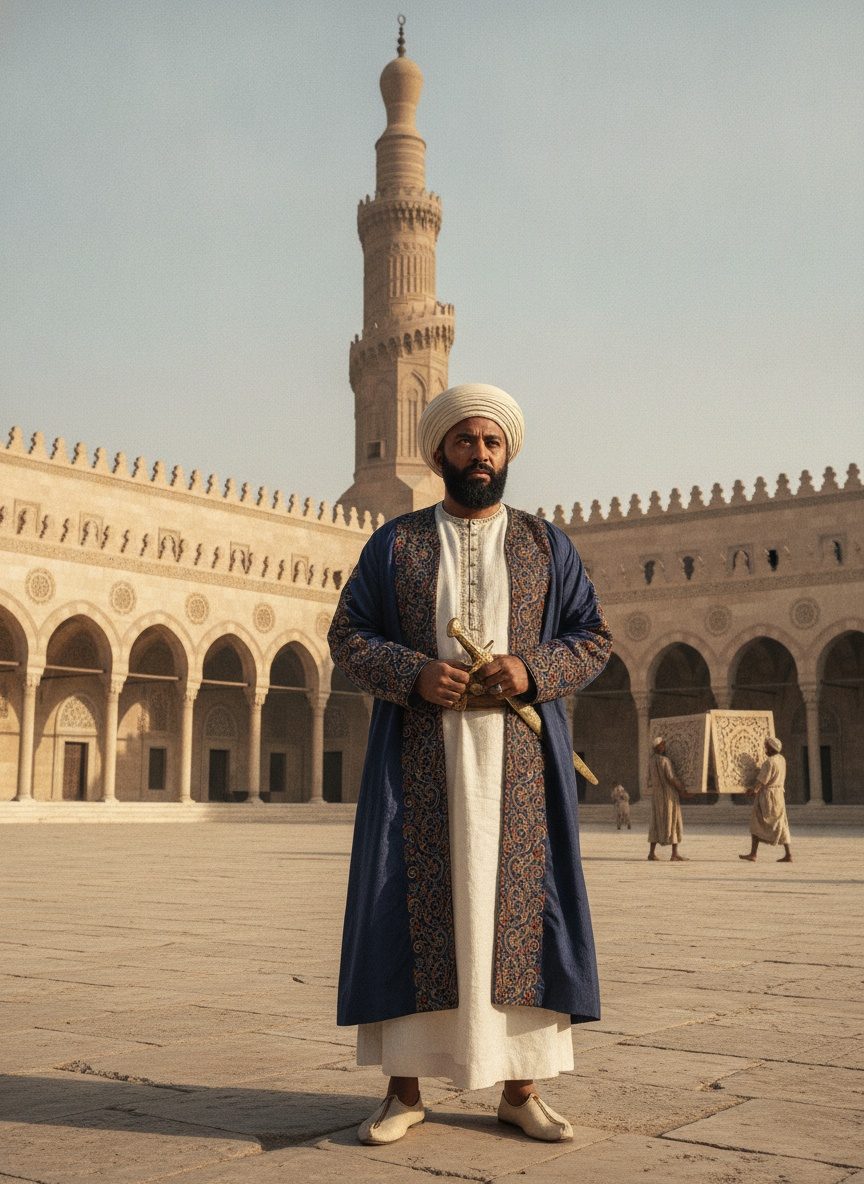
The air trembled with the sound of chisels striking stone. Workmen, their brows glistening with sweat, maneuvered blocks with the precision of craftsmen creating a masterpiece that would transcend time. Ahmad ibn Tulun's ambitious dream was taking shape, and like a stage magician crafting an illusion, he forged something extraordinary in the heart of 9th century Egypt. What emerged wasn't merely a place of worship — it was a testament to enduring vision, a mosque so expansive it could house a legion of soldiers under its roof.
Ahmad ibn Tulun had arrived in Egypt in 868 AD as a mere representative of the distant Abbasid caliph. He was a Turk by origin, part of a growing trend of non-Arabs rising to prominence in the military hierarchy of the Islamic world. Yet, he possessed a burning ambition and a keen intellect that could not be contained by the mere role of a governor. In the span of a few years, he transformed Cairo not only into a political power base but into a cultural beacon that would light up the centuries.
Founded in 876 AD, the mosque was unlike anything Egypt had seen. It was designed with clear, deliberate lines, each angle revealing the sophistication of its creators. Interwoven with spiritual significance, the structure adopted the Samarra pattern of Abbasid architecture, a symmetry of vast open spaces and intricate, geometric precision. As worshippers entered, they passed through spacious courtyards bordered with arcades resonating with the whispers of ages past. Here, Ibn Tulun commanded obedience not through force, but through awe—a masterstroke of spiritual statecraft.
At its core rose a majestic dome, sheltering the large prayer hall like a silent guardian. It was said that the mosque was so grand it could host his entire army, a statement of power under the guise of piety. More than a mosque, it was a fortification against the sands of time, standing unmoved by natural calamities and the ebbs and flows of empires. How many structures in history can claim such durability? The earthquakes that periodically shook the region failed to topple even a single one of its stones, a narrative not just of human accomplishment but nature’s acquiescence.
Behind its construction lay not just a thirst for architectural glory but a complex political maneuver. By carving out such a monumental work, Ahmad ibn Tulun asserted his autonomy from the Abbasid caliphate. Here, he could rule as a de facto king, tethered by only the thinnest strands to Baghdad. This act of defiance, veiled beneath a cloak of religious devotion, showcases the shrewdness with which he wielded both sword and spirit. Europe was thrust into its dark ages, yet here in Egypt, a brilliant mingling of cultures unfolded under his astute guidance.
Each corner of the mosque whispers stories. Its minaret, spiraling upwards like a winding staircase to the heavens, drew inspiration from the celebrated Great Mosque of Samarra. Yet it stood distinct, a symbol of local adaptation and cultural resilience. It offered a panoramic view—a visual connection to the lands stretching out beyond the city, a reminder of the vastness and scope of Tulun’s domain. The elegance of its design seems almost paradoxical, practical yet ceremonial, a duality that echoed the intricate dance of life in Abbasid Egypt.
Generations passed; rulers rose and fell, yet Ahmad ibn Tulun's vision held fast. New dynasties came, marking time with their own monuments, icons that time would eventually forget. The Fatimids plucked wonders from across the Caliphate to adorn their walls, the Ottoman Turks added their own embellishments, yet the mosque remained untouched. When the Mamluks and later Napoleon himself gazed upon it, even they saw the same sprawling edifice that crowds had marveled at centuries before.
For Ahmad ibn Tulun, the mosque was more than stone and mortar. It was a promise of eternal presence, an oath engraved into the very fabric of Cairo’s identity. It served as a gravitational center for a city that grew in both spirit and scope around it. The mosque has never been a mere relic, as some may think of other historical remnants, but a vibrant part of Cairo's pulse, living as the ancients intended.
And what of now? The mosque still stands strong, a steadfast watchman over its people. Within its walls, voices rise in prayer, as they did a millennium ago. Its enduring presence speaks not only of architectural brilliance but of a universal aspiration common to all mankind: the desire to create something immortal. It reminds us that great visions can be carved even from the harshest of sands, and that sometimes, an emissary, a son of another culture, can teach Egypt a tale so captivating that it echoes for over a thousand years.