525 AD. The sails of the Aksumite fleet gleamed under the scorching sun as they cut through the Red Sea.
The March of the Mighty King Kaleb
In the heart of the 6th century, the Kingdom of Aksum stood as a beacon of power and prosperity in the horn of Africa. King Kaleb, not just a ruler but a figure of formidable authority, led his people through an era where Christianity was woven into the fabric of society. Yet, his serene kingdom was soon disturbed by troubling whispers from across the Red Sea, in the land of Himyar—modern-day Yemen—where the cries of innocents caught his ear.
The tyrant Dhu Nuwas had claimed the Himyarite throne in a bloody coup, and his fearsome wrath fell most heavily upon the Christian population. Stories of persecution filtered into Aksum, tales of entire villages razed, churches burnt to ashes, and thousands of Christians massacred in cold blood. For Kaleb, a devout Christian king, this was not merely a threat; it was an affront to the very beliefs he cherished.
With a sense of righteous vengeance, Kaleb marshaled his forces, organizing one of the era's most audacious military campaigns. The Aksumite armada's objective was not just conquest, but justice—a reprisal to quell barbarity and defend the sanctity of their faith.
An Unexpected Act of Mercy
As the Aksumite soldiers docked on the shores of Himyar, their disciplined ranks moved with the force of judgment. The scent of war mixed with salt and sand, filling the air as they advanced inland toward Dhu Nuwas, poised for a confrontation that promised to be decisive.
The battle that ensued was fierce, yet swift. Kaleb's military acumen, combined with the element of surprise, toppled the Himyarite defenses. Dhu Nuwas, the brutal oppressor, found himself cornered, his forces dwindled to near nothing, and his power extinguished as quickly as it had erupted. It was here, at this moment of triumph, that Kaleb was presented with a choice that would echo through the annals of history.
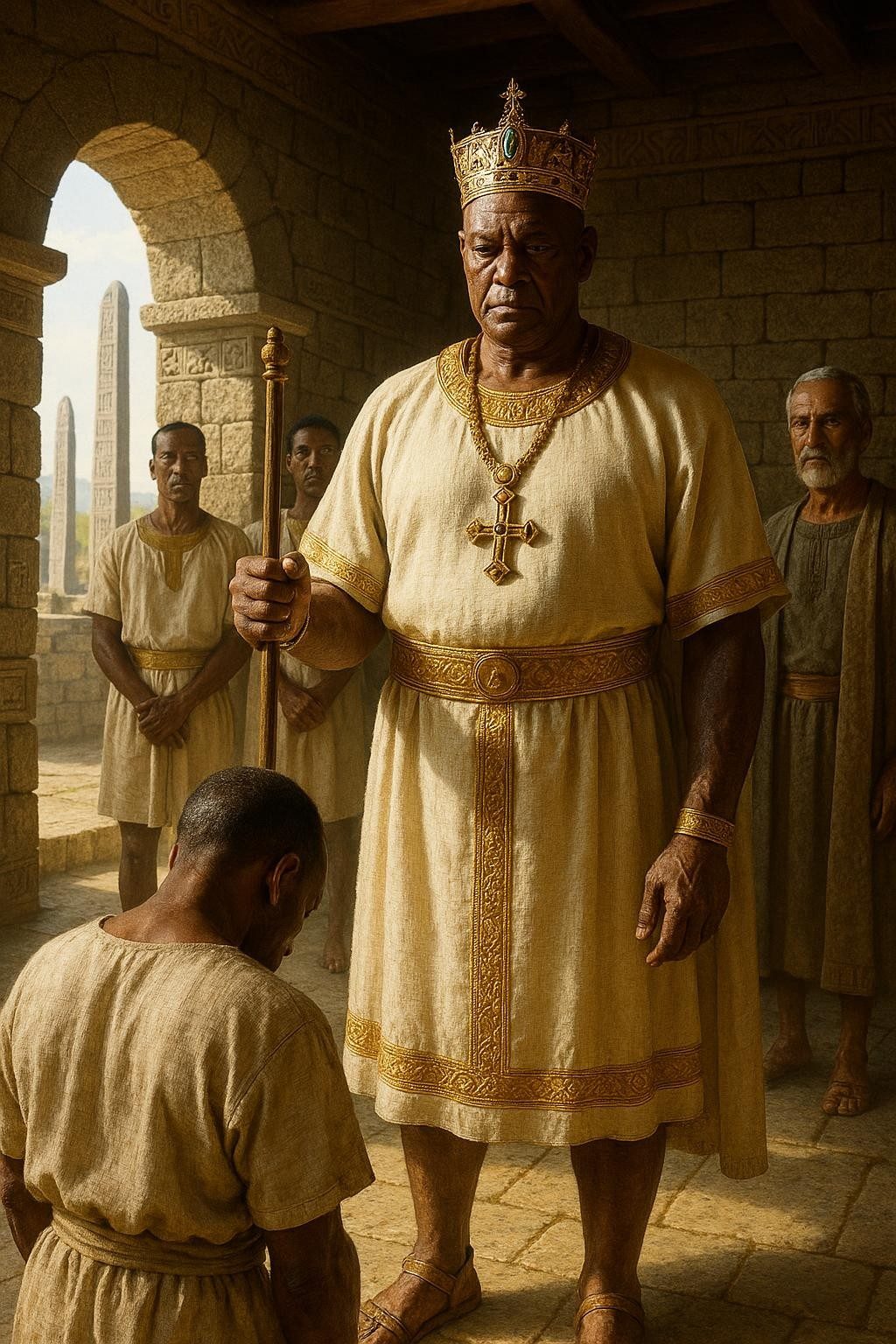
In a move that stunned both his followers and foes, Kaleb chose not the sword, but clemency. Instead of ending Dhu Nuwas's life, as would have been customary for one who committed such atrocities, Kaleb allowed him the dignity of a life spared. Rather than being an executioner, Kaleb sought to be a harbinger of peace, signaling a far greater strength in mercy than in vanquishing an enemy through bloodshed.
The Ripple of Aksum's Influence
The events in Himyar sent ripples across the ancient world. News of Kaleb's unexpected mercy reached distant lands, leaving an indelible mark among contemporaries. The act was not just a moral victory; it underscored the Aksumite ethos, one deeply intertwined with early Christian values of forgiveness and redemption. In sparing his rival, Kaleb reinforced Aksum’s status as a moral compass—a kingdom where strength was matched with wisdom and compassion.
The implications of Kaleb's actions stretched far beyond the immediate cessation of hostilities in Himyar. The campaign bolstered Aksum's regional influence, establishing it not merely as a powerful military force, but also as a patron of Christian unity and protector of the faith. Trade routes flourished under this renewed stability, with merchants knowing that the King who valued life was equally invested in prosperity and peace. Aksum's golden coins, engraved with the cross, became symbols of both wealth and faith, circulating across vast territories.
Why This Story Still Resonates
King Kaleb’s decision in 525 AD resonates through history with a profound narrative of unexpected mercy. In contrast to the often harsh and bloodstained chronicles of ancient conquests, Kaleb’s decision to let his enemy live offers a glimpse into an alternative course of leadership—one where victory is defined not just by the expanse of land acquired or the foes vanquished, but by the humanity that guides a ruler’s hand.
In our modern reflection, Kaleb’s act stands as a model of strength manifesting through compassion, a timeless reminder of the potential within leaders to choose paths that uphold dignity over destruction. While the Kingdom of Aksum's physical boundaries may have faded with the tides of time, the echoes of its king’s grace linger in tales of diplomatic foresight and emotional intelligence—attributes often needed but rarely seen in the corridors of power.
In a world where might often makes right, King Kaleb’s restraint speaks not only of a pivotal moment in African history but also of a universal truth: the greatest victories are sometimes those won over the self.