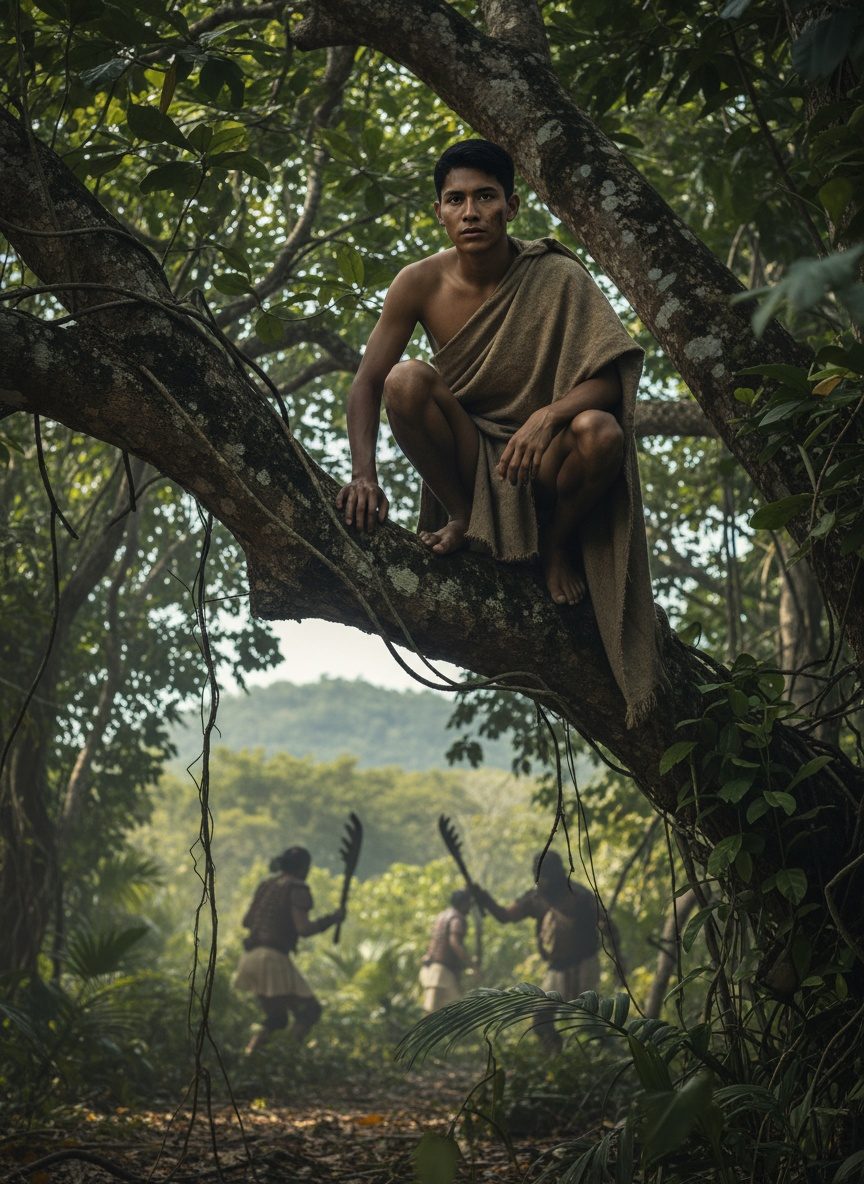
Leaves rustled overhead as Nezahualcoyotl clung to the tree's rugged bark, his breath shallow and his heart pounding like the drums of war. Below, chaos erupted in vicious crescendos of shouting warriors and the clash of blades. It was 1418 and his father's life was ebbing away, with betrayal soaking the ground in blood. Crouched among branches, he bore witness to the brutal execution, searing the moment into his memory—a memory that would fuel his resolve and shape his destiny.
The Fugitive Prince
Once the cacophony subsided, Nezahualcoyotl descended the tree, now orphaned and driven to the forest's shadowy embrace. His status shifted instantly from a prince of Texcoco to a hunted fugitive, pursued by the same forces that had claimed his father's life. The world of towering trees and murmur of streams became an unlikely sanctuary, as the forests of Mexico cloaked his escape. A price on his head transformed every encounter into a potential threat, where each rustle could be friend or foe.
Years passed as stories of the lurking exiled prince spread. He darted through the landscape like smoke, elusive and unyielding, honing his mind on survival and solace in the teachings of nature. He absorbed the forest's lessons, finding wisdom in its silent endurance and relentless growth. His time on the run refined his intellect, and though he wore the guise of a fugitive, within him matured the mind of a philosopher.
Nezahualcoyotl's path wasn't just survival; it was preparation. He sought allies among those who detested the same cruel hands that had usurped his right. Hidden behind the masks of commerce and diplomacy, he drew people to his cause, fanning the flames of resistance with cautious precision. He was a hunted prince who understood the land more intimately than any other, yet each victory over his pursuers fueled a deeper yearning for something far greater—a kingdom re-born under the light of his vision.
A Kingdom Restored
By the time two decades of pressure had passed, Nezahualcoyotl was no longer the chased child of the forest. Like steel shaped by years in the forge of adversity, he emerged ready to retake what was destined to be his. His return to Texcoco was heralded not by wild force, but through calculated strategy, alliances forged from common purpose, and a commanding respect that had grown as his legend spread.
The throne reclaimed, Nezahualcoyotl began the task of rebuilding his kingdom not just in splendor but in spirit. He envisioned Texcoco as a center of learning and culture unlike any other in Mesoamerica, breathing life back into the ruins not through the ordinary rites of power but through the extraordinary reach of knowledge. What emerged was a city inspired by a ruler whose mind painted with the diverse colors of philosophy, art, and governance.
Under his rule, Texcoco rose—a beacon of law, poetry, and architecture. His reign nurtured an environment where libraries flourished, preserving the wisdom of ages and the musings of his contemporaries. Sacred groves turned into sanctuaries of reflection, and his palace into a haven of intellectual exchange, the walls echoing with discussions as vibrant as the hues of a woven tapestry in the sun.
Amidst such growth, he courageously outlawed human sacrifice within his city—a bold divergence from tradition that reinforced Texcoco's distinction under his equitable rule. The grandeur of temples was rivaled only by an emerging ethos that sought to recognize the sanctity of life, embodying a vision of civilization that bore little allegiance to the brutal rites practiced by neighboring cities.
The Philosopher King
Nezahualcoyotl was more than a king by birthright; he was a philosopher-king whose reign was a quiet revolution, whispered through pages of poetry as much as decreed through proclamations. His verses spoke of the fleeting nature of life, the search for wisdom, and the resilience stemming from the heart's most profound trials. They resonated across the land, carried on winds that had once whispered his fugitive secrets, now transformed to sing of creation over destruction.
Tales of his eloquence and mindful governance tethered themselves to the legacy of a ruler who did not only restore a kingdom but transformed its very soul. Nezahualcoyotl, unlike so many rulers of his time, turned his power not towards perpetual conquest but towards cultivating a space where culture could flourish, a domain where thought was held in as high regard as strength.
This incredible story matters today, for it is a testament to the transformative power of resilience, vision, and ideas. Nezahualcoyotl's life—written in the annals of history not just for his reign, but for the enlightenment he championed—serves as a timeless narrative of how leaders can shape worlds through the gentle touch of wisdom rather than the bludgeoning force of tyranny. It reminds us of the potential that lies in looking beyond the bleakness of current circumstance to the boundless possibility of what can be achieved with patience, intelligence, and hope. As we weave the narratives of our modern times, his legacy beckons us, inspiring us anew to believe in the quiet, enduring strength of humanity's better self.