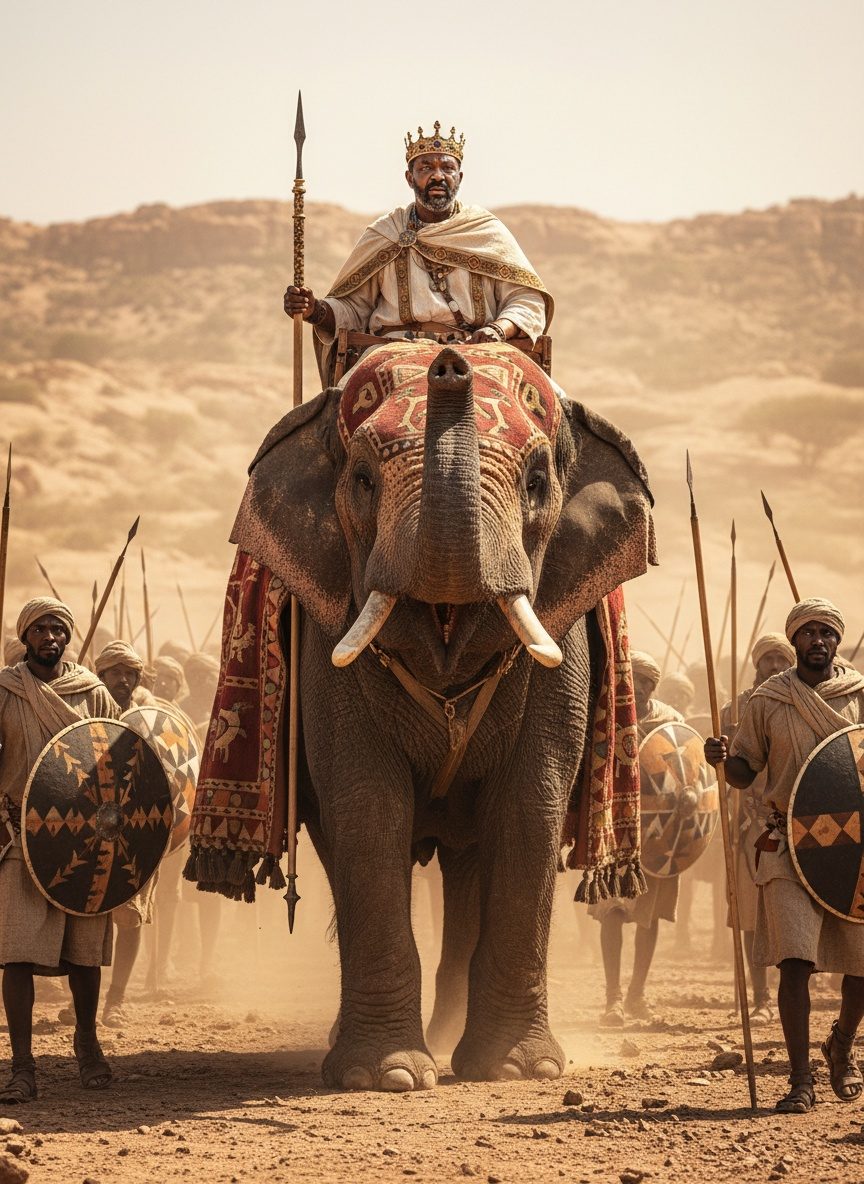
570 AD. The rising sun painted the Arabian desert in shades of orange and gold. The air buzzed with the subdued murmur of thousands of soldiers preparing for their final march. This was no ordinary army. At its heart stood a creature that would etch its legend into history—a massive war elephant, led by Abraha, burning with determination to bring Mecca to its knees. But destiny had other plans.
The Rise of a Fearsome Power
Abraha, a general from the Kingdom of Aksum, had ascended to power through grit and ambition. The vibrant Kingdom of Aksum, located in what is modern-day Ethiopia, extended its influence across the Red Sea into the Arabian Peninsula. Driven by religious fervor, Abraha had one goal: to cement the influence of Christianity in the region by eliminating its most sacred Pagan site—the Kaaba in Mecca.
This wasn't merely a strategic maneuver; it was an audacious statement of faith. The use of a war elephant was not just to showcase military superiority but also to instill fear in the hearts of those who revered the humble town of Mecca as a spiritual haven. This enormous beast, a symbol of strength and dominion, was expected to crush any resistance underfoot with its sheer power.
The March Towards Destiny
Abraha's forces moved with precision across the arid landscapes of Arabia, encountering little to no resistance. The mere sight of the elephant, a creature unfamiliar and terrifying to many in the region, struck awe and submission within the hearts of men. Villages and tribes submitted, paths cleared, and the road to Mecca seemed assured.
It is said that as the army approached the outskirts of the sacred city, the mood shifted—nature itself offered signs of reluctance. The winds howled ominously, and the skies carried whispers of impending doom. Whether these were merely natural changes or interpreted by the fearful eye of human superstition, they signaled a turning point.
The Elephant’s Defiance
Standing at the brink of Mecca, with the tantalizing vision of the Kaaba visible, Abraha prepared for his final victory. Yet, as history tells it, something extraordinary occurred: the elephant refused to move. The colossal beast that had so powerfully led the charge now knelt, unyielding to coaxing, force, or threat. It was as if the animal, in its simple yet majestic wisdom, sensed a boundary it dared not cross.
Chaos simmered through the ranks. Soldiers and commanders hurled commands and threats, but to no avail. The elephant stayed firm, as if planted, while the air thickened with tension and uncertainty. Was this divine intervention? Or perhaps the creature's fatigue encountered at the fateful place where empires falter?
The Retreat of Dreams
For Abraha, this unexpected defiance was devastating. With wavering morale and sign of ill-omen clouding their judgment, the army began to lose its resolute spirit. Reports speak of sudden storms and mysterious illness that struck the troops, as confusion gave way to fear. What promised to be a conquering march turned into a hasty retreat, a shadow of disorganization where once there was order.
The Kingdom of Aksum’s dream of expansion and religious domination crumbled that day, not on the battlefield but in the silent refusal of a majestic elephant. Mecca stood unblemished, its spiritual aura seemingly safeguarded by an unlikely protector, returning Abraha and his troops to the annals of obscured history.
The Elephant in History’s Shadow
The story of Abraha and the obstinate elephant ripples through history as more than a mere tale of warfare. It challenges us to ponder the inexorable winds of fate and the limits of human ambition. Whether through divine intention or coincidental circumstance, the refusal of one creature rewrote the future of a people.
In this moment of defiance lies a profound reflection on the power of belief and the unforeseen twists of destiny. Would faith in Mecca’s sanctity have endured unchallenged had the elephant not knelt? Perhaps the endurance of its religious heritage owes itself to this peculiar, defining standoff.
As we sift through the sands of history seeking answers, we are reminded that in the grand tapestry of time, even the mightiest plans can hinge on the unlikeliest of events. And sometimes, they do not bow to human will, but to the enigmatic rhythm of the cosmos.