He was a soldier who chose the front line. He walked into Auschwitz deliberately.
A Mission Like No Other
In September 1940, Warsaw was an occupied city, its streets overshadowed by the iron fist of Nazi Germany. Among the subdued crowds walked a man different from the rest — Witold Pilecki, a Polish cavalry officer with a mission unlike any attempted before. While many sought refuge from the horrors enveloping Europe, Pilecki sought entry into one of its darkest epicenters. He volunteered to infiltrate Auschwitz, the infamous Nazi concentration camp, by getting himself deliberately captured. Pilecki was not motivated by a death wish but by a relentless desire to gather intelligence and illuminate the atrocities unfolding within the camp's barbed-wire confines.
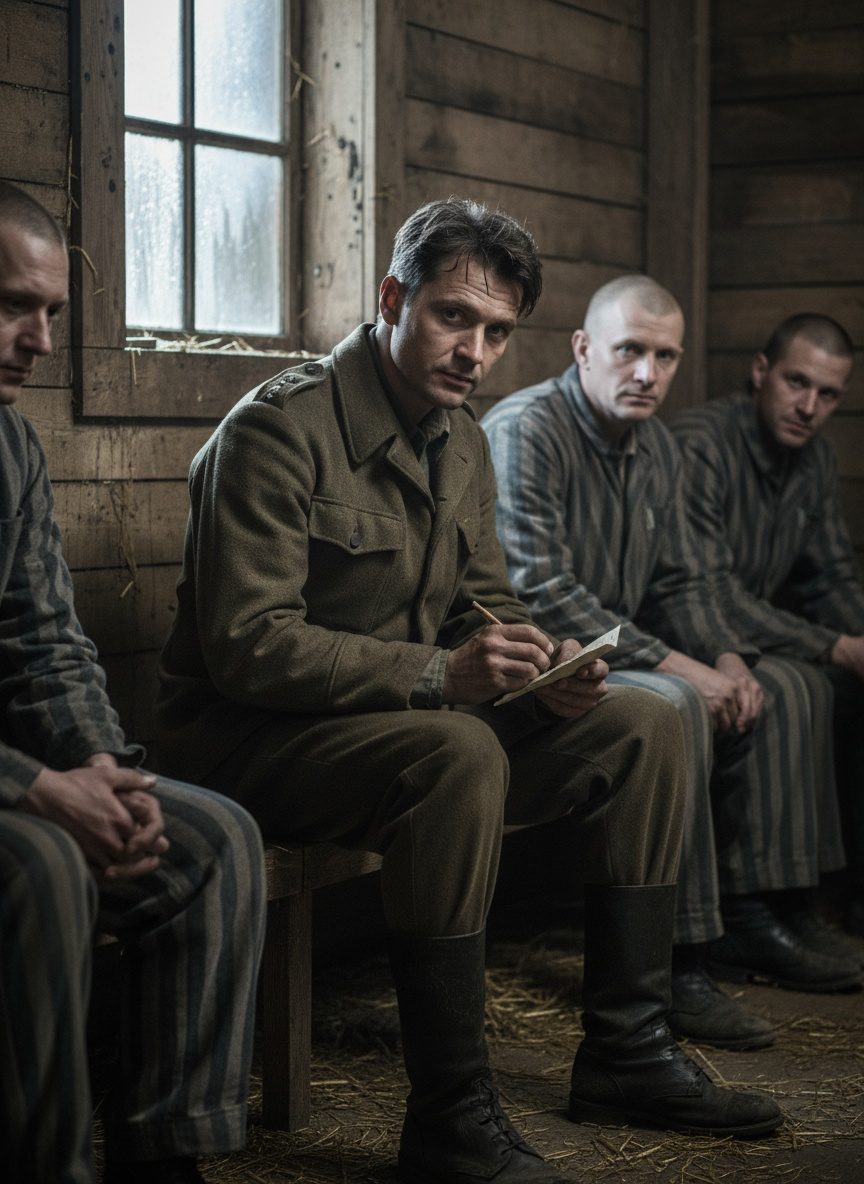
A shabby roundup on Warsaw's streets provided the opportunity. Without hesitation, Pilecki entered his own personal hell. Captured in the dragnet, he was sent to Auschwitz under the pseudonym "Tomasz Serafiński." Upon arrival, the brutality exceeded even his worst expectations. As prisoner number 4859, Pilecki found himself in a world stripped of humanity. Starvation, disease, and systematic murder were everyday realities. Witnessing these inhuman conditions, Pilecki’s resolve strengthened, transcending personal survival as he set about organizing resistance from within.
Under his leadership, the inmates created a clandestine network called the Union of Military Organization (ZOW). It was an act of sheer willpower and ingenuity against an enemy that considered them less than human. This network aimed to provide food, clothing, and morale to fellow prisoners, but its most critical mission was to smuggle intelligence out of Auschwitz. Through messages stitched into the lining of garments and scraps of paper hidden in the belongings of escapees, Pilecki sent detailed reports to the Polish resistance and, eventually, to the Allies. These reports were among the first solid evidences of the Holocaust reaching the Western world, painting a grim picture of mass exterminations and hinting at the industrial scale of Nazi brutality.
The Silent Hero of Auschwitz
Witold Pilecki’s work was fraught with danger at every turn. The watchful and ruthless SS guards were trained to sniff out any dissent. To be part of ZOW was to be constantly on the brink of death. Each report sent out was more than information; it was a lifeline to the outside world — a desperate plea for intervention and understanding. The risk of discovery lingered like a specter, ever present and deadly. Still, Pilecki continued to document the monstrous crimes he witnessed, firmly believing that awareness could spark action against the Nazi’s genocidal machinery.
Inside Auschwitz, Pilecki's organizational prowess kept the flickering flame of hope alive. ZOW wasn’t merely a resistance network but a community. They managed to smuggle medicine into the camp, risking their lives to save those of others. Every act of defiance was a blow against the terror, a statement that the dehumanization and despair orchestrated by the oppressors would not win. Resistance members were instrumental in organizing escapes, the successful ones bringing back crucial intelligence to aid the broader struggle against Nazi tyranny.
In April of 1943, Pilecki made the bold decision to escape the camp himself. Months of preparation and tense execution led to his breakout, a feat that was both daring and tactical. His escape brought not just another body from under Nazi control but a treasure trove of firsthand information about the camp’s operations. Upon his return to Warsaw, Pilecki compiled a comprehensive report on Auschwitz, one which he hoped would spark outrage and action among the Allies. Yet, bureaucracy and disbelief slowed the response he desired, leaving the world to grapple with the extent of the horrors too late for many.
Beyond Survival
Liberty outside Auschwitz’s electric fences didn’t mean respite; for Pilecki, it led to continued combat against oppression in its many forms. After his escape, he actively participated in the Warsaw Uprising in August 1944, a stark reminder that even with Auschwitz behind him, the fight for freedom was far from over. Pilecki’s patriotism and bravery were resolute, burning fiercely throughout the war years. Still, post-war Poland, ensnared by a new Soviet regime, had little room for heroic narratives that did not align with the new political order.
The very skill set that had made Pilecki a thorn in the Germans' side marked him as a threat to Stalin’s Communists. In 1947, he was arrested by the Polish secret police on charges of espionage for the Polish government in exile. In a tragic twist of fate befitting a Shakespearian hero, the verdict was death in 1948, erasing him from the world he had dedicated his life to protecting.
Witold Pilecki's choice to enter Auschwitz was more than an act of espionage; it was a profound testament to integrity and resilience. Standing quietly against an unthinkable tide of cruelty, Pilecki shed light in the darkest of places, embodying the ethos of resistance. Astonishingly, his contributions remained clouded for decades, obscured by political agendas and overshadowed by the vast tapestry of war. Today, his deeds remind us that courage often takes the path less visible, that justice sometimes requires one to walk into the storm, and that history remembers those who dare to fight not with might but with the truth of their convictions. His legacy isn't just a narrative of war; it's an enduring challenge to recognize, honor, and act upon the truths that brave individuals like Pilecki illuminate, even — and especially — when they arise from humanity's darkest chapters.