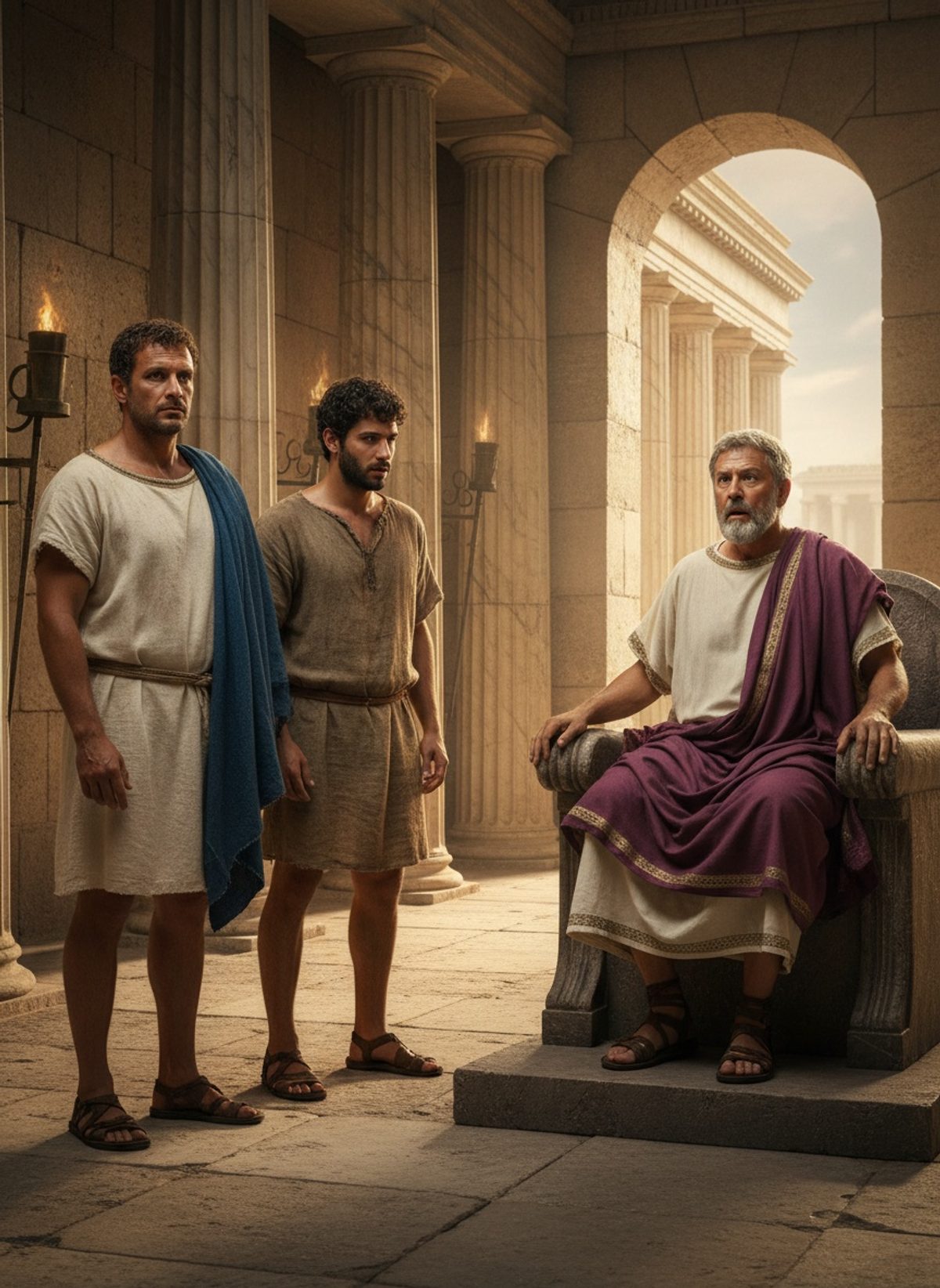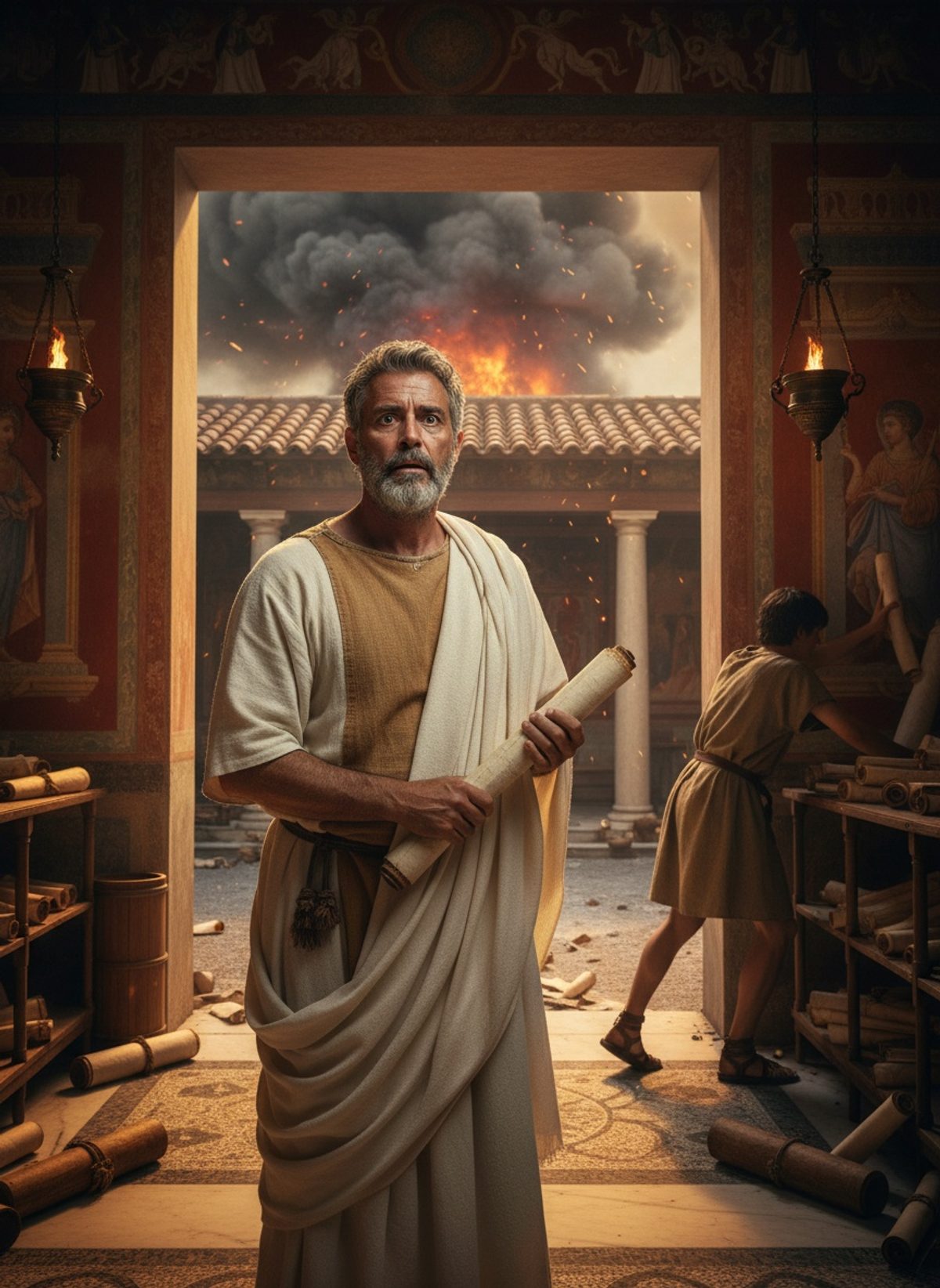
August 24, 79 CE. The massive crown of Vesuvius loomed ominously over the bustling Roman towns.
When Fire Met the Pages of Antiquity
On that fateful summer day, the tranquility of Pompeii and Herculaneum was violently shattered. Residents of these towns found themselves at the mercy of Mount Vesuvius, which roared to life with unmatched ferocity. A torrent of ash and pumice swept across the landscapes, entombing everything in its path. This eruption did more than just obliterate homes and snuff out lives; it encapsulated an entire cultural moment beneath a blanket of deathly gray.
Deep beneath this ashen veil lay a treasure trove that no armchair historian could have dreamt of: the Villa of the Papyri. This grand estate, located in Herculaneum, housed the only intact library known to survive from antiquity. The villa had been a summer retreat for the wealthy and learned, its walls adorned with art, its floors impeccably tiled, and its bookshelves stocked with rare works.
The villa's urns and busts, its mosaics and frescoes, all were lost to the suffocating embrace of the volcanic surge. Likewise, its hundreds of scrolls were reduced to brittle, blackened cylinders—carbonized by the heat, made fragile by time. As the centuries passed, these artifacts became mere whispers of the vibrancy that once filled the villa's halls. Most scholars thought these papyri had surrendered forever their secrets to the abyss of history.
The Rediscovery and a New Hope
For nearly two millennia, the Villa of the Papyri lay dormant beneath eighteen meters of volcanic soil. It wasn't until the 18th century that the villa was rediscovered by chance during the construction of a well. Yet, it would be many more years before the significance of its library was fully understood. Archaeologists painstakingly excavated its treasures, laying eyes on a vast number of scrolls that had once been believed unimaginable to find.
However, to touch or unroll these fragile scrolls was tantamount to destruction. Scholars were faced with an impossibility: the papyri contained invaluable insights from the ancient world, yet deciphering them without damage seemed beyond reach. This dilemma turned many away, leaving the scrolls to lie untouched, too sacred for experimentation, yet too delicate for the clumsy intrusions of human curiosity.
Then, amid this cautious impasse, an unlikely alliance between technology and antiquity offered a glimmer of hope. Modern imaging techniques emerged as potential saviors. What once was speculation began to harden into possibility as scientists began to explore how technology might peer inside the smoldering wreckage of the scrolls without causing further harm.
Unlocking the Words Within
Enter the realm of advanced imaging techniques. The scrolls, once unravelled by hand at great risk, now found a caretaker in the form of non-invasive digital technology. Multi-spectral imaging, a technique that examines materials under various wavelengths of light, began unveiling details that human eyes alone could not discern.
But the real breakthrough came with the adoption of X-ray phase contrast tomography, a technique that probes beneath the charred layers without even the gentlest of touches. This technology, uncommon even within modern medical practices, was heralded as a radical innovation in historical preservation. It offered a unique glimpse into the whorls and weaves of the papyri's carbonized fibers, revealing letters and even entire passages that had been sealed away for centuries.
Researchers began to piece together the minds of the philosophers, the poets, the thinkers of a bygone age, whose works had been presumed lost. Many were written by Philodemus, an Epicurean philosopher and poet whose works discussed ethics, poetry, and the natural world. It was like conversing with ghosts, the written words of a time long vanished whispering new tales and thoughts into a much-altered world.
The Echoes of Time's Garden
The successful digital unrolling of the Herculanean papyri marks more than just a triumph of technology over tragedy; it represents humanity's unyielding desire to hold fast to its cultural memory. As scholars continue to decipher these ancient texts, you can feel the echoes of the past resonating within our present, an endless dialogue across time.
While only a fraction of the work remains unlocked, each new character read serves as a reminder of the resilience not just of artifacts, but of human determination itself. It's fitting—profound, even—that a catastrophe so apocalyptic in its reach would encase, and inescapably preserve, wisdom that might have otherwise been erased by the mundane friction of time.
The hot breath of Vesuvius rendered the scrolls unreachable for nearly two millennia, but persistence and innovation have begun to thaw this forgotten library from its monumental freeze-frame. Each unwrapped scroll is a defiance of oblivion, a message from worlds that once were, a testimony not merely to what was lost, but to what can yet be found. In their delicate unfurling, we are reminded that culture and knowledge often endure, beneath the ashes, waiting patiently for light once more.