History often sidelines the powerful women who shaped its course. Yet, in March 1900, Yaa Asantewaa stood at the center of a showdown with an empire.
Seizing Power: A Queen Mother's Defiance
The West African Kingdom of Ashanti, known for its golden riches and fierce warriors, found itself on the brink of collapse at the dawn of the 20th century. The British Empire, extending its grasp over the African continent, had already exiled the Ashanti king, Prempeh I, cutting the head from the proud lion of this vast kingdom. The British did not stop at dethroning royalty; they demanded the Golden Stool, a sacred symbol of the Ashanti realm's soul and unity. An insidious move designed to sap the people's spirit. Yet the story that unfolded was far from one of inevitable capitulation.
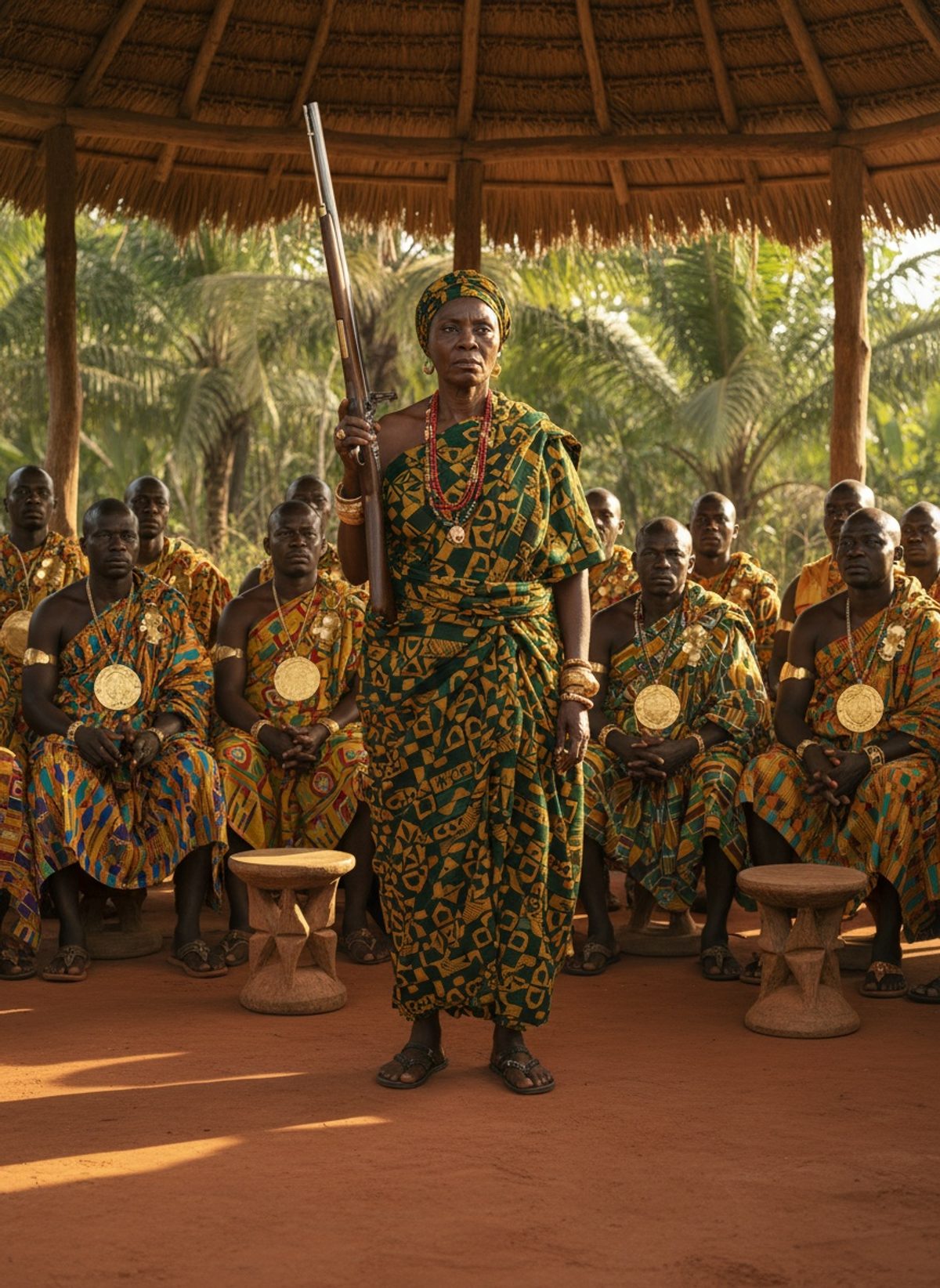
Amidst this turmoil, the Ashanti chiefs—once stalwart defenders of their tradition and sovereignty—sat in disbelief, their usual vigor seemingly dampened. Enter Yaa Asantewaa, the venerable queen mother of Ejisu. At sixty, she was no stranger to struggle, nor was she willing to bend the knee without a fight. As silence enveloped the council, she rose, a picture of resolve, and seized a rifle. Firing into the air, her actions demanded attention, boldly interrupting the stillness and banishing any lingering doubt among the gathered leaders.
The Speech That Sparked a Revolution
Her voice cut through the heavy air, each word a challenge, yet an invitation. "If you men will not go forward, then we will," she declared, igniting a flame of resistance. With searing conviction, Yaa Asantewaa called out the chiefs, drawing from an internal well of strength that would stir the warrior spirit embedded in Ashanti identity. This wasn't mere rhetoric; it was an ultimatum to action. Her message was unyielding: the fight for the Ashanti's honor, dignity, and future would not succumb to the cowardice of complacency.
What Yaa Asantewaa proposed was radical: the women, traditionally assigned roles away from the frontline of battle, would rise to the occasion if the men faltered. It was a rallying cry that echoed through the annals of Ashanti history, a manifesto that would galvanize warriors and civilians alike. Her audacity inspired the Ashanti to envision the impossible—women taking charge in a sphere dominated by men, leading them to defense against colonial rule.
A Fierce Resistance Begins
The British Empire perhaps underestimated the power and resolve they had awakened. The subsequent events, often referred to as the War of the Golden Stool, demonstrated not just military might but an indomitable spirit. The Ashanti people, with Yaa Asantewaa symbolically at their helm, leveraged every resource at their disposal. These were not merely warriors outfitted with implements of war, but a collective embodying resilience and cultural unity against a technologically superior force.
For months, Yaa Asantewaa's resistance kept the British forces at bay, her leadership a masterclass in unconventional warfare. She utilized the dense forests to her strategic advantage, orchestrating ambushes that bewildered the British military. This was not just a battle of physical endurance; it was a tactical engagement that tested intellect and resilience. The queen mother's resolve and strategic prowess punctured the myth of British invincibility, a reminder that might does not always make right.
Beyond the Battleground: The Legacy of a Warrior Queen
Ultimately, the overwhelming resources of the British Empire conquered the Ashanti resistance. Yaa Asantewaa was captured and exiled, much like her regal counterpart, King Prempeh I. Yet, her tenacity and courage left an indelible impact on both Ashanti culture and anti-colonial movements across the continent. Her defiance was not merely a historical footnote; it reverberated through the decades, inspiring future generations to reclaim their heritage and assert their rights against oppression.
Yaa Asantewaa's story matters because it disrupts the conventional narrative that often paints colonized peoples as passive subjects of history. Her actions depicted the complexities of resistance and the creativity of leadership, challenging norms and redefining gender roles long before contemporary dialogues had taken shape. She showed that true power lies in the courage to act, to stand when others remain seated, to speak when others remain silent.