In the world of archaeology, mysteries often unfold slowly. Yet, some remain hidden in plain sight for thousands of years. Such was the case in 1922, when a team of archaeologists unearthed a sealed doorway deep in Egypt's Valley of the Kings. What lay behind that untouched portal would ignite imaginations and kindle whispered tales of curses and wonders from an era long past.
The Curse above the Doorway
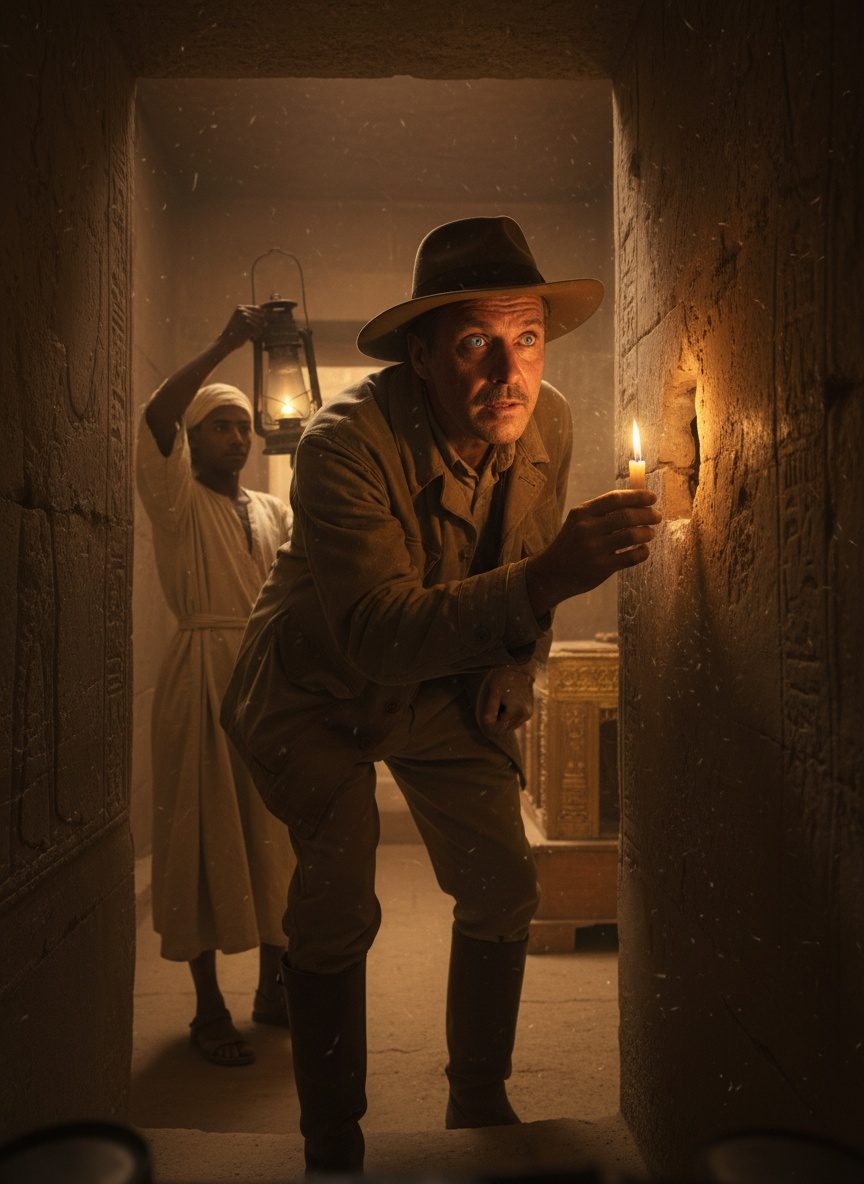
A candle flickered in the cool, dark air, revealing the glitter of gold beyond the door. Howard Carter, the determined archaeologist, had spent years combing the arid landscape of the Valley, driven by whispers of a forgotten king. When he finally peered through the breach, what he saw was beyond his wildest dreams—a room filled with treasures, dazzling in the soft light of the flame. But etched above the doorway was something unexpected: a curse meant to deter those who dared trespass. Its ominous warning carved in ancient hieroglyphs spoke to the superstitions of the time, and while its words were unreadable to all but a few, their intent was chillingly clear.
The Boy Pharaoh Entrusted to the Sands
Tutankhamun, a teenage ruler whose brief life ended prematurely, was buried with unrivaled splendor. Yet his reign was shrouded in haste and secrecy. Unlike the grand monuments built for rulers such as Ramses or Seti, his tomb, KV62, was modest—almost unworthy of a king. Concealed by the sands and forgotten by time, it escaped the grasp of tomb raiders who pilfered most of Egypt’s ancient treasures.
His burial chamber was a treasure trove of artifacts, offering a window into the opulence and artistry of an ancient civilization. Every item had a purpose, carefully chosen for the afterlife. The sealed doorway and untouched state of these relics offered an authenticity lost to the ages, a pristine glimpse into the sacred rites of Egyptian burial practices.
The Valley Gives Up Its Secrets
As Carter’s team carefully dismantled the ancient barriers, the world held its breath. Inside the tomb, intricate carvings and paintings seemed to pulse with life, telling stories of gods and the eternal journeys of the soul. The treasures were innumerable: a golden throne, ceremonial beds, chariots, and statues. Each artifact bore witness to the splendor of a forgotten epoch.
But the most stunning discovery was yet to come. In the burial chamber, a majestic sarcophagus lay nestled in layers of protection. Within it, the intact mummy of Tutankhamun, his burial mask gleaming with an intense, otherworldly luster. The face gazed forth, an image forever linked with the mysteries of Ancient Egypt.
A Discovery Both Celebrated and Feared
News of the discovery spread like wildfire. Yet, interwoven with awe and admiration were shadows of dread. The curse etched above the entrance played into the fears of many. Visitors to the tomb told tales of inexplicable misfortunes and eerie occurrences, attributing them to Tutankhamun’s vengeful spirit.
While a slew of mysterious ailments and accidents befell several members of Carter’s team and their acquaintances, modern science has since sought alternative explanations. Some suggest that ancient toxins sealed within the tomb could have unleashed health hazards upon its opening. Yet, others maintain that whatever the source, the curse remains as enigmatic as its origins.
The Enduring Mystery
The seal was unbroken, offering a tantalizing study of preservation, but the curse left more questions than answers. Tutankhamun’s rediscovery illuminated more than the treasures of a forgotten king; it unveiled the depths of human intrigue and superstition. In uncovering the boy pharaoh, Carter not only revived a figure lost to antiquity but also reignited the world’s appetite for stories that straddle the line between history and legend.
This tale from Ancient Egypt reminds us that beneath layers of history lie narratives waiting to be unearthed—some adorned with gold, others echoing ancient threats. Whether blessing or malediction, the stories these ruins whisper continue to captivate, compel, and caution generations who tread in the footsteps of those who have come before.