Smoke still curled from the scattered remnants of fires as Union soldiers watched with wary eyes. Across the barren fields stretching from the Appomattox Court House, Confederate soldiers slumped against their wagons, exhausted and hollow-cheeked. The war was finally at its end, yet the specter of famine hung thickly in the air. The clash of iron and the cries of the wounded had faded, and in their place settled a silence filled with an uneasy anticipation of what would come next.
An Unexpected Act of Humanity
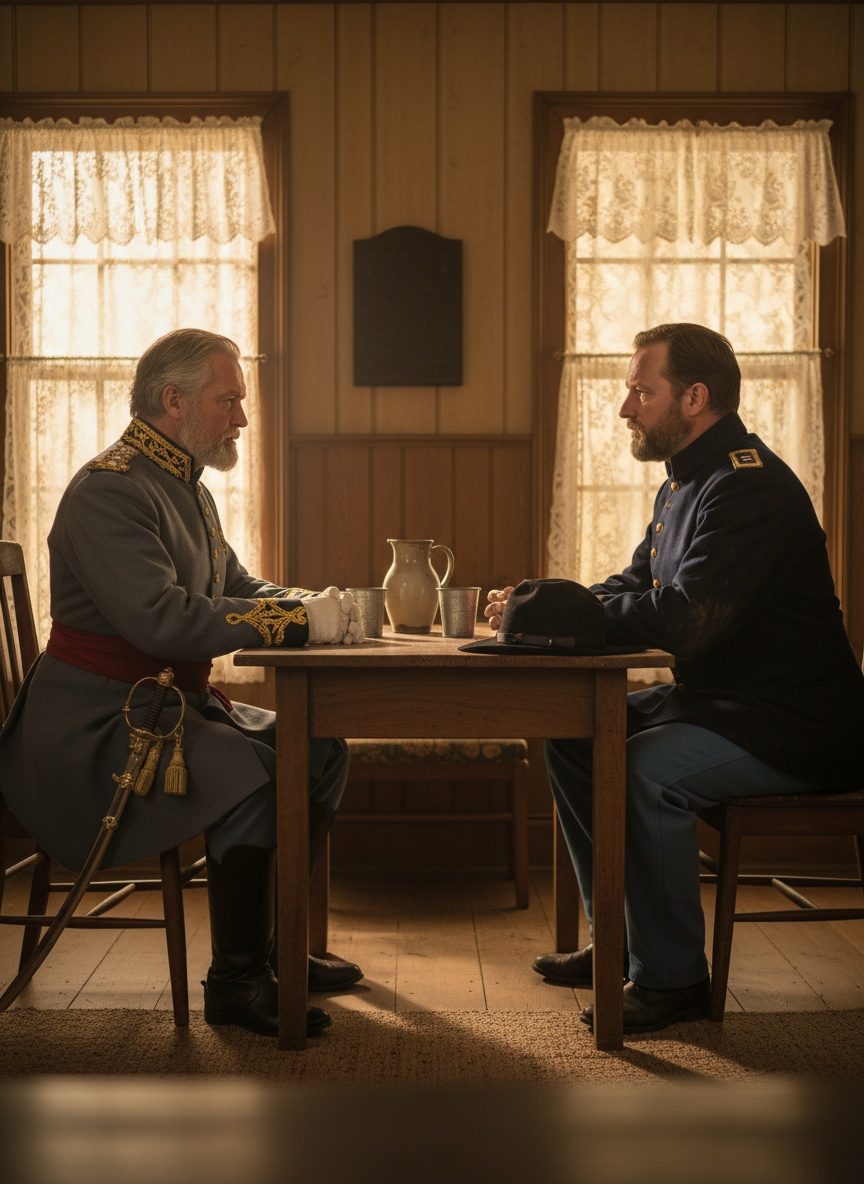
As the dust settled on the fields of Virginia, a weary Robert E. Lee faced a task perhaps more daunting than fighting the war itself: he had to admit defeat to his long-standing adversary, Ulysses S. Grant. It was April 9, 1865, a date etched into history as the moment the Civil War found its solemn close. But as Lee stood before Grant, expecting the sting of defeat to be laced with humiliation, an unexpected gesture turned the tide of that historic day.
Lee’s troops were starving and demoralized, having survived on a threadbare diet as their resources dwindled to nothing. Though separated by the bitterness of war, they were still countrymen, and Grant recognized their dire plight. Not with terms or conditions but with a quiet resolve, Grant ordered 25,000 rations to be sent to the defeated Confederate soldiers, a powerful gesture of reconciliation that spoke volumes without uttering a word.
From Battlefields to Benevolence
The final embers of the Civil War flickered out on the same day Grant extended his generous hand. It was a startling change of pace from years of merciless battles and strategic maneuvers. Under the copse of trees at Appomattox, two generals discussed peace and future dreams rather than the brutality of conflict. Before the ink of their signatures dried, Grant and Lee, once bitter foes, became pragmatic peacekeepers discussing the logistics of feeding men who no longer wielded arms.
During the days of carnage, Lee’s army had marshaled their resolve on empty stomachs and thinning clothes. The rations carried across the former enemy lines were more than just sustenance—they were a bridge across a chasm dug by years of turmoil. The Unionists and Confederates, once entangled in deadly skirmishes, now shared the humble bonds of humanity, tasting the first glimmers of a united nation, reflected in each hard-won mouthful of bread and meat.
Simplicity Amidst Complexity
The moment itself was striking in its simplicity. While political complexities raged around them, the officers who witnessed the act of feeding their defeated foes were struck by its clarity. Soldiers accustomed to entrenched enmity now found the routine of war replaced by an unexpected, shared acknowledgment of their shared identity as Americans. The ration, stripped of all pomp and circumstance, emerged as an olive branch extended without hesitation—no conditions needed to lubricate its acceptance.
In its way, feeding a hungry army was a silent dialogue that spoke against future animosities. Mere days after musket fire had ceased, men on opposing sides took to repair the ruptures between them one small act of kindness at a time. As much as it was a physical relief, the distribution of rations reinstated a moral perspective that elected kindness over cruelty and hope over despair.
Beyond Strategy: A Tale of Decency
The impact of Grant's decision lingered far longer than any formal agreement penned on paper. In contrast to the ruthless efficiency of war strategies and martial law, Grant's delivery of rations to his opponents was refreshingly uncalculating, elevating him not just as a military tactician but as a humane leader. Lee's decision to accept the supplies was nothing short of a grace note in an otherwise discordant symphony of war—a testament to the value of reconciliation over retribution.
The echoes of that act resonated beyond the humble village of Appomattox. The spectrum of leadership transcended honor defined on battlefields to embrace moral duty—a lesson not soon to be forgotten. In the fabric of American history, Aprils's gift stood as a beacon of civic decency and the power of human kindness to transcend even the darkest chapters.
Lessons in the Unwritten Peace
The scene at Appomattox Court House was a rare pivot from chaos to calm, from division to unity. That historic day taught profound lessons about the nature of leadership and the intricate dance of defeating and forgiving. Although physical scars of battle would heal slowly across the land, this selfless gesture created a narrative that would echo through future generations: the significance of mercy amid victory and grace in the face of loss.
Long after the rations disappeared, consumed by men who sought solace and strength, the story endured, serving as a powerful reminder. In times divided by strife or united in crisis, it is in the shared goodness of the human spirit that people find their true strength—nurturing the potential for unity even in the shadow of division. The story of Grant's gift is not merely one of sustenance but a legacy of compassion, transcending the boundaries of time and conflict alike.