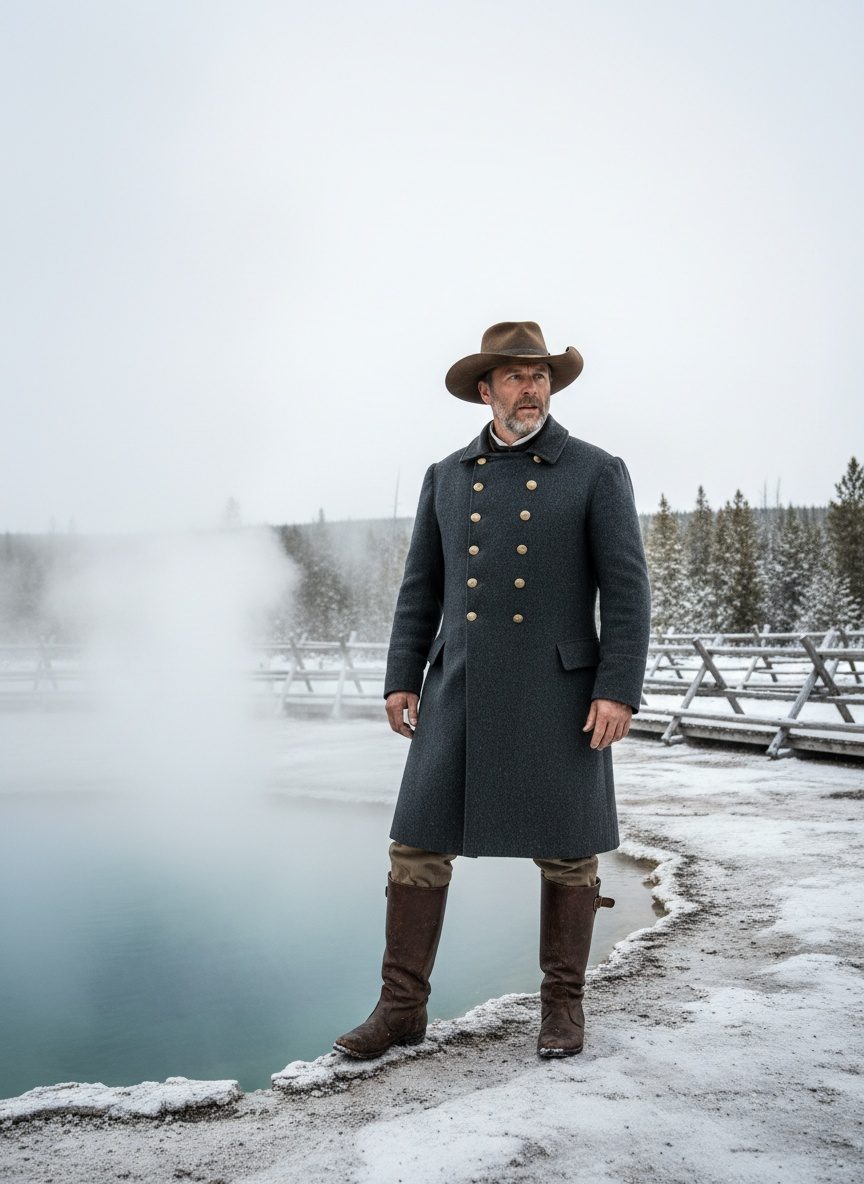
Yellowstone National Park is a testament to nature's majesty. Yet it’s also an unforgiving wilderness where beauty can swiftly turn lethal.
The Rugged Protector
In 1890s America, few could claim to know the untamed wilderness of Yellowstone better than Charles Myers. As a devoted ranger in the newly established national park, Myers was not just a guardian of its grounds but an admirer of its unparalleled raw beauty. His deep connection to Yellowstone's diverse landscape meant he was perfectly suited to protect it — a role he lived by every day, in every season. Despite his expertise and reverence for the land, nature's unpredictable temperament proved to be his greatest adversary.
Winters in Yellowstone are brutal, painting the sprawling landscapes with icy hues that hid myriad dangers beneath their frosty façade. Myers' routine patrols were a dance between vigilance and familiarity, each step measured by his seasoned instincts. Yet, even experts can fall victim to unforeseen hazards.
A Journey Beyond Return
It was during one of these routine inspections that tragedy struck. The winter of 1890 was particularly harsh, causing icy layers to coat the boardwalks that traversed the park’s numerous geothermal features. As Myers navigated these tracks of slippery timber — familiar paths he could've walked blindfolded — one misstep set into motion a catastrophic chain of events.
The ground beneath him gave way. In a mere fraction of a second, Myers plunged into the blistering depths of a boiling hot spring. The intolerance of the searing water was immediate, its devastation terrifyingly swift. Rescue came quickly, with fellow rangers pulling him from his perilous pitfall within seconds. But the boiling waters of Yellowstone had already etched their indelible mark.
The Bitter Cost of Devotion
Fate delivered its cruel verdict in the hours following his accident. Despite the best efforts to save him, the severity of his burns proved insurmountable. In a small window of time, the park that Myers had devotedly served and cherished became the very entity to claim his life. His passing was not just a personal tragedy but a stark reminder of the inherent risks that lay in safeguarding the untamed wilderness.
For the rangers and park staff who continued to tread the trails of Yellowstone, Myers' death served as a sobering emblem of their own vulnerability. From that point on, the commitment to preserving the park required both respect and recognition of the unpredictable dangers that resided within its boundaries.
The Precincts of Power and Peril
Yellowstone, with its sprawling geysers, verdant valleys, and thermal wonders, disguised its lethal potential behind breathtaking sights. It beckoned adventurers and protectors alike, a living tapestry woven with both awe and peril. Myers' accident underscored a relentless duel between nature's unparalleled artistry and its harshest realities.
In the aftermath of his death, the park authorities implemented heightened safety measures to protect both visitors and the rangers tasked with its stewardship. Boardwalks were reinforced; signs clearly marked areas of danger. The tracks Charles Myers had walked were scrutinized and fortified, a testament to the hard-earned lessons of his sacrifice.
A Legacy Written in Steam
Myers' death in Yellowstone became a haunting chapter in the park's annals, one that underscores the fragility of human life amidst nature's indifference. His story is a reflection of the paradox that many naturalists know too well: those who guard the wilderness often stand on a precipice, admired for their bravery while knowingly surrounded by unpredictable forces.
As the world increasingly embraces conservation and protection of natural wonders, Charles Myers’ story resonates beyond his era. It highlights the dedication required to safeguard these spaces and stresses the importance of respecting nature's profound power. The tale of the ranger who walked into the spring and never walked out serves as an eternal caution — and a humble reminder of our place within the grander scheme of nature's domain.