1404. The midday sun spilled golden light across the vast plains of Central Asia.
The Shadow of Timur
Throughout the 14th century, the name Timur was synonymous with terror. A Turco-Mongol conqueror and the founder of the Timurid Empire, Timur, often known by his Persian epithet Amir Timur or Tamerlane, carved a path of destruction across Asia, the Middle East, and even touching the edges of India. His campaigns were as notorious as they were brutal; cities such as Delhi, Moscow, and Damascus bear scars from his relentless quest for power.
It was said that Samarkand, his beloved capital, shone with the light of gold looted from countless cities. Yet, for all the magnificence that surrounded him, Timur was a paradox—a man at once a brutal warlord and a patron of the arts and culture. While he engineered breathtaking architecture and gathered the most talented minds to his court, his rule was underpinned by a methodical ruthlessness that left countless cities in ashes.
Before the Ancients
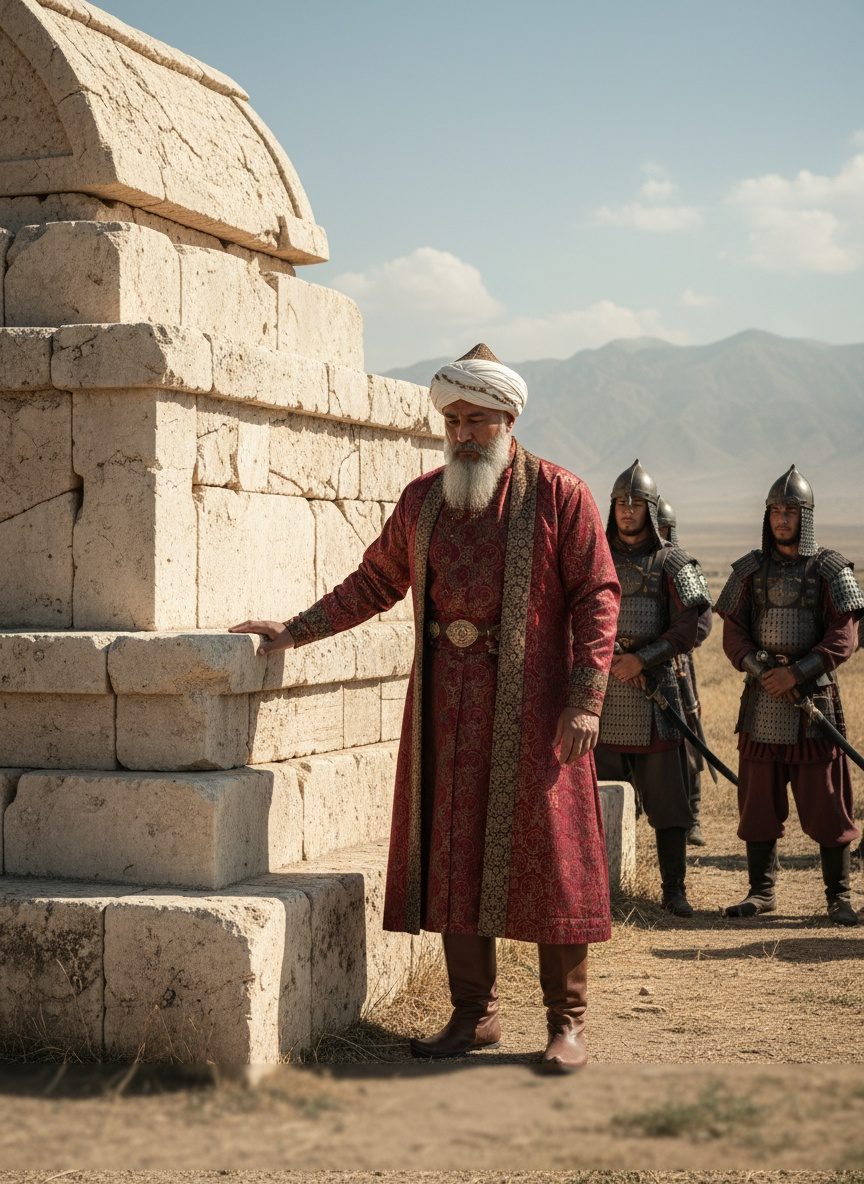
In 1404, Timur found himself at the ancient tomb of Cyrus the Great, the revered founder of the Achaemenid Empire. Situated in the land that is now Iran, the tomb was a simple structure, quiet and dignified amidst the sweeping Persian landscape—a stark contrast to the flamboyant Samarkand. As he stood before this relic of an earlier age, Timur, accustomed to the marvels of his own making, paused.
The tomb bore an inscription, one that ostensibly read as a humble plea from Cyrus himself: "O man, whoever you are and wherever you come from, for I know you will come, I am Cyrus who secured the throne for the Persians. Do not begrudge me this patch of earth that covers my body." This simple epitaph struck a chord within the relentless conqueror. Legends say that upon reading it, Timur was deeply moved—a rare occurrence for a man accustomed to the sounds of battle and the cries of cities in flames.
Restoration of Reverence
In an unexpected turn, Timur ordered his men to cease any destruction they had begun upon this ancient site. Recognizing the historical and cultural significance of the tomb, Timur commanded that repairs be made to restore it to its former dignity. His warriors, accustomed to the cycle of conquest and pillage, found themselves in the strange position of preservation rather than annihilation.
For a brief moment, the shadow of the past mingled with the present. Timur, who had wielded fear as readily as a sword, paused in an act of reverence. By sparing the tomb and ordering its repairs, he paid homage to Cyrus, a conqueror of the ancient world whose name had transcended time itself. It was as if in Cyrus, Timur saw a reflection of the legacy he himself sought—a legacy not annihilated by the hands of time or the hearts of men.
A Moment of Reflection
The sparing of Cyrus's tomb marked a curious moment in history—a lapse in the cycle of destruction that had defined Timur's journey across continents. It poses a question that resonates through the corridors of time: Was it a flicker of mercy or an astute acknowledgment of a kindred spirit, a reflection in historical tapestry, that prompted Timur’s decision?
While Timur continued his campaigns—embarking on yet another ambitious endeavor shortly after this episode—the moment at the tomb lingered. It served as a reminder of how even the most relentless seekers of glory can be swayed by the echoes of a forgotten past, by the whispers of those who came before. This singular incident at Cyrus's tomb may seem a footnote in the annals of history, but it tells us much about the timelessness of legacy and the unpredictability of the human heart.